To use social proof effectively for AI-built products in 2026, focus on four types that consistently convert (specific reviews from real users with full names and contexts, video testimonials that capture authentic enthusiasm, detailed case studies that show measurable outcomes, and usage statistics that demonstrate scale), collect them through systematic processes rather than ad-hoc requests, and place them strategically across your funnel rather than dumping them on one page. Generic testimonials underperform; specific, substantive social proof can lift conversion rates 30-50 percent.
This piece walks through the four social proof types, the collection patterns that produce substantive material, the placement strategies that maximize impact, and the four mistakes that turn social proof into noise.
Why Social Proof Matters More for AI-Built Products
AI-built products often face skepticism: prospects wonder whether the product is professional-quality, whether it will be supported, whether it actually works. Social proof addresses these concerns by showing that real people use and benefit from the product. The reassurance accelerates conversion dramatically.
The 2026 reality is that consumers have learned to discount generic testimonials. "Great product!" with no name or context is treated as fabricated. Specific, substantive social proof from real people with verifiable contexts works; generic testimonials do not.
A 2025 BigCommerce conversion analysis of 1,800 SaaS landing pages found that pages with substantive social proof (named reviewers, specific outcomes, video testimonials) converted 38 percent better than pages with generic social proof (initials, vague positive statements). The mechanism was straightforward: substantive proof was perceived as authentic; generic proof was discounted. Quality of social proof matters more than quantity; one detailed case study often outperforms ten vague testimonials.
The pattern to copy is the way restaurants use online reviews. The most useful reviews include specific dishes, specific service experiences, photos of meals. Generic "great place" reviews provide little value. Software social proof works the same way; specificity and authenticity drive trust, while generic positivity gets discounted.
The Four Types of Social Proof That Convert
Four social proof types consistently convert prospects. Each fits different funnel stages.
Type 1, specific reviews with named users and contexts. Full names, company names, specific use cases, specific outcomes. The specificity establishes authenticity that generic praise cannot.
Type 2, video testimonials. Real customers talking about their experience. Video is harder to fake than text; the authenticity converts better than written testimonials of equivalent length.
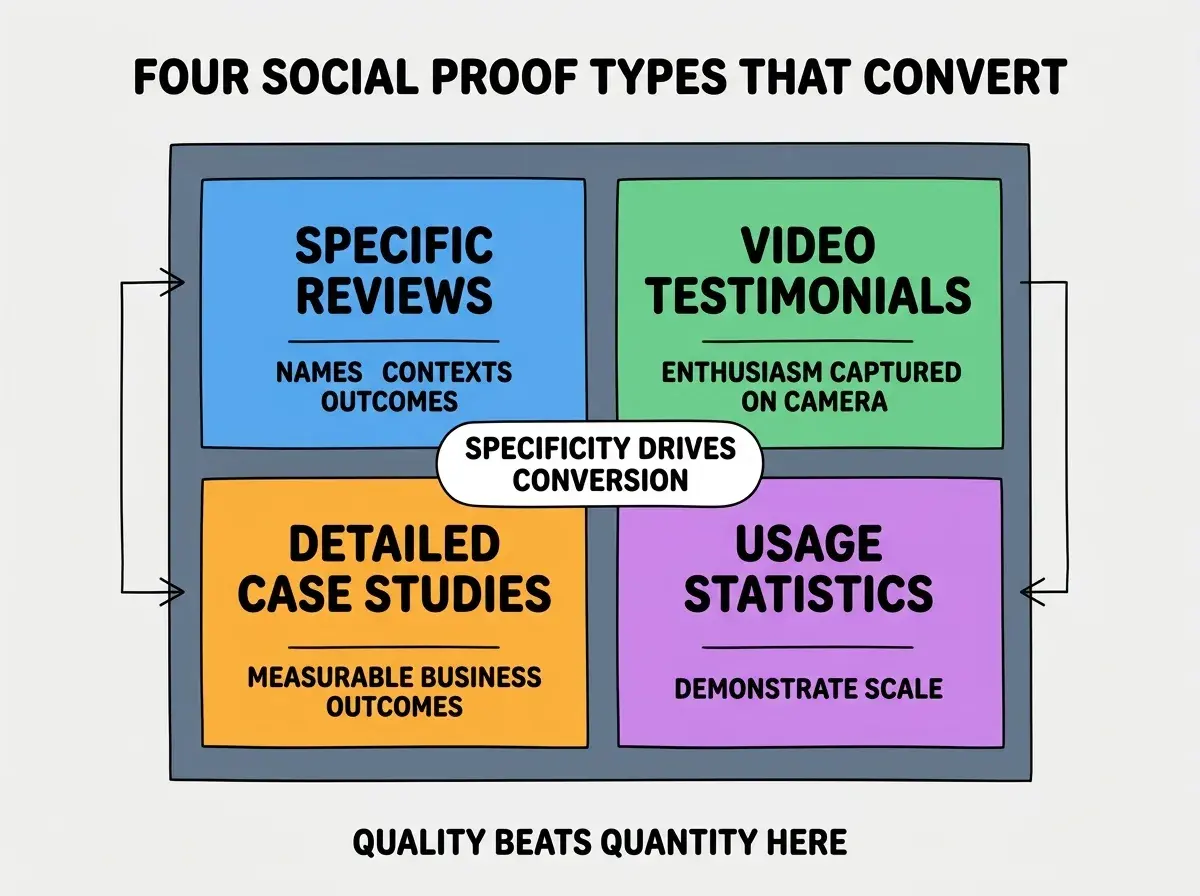
Type 3, detailed case studies with measurable outcomes. Customer stories with specific metrics: "increased conversion 32 percent in 3 months." Concrete outcomes provide evidence that abstract praise cannot deliver to skeptical prospects.
Type 4, usage statistics that demonstrate scale. "10,000 customers" or "500 million tasks completed" signal that the product is established. Scale signals reduce perceived risk for prospects worried about backing the wrong horse.
How to Collect Social Proof Systematically
Three collection patterns produce substantive social proof rather than vague positivity.
Pattern 1, ask at the right moments. Ask satisfied customers immediately after positive experiences (successful onboarding, milestone reached, problem solved). Asking generically produces generic responses; asking after specific moments produces specific, substantive responses worth using.
Browse more conversion optimization guides
Read more grow articlesPattern 2, ask specific questions. Instead of "would you write a testimonial," ask "what specifically improved for your business since using this." Specific questions produce specific answers worth quoting.
Pattern 3, make participation easy. Pre-fill forms; offer multiple formats (text, video, audio); handle the editing. The customer's time investment determines participation rate; lower friction produces dramatically more material to choose from.
How to Place Social Proof Strategically
Three placement principles maximize the conversion impact of collected social proof.
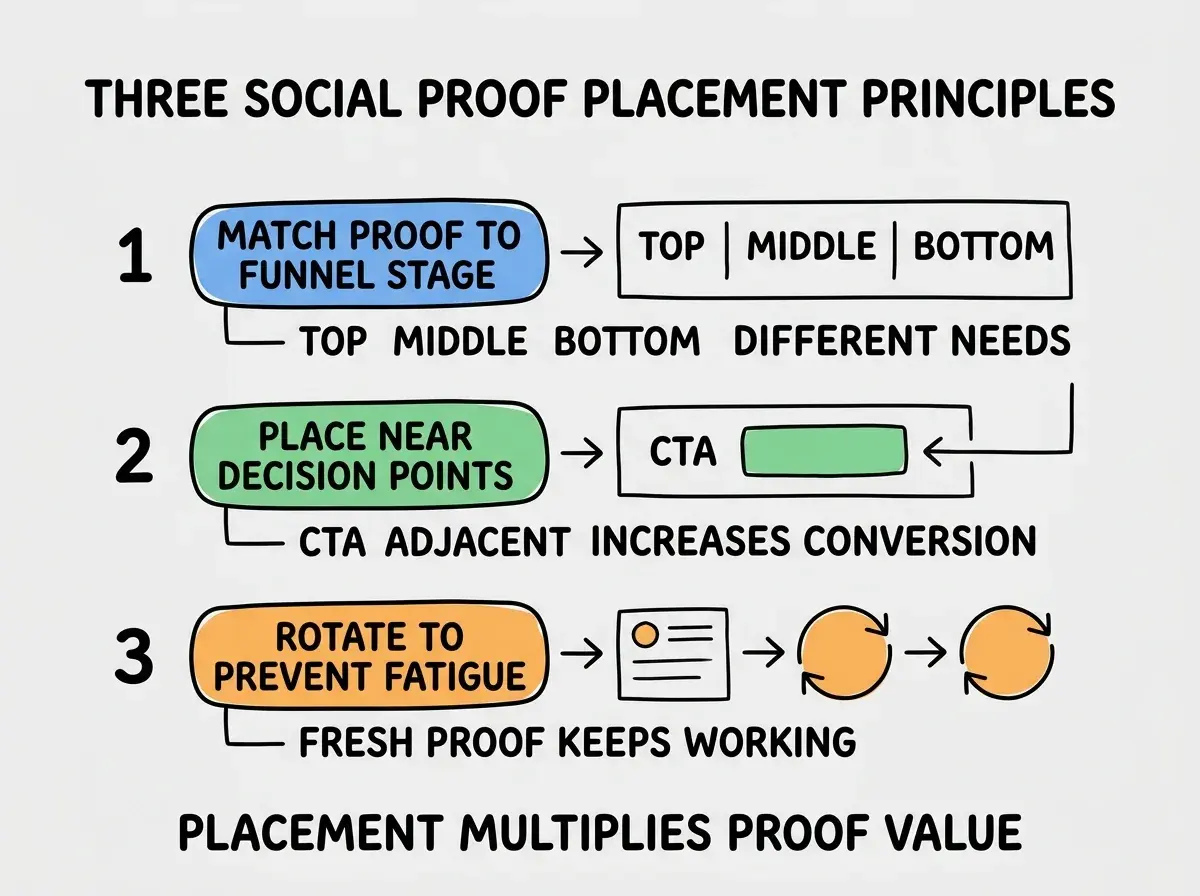
Principle 1, match proof type to funnel stage. Top-funnel pages benefit from usage statistics (scale builds trust); bottom-funnel pages benefit from detailed case studies (evidence drives decisions).
Principle 2, place proof adjacent to decision points. Testimonials near pricing, signup, and call-to-action elements convert better than testimonials on dedicated testimonial pages. The proximity reduces decision friction.
Principle 3, rotate proof to prevent fatigue. Same testimonials on every page train users to ignore them. Rotation keeps proof fresh; new proof should appear every quarter to maintain its conversion impact.
How to Build a Case Study That Converts
Three principles produce case studies that prospects find compelling rather than skip past.
Principle 1, structure as problem-solution-outcome. Customer's specific problem; how the product addressed it; measurable outcomes after. The narrative arc engages readers; pure feature lists do not.
Principle 2, include real numbers customers verify. "Increased conversion 32 percent in 90 days" with verifiable methodology beats "significantly increased conversion." Specific numbers signal authenticity.
Principle 3, get customer quote about the human element. Beyond metrics, capture how the customer feels about the work and the relationship. The emotional content makes case studies feel like real stories rather than marketing material.
The combination produces case studies that prospects share with colleagues. Without these principles, case studies become formulaic content that prospects skim and forget.
How to Handle Negative Social Proof
Three patterns help respond to negative reviews and criticism without damaging brand.
Pattern A, respond to negative reviews promptly and professionally. Visible response shows future prospects that you care about feedback. Ignoring negative reviews damages credibility; defensive responses damage it more than silence would.
Pattern B, learn from criticism patterns. Multiple complaints about the same issue signal real problems. Address the underlying issue; the social proof improves naturally as the product improves and customers notice the responsiveness.
Pattern C, do not delete legitimate negative reviews. Deleting reviews is detected by users and platforms; the reputational cost exceeds the benefit of removed criticism. Better to respond well than to delete and risk the deletion becoming the story.
The combination produces social proof that builds trust over years. Without these patterns, negative reviews accumulate while positive proof goes uncultivated; the imbalance hurts conversion.
The most damaging social proof mistake is using fake or AI-generated testimonials. Some founders facing slow customer acquisition fabricate reviews to look more established. The deception is increasingly detectable (reverse image search on photos, language pattern analysis on text), and detection produces brand damage that takes years to recover from. The fix is to use only authentic social proof, even if you have less of it. One genuine testimonial outperforms ten fabricated ones; the authenticity is detectable to readers even before formal verification.
The other mistake is collecting social proof without asking permission to use it specifically. Customers who say nice things in support tickets did not consent to having those quotes appear in marketing. The fix is to explicitly ask permission to use specific quotes, with explicit context (where it will appear, how attribution will work). The discipline protects against legal issues and builds customer trust.
A third mistake is letting social proof go stale. Testimonials from 2022 about features that have changed substantially undermine credibility rather than building it. The fix is to refresh social proof annually; archive old testimonials when products evolve, replace with current ones that reflect current product capabilities. Fresh proof signals an active, evolving product; stale proof signals stagnation.
What This Means For You
Social proof is high-leverage conversion lever in 2026. The four types, collection patterns, and placement strategies produce social proof that meaningfully improves conversion rates.
- If you're a founder: Build social proof collection into your customer success workflow from day one. Late-stage social proof building is much harder than early-stage building.
- If you're changing careers into marketing or growth: Social proof skill is increasingly expected. Practice on personal projects or volunteer for nonprofit marketing.
- If you're a student: Study how successful products use social proof across their funnels. The patterns are publicly visible and generalize across product categories.
Browse more conversion and marketing guides
Read more grow articles