To scale email infrastructure for transactional and marketing volume, follow the four phase approach (separate transactional and marketing infrastructure to prevent deliverability cross contamination, configure sending reputation gradually through warm up patterns, monitor deliverability metrics across major mailbox providers, and implement bounce and complaint handling that protects sender reputation), recognize what makes email infrastructure reliable at volume, and apply the patterns that prevent deliverability issues that destroy email channels. The email scaling capability matters because email remains primary communication channel that broken deliverability silently damages.
This piece walks through the four scaling phases, what makes email reliable at volume, the specific provider patterns, and the four mistakes that produce deliverability collapse.
Why Email Scaling Matters
Email scaling matters because email remains primary user communication channel. The persistence matters; user engagement, transactional confirmations, marketing all depend on email reaching inboxes reliably.
The 2026 reality is that email deliverability has become more difficult as mailbox providers tighten requirements. Without explicit scaling consideration, email infrastructure that works at small volume often degrades at higher volume in ways that are hard to diagnose.
A 2025 email deliverability study of 300 SaaS companies found that companies with structured email scaling practices maintained 98 percent inbox placement at volume compared to 67 percent average for companies without practices. The placement difference translates to dramatic differences in user engagement and conversion.
The pattern to copy is the way airlines manage runway capacity. Runways have throughput limits; airlines schedule flights respecting limits to prevent gridlock. Email infrastructure follows similar pattern; sending capacity has limits that respecting prevents deliverability collapse.
The Four Scaling Phase Approach
Four phases produce reliable email infrastructure at volume.
Phase 1, separate transactional and marketing infrastructure. Different sending domains, different IP ranges, different providers. Separation prevents marketing complaints from affecting transactional delivery.
Phase 2, configure sending reputation through warm up. Gradual volume increase building reputation with mailbox providers. Warm up prevents reputation damage from sudden volume.
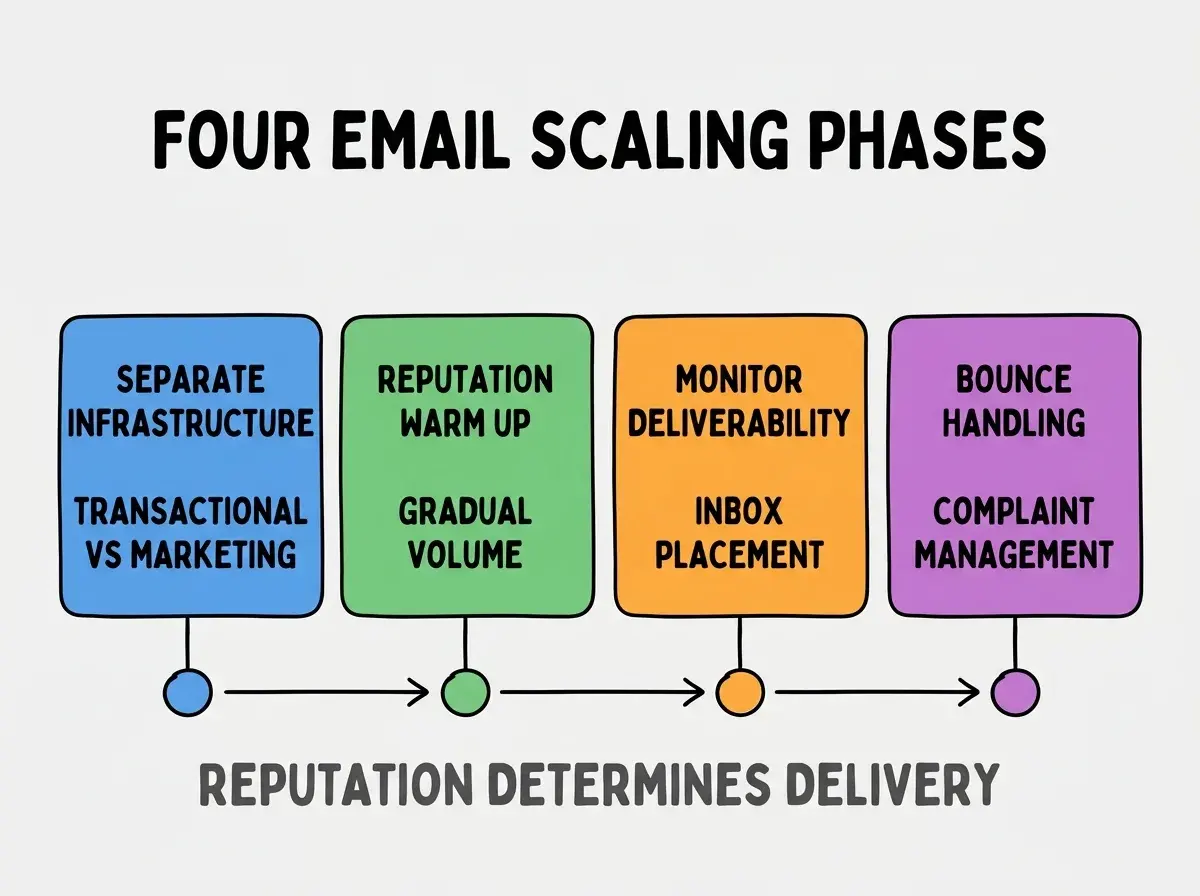
Phase 3, monitor deliverability across mailbox providers. Inbox placement, spam folder placement, blocking rates. Monitoring catches issues before user reports.
Phase 4, implement bounce and complaint handling. Hard bounces removed immediately; complaints suppressed permanently. Handling protects sender reputation.
What Makes Email Reliable At Volume
Three patterns characterize reliable email infrastructure.
Pattern 1, sender authentication properly configured. SPF, DKIM, DMARC records aligned with sending patterns. Authentication prevents spoofing flags.
Browse more grow articles
Read more grow articlesPattern 2, list hygiene maintained continuously. Inactive subscribers removed; engagement signals tracked. Hygiene prevents reputation damage from unengaged sending.
Pattern 3, content patterns avoiding spam triggers. Avoiding excessive capitals, suspicious links, spam pattern words. Content matters for spam filter scoring.
The Specific Provider Patterns
Three provider categories handle different email needs.
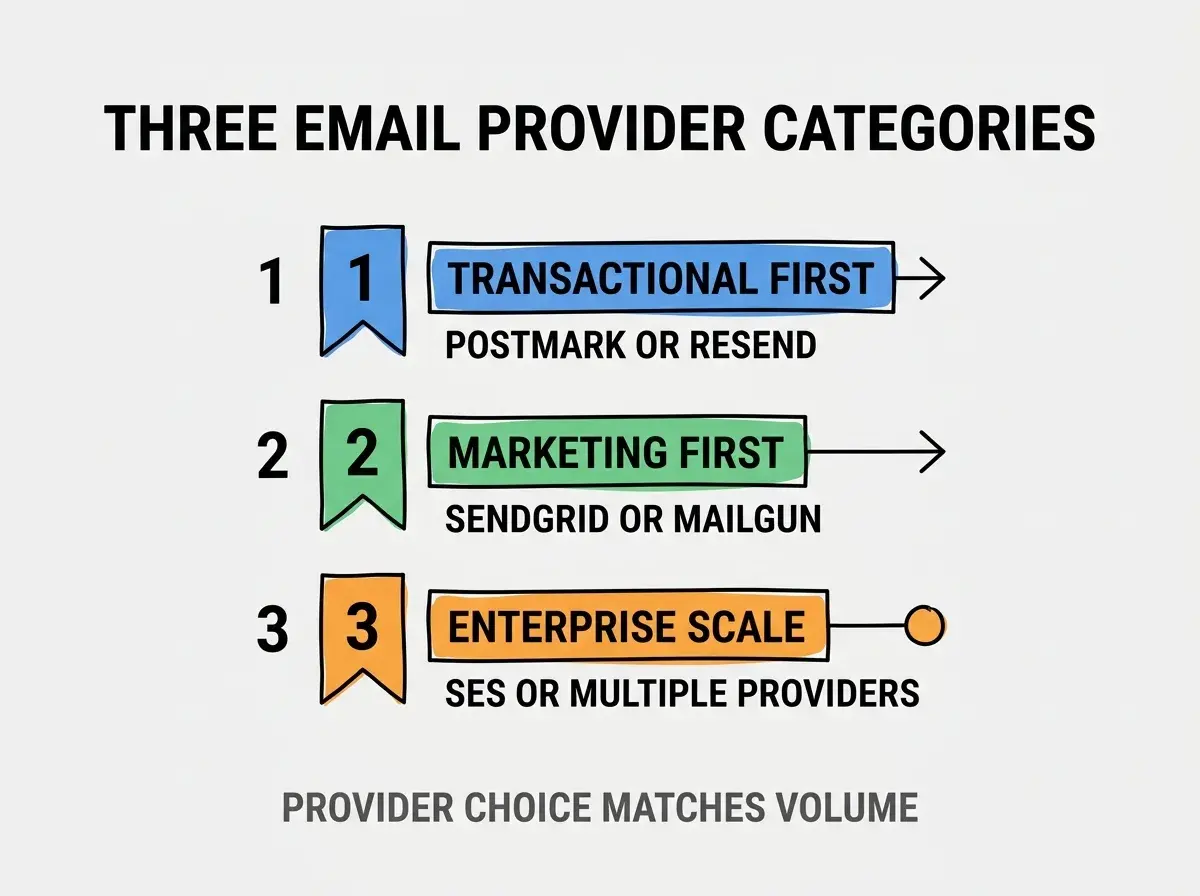
Provider 1, transactional focused like Postmark or Resend. Optimized for delivery reliability, simple API. Best for transactional volume where reliability matters most.
Provider 2, marketing focused like SendGrid or Mailgun. Campaign features, list management, analytics. Best for marketing volume with campaign needs.
Provider 3, enterprise scale like AWS SES or multiple providers. Maximum capacity at lowest per email cost. Best for high volume with engineering capacity to manage.
What Makes Email Scaling Sustainable
Three patterns separate sustainable email scaling from problematic scaling.
Pattern 1, capacity matched to actual sending patterns. Burst sending versus steady sending have different infrastructure needs. Matching prevents both over capacity cost and under capacity issues.
Pattern 2, deliverability monitoring across major providers. Gmail, Outlook, Yahoo each have different patterns; monitoring across providers catches provider specific issues. Without monitoring, provider specific issues go undetected.
Pattern 3, alerting on deliverability metric changes. Sudden delivery rate drops indicate reputation issues; alerts enable response. Without alerts, reputation damage compounds before detection.
The combination produces email scaling that maintains deliverability over time. Without these patterns, scaling often produces deliverability collapse despite sending capacity.
How To Handle Specific Volume Patterns
Three volume patterns deserve specific approaches.
Pattern A, transactional bursts during product events. Launch emails, password resets during outages, batch transactional. Bursts require capacity planning.
Pattern B, marketing campaigns to engaged segments. Engaged segment campaigns produce strong engagement; unengaged segments damage reputation. Segmentation matters dramatically.
Pattern C, drip sequences over time. Drip volume distributes evenly; reputation builds gradually. Drips work well with warm up patterns.
The combination produces approaches matched to volume patterns. Without pattern specific approaches, generic configurations produce suboptimal outcomes.
The most damaging email scaling mistake is mixing transactional and marketing on shared infrastructure. Marketing complaints affect transactional delivery; complaint rates spike from marketing while transactional emails fail to reach inboxes. The fix is to separate infrastructure completely; different sending domains, different IPs, different providers. Teams that maintain separation preserve transactional delivery reliability; teams that mix produce delivery issues that affect critical business communications.
The other mistake is missing sender authentication setup. SPF, DKIM, DMARC misconfiguration produces deliverability issues that proper configuration prevents. The fix is to validate authentication setup against sending patterns.
A third mistake is ignoring complaint and bounce signals. Signals indicate reputation health; ignoring them produces compound damage. The fix is to act on signals immediately.
A fourth mistake is treating email as send and forget. Email infrastructure requires ongoing maintenance; treating it as one time setup produces gradual degradation.
How To Build Reputation Through Warm Up
Three warm up patterns build sending reputation effectively.
Pattern 1, gradual volume increase over weeks. Starting at 50 emails per day, doubling weekly produces controlled reputation building. Volume increases too fast trigger spam flags.
Pattern 2, send to engaged subscribers first. Engaged subscribers produce positive signals; positive signals build reputation. Warm up to engaged segments establishes reputation.
Pattern 3, monitor delivery rates during warm up. Delivery rate trends indicate warm up success or failure. Without monitoring, warm up problems go undetected until full volume produces failure.
The combination produces reputation that supports volume sending. Without warm up, volume sending often produces reputation collapse.
How Email Scaling Will Likely Evolve
Email scaling will likely continue evolving with mailbox provider requirements.
The first likely evolution is mailbox provider requirements tightening. Authentication, engagement, content patterns all becoming more strictly enforced. Tightening makes proper practices more important.
The second likely evolution is AI tools assisting deliverability optimization. AI for content optimization, send time optimization, segmentation. AI assistance reduces manual optimization burden.
The third likely evolution is alternative communication channels growing. SMS, push notifications, in app messaging supplementing email. Diversification reduces email channel risk.
The combination suggests email will remain critical but require more discipline to scale effectively. Engineers learning scaling now build skills that remain valuable as requirements tighten.
Common Questions About Email Scaling
Email scaling raises questions worth addressing directly.
The first question is whether to use shared or dedicated IPs. Dedicated IPs require warm up but produce reputation control; shared IPs work for low volume but limit control. Volume threshold roughly 100K monthly emails justifies dedicated.
The second question is how to handle list segmentation for deliverability. Engaged segments produce positive reputation signals; unengaged segments damage reputation. Segmentation that prioritizes engagement matters dramatically.
What This Means For You
Email scaling determines whether email channels support business growth or become bottlenecks. The four phases, provider patterns, and warm up approaches produce framework for reliable email at volume.
- If you're an indie hacker: Email scaling matters more than most builders expect. Plan email infrastructure separation from start to prevent issues at scale.
- If you're a senior dev: Email infrastructure decisions affect business communication reliability. Help business stakeholders understand deliverability importance.
- If you're a founder: Email channel reliability affects user activation, retention, and conversion. Invest in email infrastructure as core business infrastructure.
Browse more grow articles
Read more grow articles