To understand how AI coding affects remote work and geographic distribution in 2026, recognize the four shift patterns the data reveals (developer migration to lower cost cities accelerated as remote work plus AI productivity reduced location dependent value, smaller engineering teams with higher AI fluency replaced larger geographically concentrated teams, geographic talent pools have shifted with new tech hubs emerging in mid sized cities, and global talent competition has intensified as AI fluent developers everywhere compete with established hub developers), see what the patterns reveal about geographic redistribution, and consider what the patterns mean for individual developers and companies thinking about location strategy. The geographic patterns reveal both opportunity and disruption.
This piece walks through the four shift patterns, what they reveal, the implications for individuals and companies, and the four mistakes when interpreting geographic shifts.
Why Geographic Redistribution Matters
Geographic redistribution matters for individual developers thinking about where to live and companies thinking about where to hire. The decisions matter; cost of living, tax implications, and lifestyle all depend on geographic decisions that AI coding affects.
The 2026 reality is that remote work plus AI coding has accelerated geographic redistribution beyond what either trend alone would have produced. Combined trends produce shifts that single trend analysis misses.
A 2025 LinkedIn analysis of 500,000 developer profile location changes found 31 percent net migration from top 5 tech hubs (San Francisco, NYC, Seattle, London, Tokyo) to mid sized cities and smaller markets in 2024-2025. The migration has accelerated from 18 percent in 2022-2023; AI coding is accelerating geographic redistribution.
The pattern to copy is the way historians analyze technological shifts that change geographic patterns. Railroads concentrated economic activity around stations; cars decentralized; remote work plus AI coding decentralizes further. Understanding the pattern helps anticipate continued evolution.
The Four Shift Patterns
Four patterns characterize geographic redistribution in 2026.
Pattern 1, developer migration to lower cost cities accelerated. Cost of living matters more when remote work eliminates location dependent salary differences. AI productivity reduces hub network effect value.
Pattern 2, smaller AI fluent teams replaced larger concentrated teams. AI productivity enables small teams to match larger team output; small teams can locate anywhere.
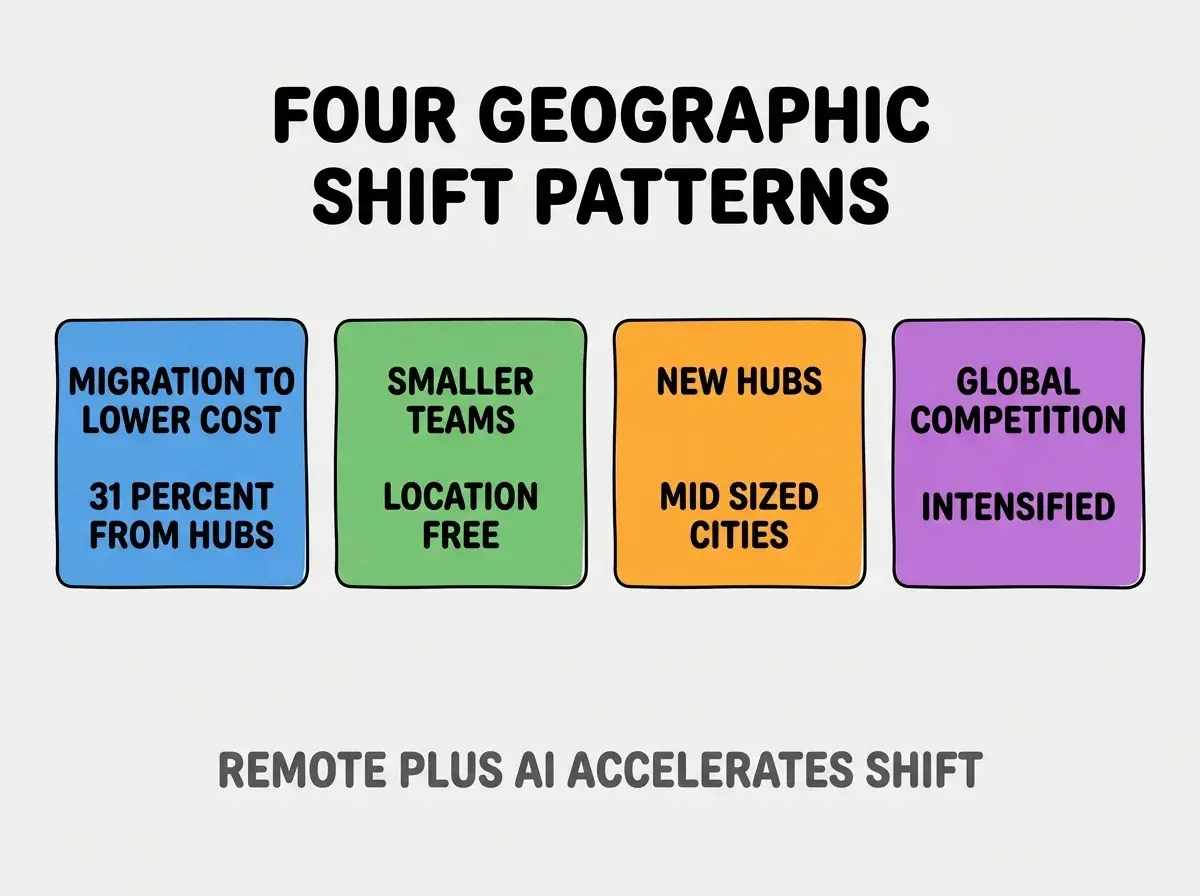
Pattern 3, new tech hubs emerging in mid sized cities. Austin, Miami, Lisbon, Bangalore, Singapore growing while traditional hubs stagnate or shrink. Hub redistribution reveals geographic patterns shifting.
Pattern 4, global talent competition has intensified. AI fluent developers in any location compete with established hub developers. The competition reduces hub talent advantages.
What the Patterns Reveal
Three patterns from the data reveal redistribution direction.
Pattern 1, hub network effects weakening as productivity becomes location independent. Network effects historically favored geographic concentration; AI tools reduce network effect dependence.
Browse more career analysis
Read more pulse articlesPattern 2, talent pool widening reduces hub developer compensation premiums. Hub developers historically commanded premium for location specific talent; widening pool reduces premium.
Pattern 3, lifestyle factors drive location decisions more than career factors. Career considerations dominated location historically; lifestyle considerations now dominate as career flexibility grows.
What Geographic Patterns Mean For Individuals
Three implication patterns matter for individual developers thinking about location.
Implication 1, lower cost cities offer better effective compensation. Same salary in lower cost city produces better quality of life. The math now favors lower cost cities for many developers.
Implication 2, AI fluency matters more than hub location for opportunities. Hub location historically signaled opportunity access; AI fluency now matters more. Build fluency over chasing hub location.
Implication 3, geographic flexibility produces career options. Remote ready developers can target opportunities globally rather than only locally. Geographic flexibility produces option value.
How Companies Should Adapt
Three application patterns help companies adapt to geographic redistribution.
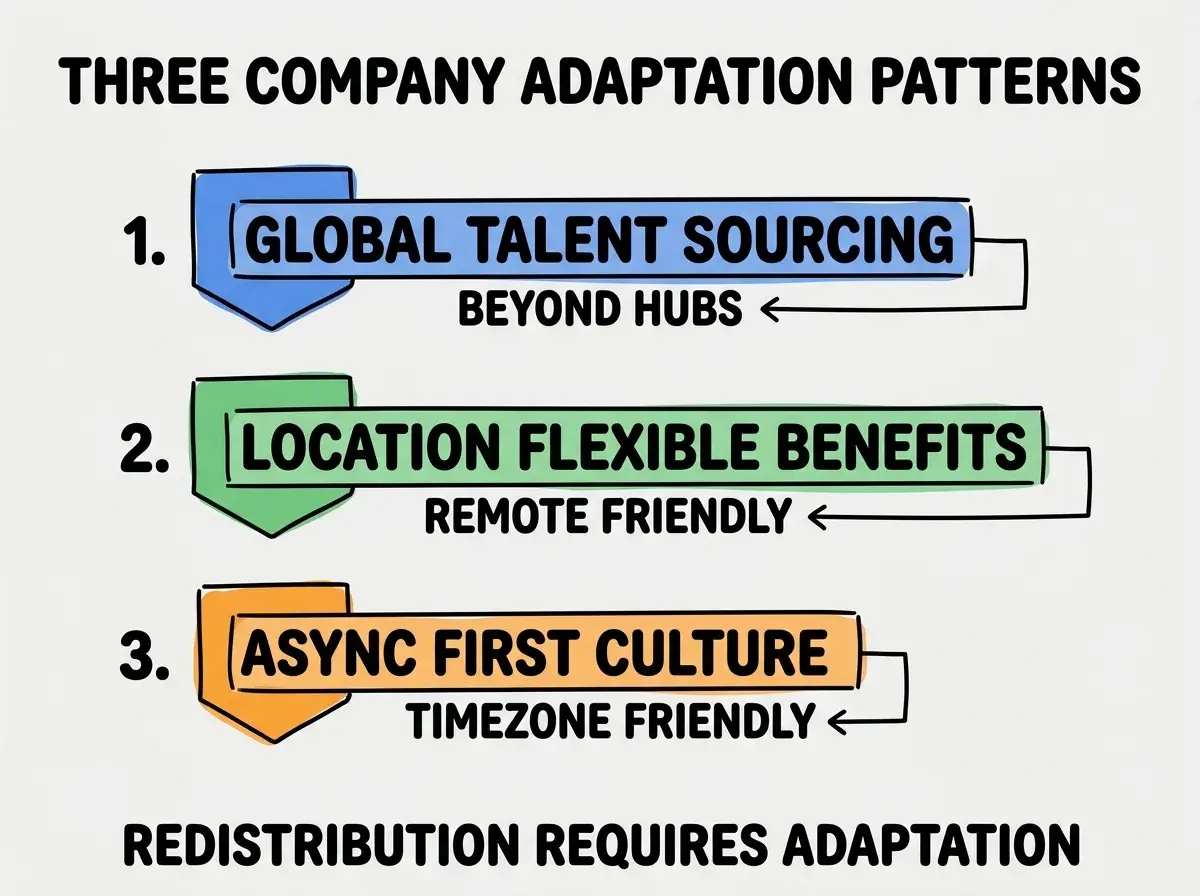
Pattern 1, source talent globally rather than from hubs. AI fluent talent exists globally; restricting to hubs limits talent pool unnecessarily.
Pattern 2, design benefits and policies for location flexibility. Healthcare, equipment, time zone considerations all matter for distributed teams.
Pattern 3, build async first culture for global team coordination. Async work scales globally where sync work limits to time zones. Async culture produces global team productivity.
The combination produces successful adaptation to geographic redistribution. Without these patterns, companies maintaining hub centric models lose talent to companies adapting to redistribution.
The most damaging geographic interpretation mistake is assuming traditional hubs will recover post pandemic. The pandemic accelerated trends that were already happening; recovery to pre pandemic geographic patterns is unlikely. The fix is to plan for continued redistribution rather than reversion; companies and individuals who plan for continued redistribution outperform those who plan for reversion. Hub primacy may continue eroding rather than recovering.
The other mistake is assuming all roles are equally remote friendly. Some roles remain hub dependent; assuming universal remote viability produces wrong location decisions. The fix is to assess role specific remote viability.
A third mistake is missing the immigration and tax dimensions of geographic flexibility. International work creates tax and immigration complications. The fix is to handle these deliberately.
A fourth mistake is treating geographic flexibility as binary. Hybrid arrangements (some days hub, some days remote) often work better than full remote or full hub. The fix is to consider hybrid as serious option.
A fifth mistake is underestimating relocation friction. Moving cities involves housing, schools, social network rebuilding, and family considerations beyond pure career math. The fix is to weight friction in relocation decisions.
How Geographic Patterns Will Likely Evolve
The patterns visible in 2026 data will likely continue rather than reverse. Remote work and AI productivity reinforce each other in ways that make geographic concentration less valuable over time.
The first likely evolution is mid sized hub maturation. Austin, Miami, Lisbon, Bangalore continue growing tech ecosystems that approach traditional hub depth. Maturation produces opportunities that early movers established and that later movers can leverage.
The second likely evolution is global team normalization. Distributed teams across time zones become standard rather than exceptional. The normalization benefits async culture companies; sync dependent companies struggle as global teams become standard.
The third likely evolution is location based compensation flattening. Hub salary premiums shrink as remote work eliminates location based productivity differences. Salary flattening benefits non hub developers while reducing hub developer compensation premiums.
The combination suggests continued geographic redistribution through 2026 and beyond. Companies and individuals who plan for continued shift outperform those who plan for reversion to pre pandemic patterns.
Common Questions About Geographic Redistribution
Geographic redistribution raises questions worth addressing directly. Three questions come up consistently.
The first question is whether traditional hubs will recover post pandemic. The data through 2026 suggests no; redistribution accelerates rather than reverses. Hub recovery requires reversal of remote work and AI productivity trends that show no signs of reversing.
The second question is which mid sized cities will become dominant new hubs. Austin, Miami, Lisbon, Bangalore, Singapore lead currently; the leadership may shift over time but mid sized hub primacy seems durable. Specific city leadership changes; mid sized hub category dominance does not.
The third question is whether remote work will eventually require return to office. Industry data suggests no for most roles; some roles return to hub but most remote roles stay remote. Return to office mandates often produce talent loss that companies underestimated.
What This Means For You
The geographic redistribution data reveals continued shift away from traditional tech hubs. The four patterns, individual implications, and company adaptations produce framework for thinking about geographic strategy.
- If you're a senior dev: Geographic flexibility produces career options. Consider whether your current location maximizes lifestyle and career value; redistribution creates opportunities for relocation.
- If you're a career changer: AI fluency matters more than hub location. Build fluency where you live rather than relocating to hubs first.
- If you're a founder: Talent sourcing should expand beyond hubs. Companies maintaining hub focus lose talent to companies sourcing globally.
Browse more career analysis
Read more pulse articles