To refactor AI generated code effectively, recognize the four refactoring triggers that signal refactoring need (duplicated patterns across files indicating extraction opportunity, complex functions exceeding cognitive load that need splitting, inconsistent patterns indicating standardization opportunity, and dead code accumulation requiring removal), see how AI code refactoring differs from traditional refactoring, and apply the patterns that make AI code refactoring effective. The refactoring capability matters because it determines whether AI built apps stay maintainable as they grow.
This piece walks through the four refactoring triggers, what makes AI code different to refactor, the techniques that work for AI code, and the four mistakes that produce refactoring failure.
Why Refactoring AI Code Matters
Refactoring AI generated code determines long term maintainability of AI built applications. The maintainability matters; codebases without refactoring discipline become impossible to modify regardless of how productive AI tools were initially.
The 2026 reality is that AI generated code has different characteristics than human written code, requiring adapted refactoring approaches. Traditional refactoring techniques apply but need modification for AI code specifics; without adaptation, refactoring efforts often miss the highest impact opportunities.
A 2025 codebase analysis study comparing 100 AI built apps before and after structured refactoring found that refactored apps showed 4.2x faster feature addition rates and 67 percent fewer bugs in modified code. The improvement reflects how much velocity AI code refactoring unlocks when done systematically.
The pattern to copy is the way book editors approach manuscripts. Book editors do not rewrite manuscripts; they identify high impact improvements and make targeted changes. AI code refactoring follows similar pattern; targeted improvements produce more value than wholesale rewrites.
The Four Refactoring Triggers
Four triggers signal AI code refactoring needs.
Trigger 1, duplicated patterns across files indicating extraction opportunity. Same logic appearing in multiple places signals shared utility extraction need. Duplication is most common AI generated debt.
Trigger 2, complex functions exceeding cognitive load needing splitting. Functions doing too many things resist understanding and modification. Splitting into focused functions enables easier modification.
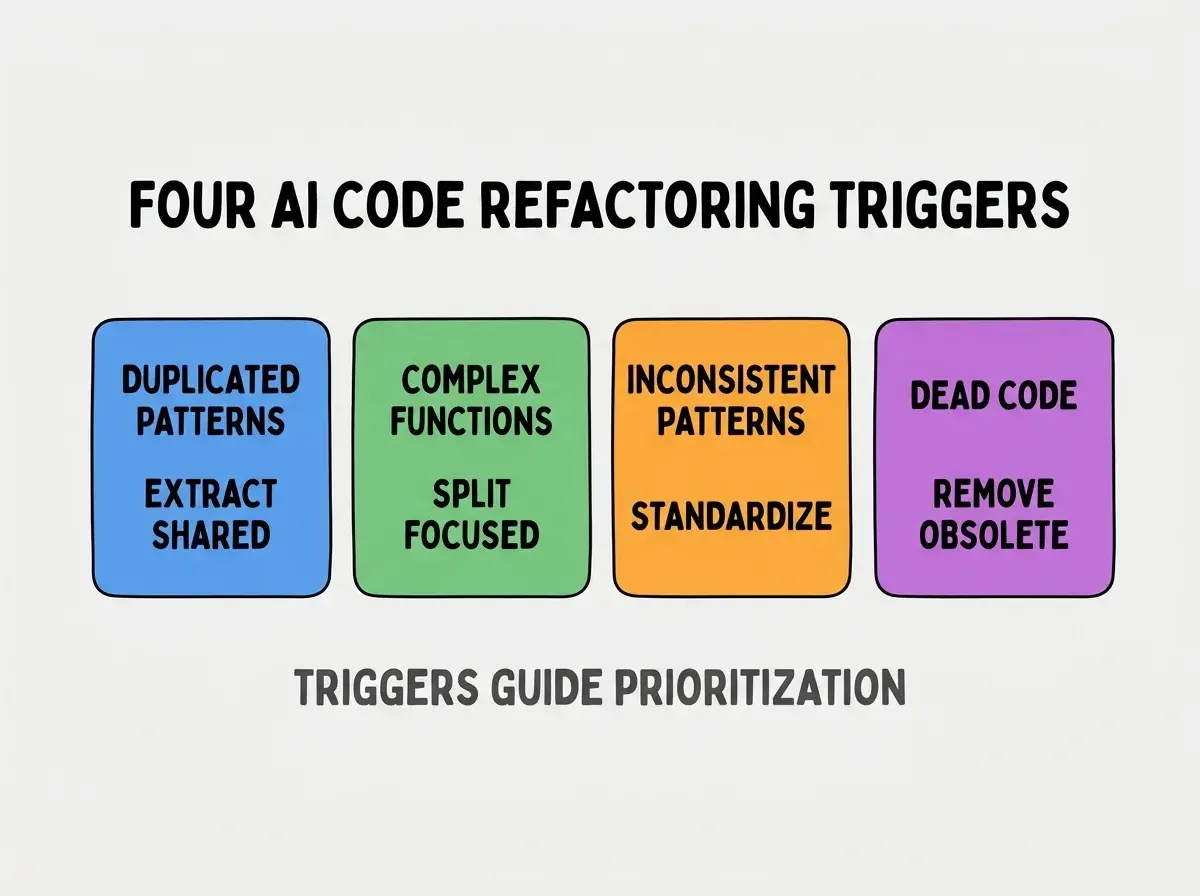
Trigger 3, inconsistent patterns indicating standardization opportunity. AI applies different solutions to similar problems based on prompt phrasing. Standardization improves codebase consistency.
Trigger 4, dead code accumulation requiring removal. AI generates code for changing requirements without removing obsolete code. Removal reduces cognitive load.
What Makes AI Code Different To Refactor
Three differences distinguish AI code refactoring from traditional refactoring.
Difference 1, duplication often more extensive than human written code. AI does not see existing implementations; same logic appears more often in AI code than human code. Extensive duplication changes refactoring scope.
Browse more ship articles
Read more ship articlesDifference 2, patterns more uniform but inconsistent across prompts. AI generates uniform patterns within single prompts but inconsistent patterns across different prompts. Inconsistency between prompts requires standardization.
Difference 3, comments often misleading or incorrect. AI generated comments sometimes describe what code was intended to do rather than what it does. Misleading comments require careful refactoring approach.
The Refactoring Techniques That Work For AI Code
Three techniques work effectively for AI code refactoring.
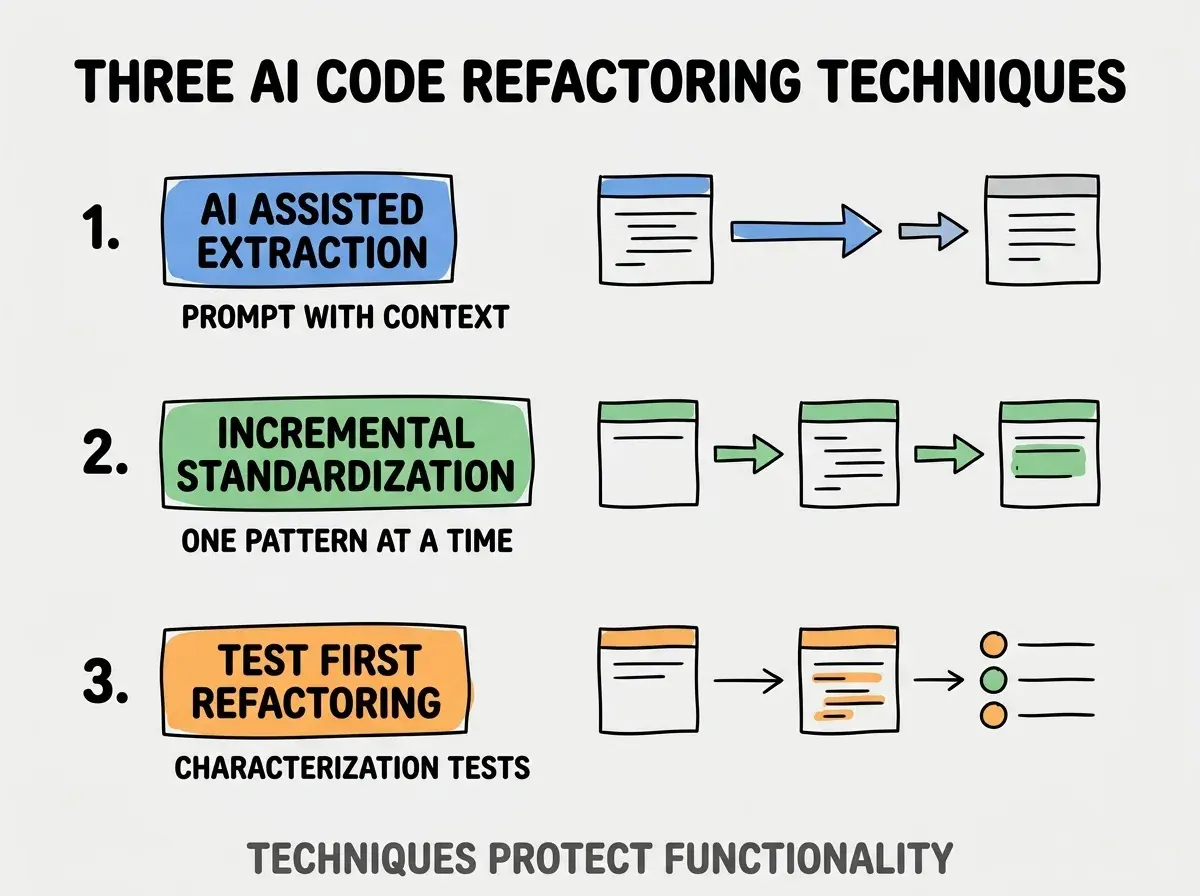
Technique 1, AI assisted extraction with full context. Provide AI with all duplicated instances and ask for shared utility. AI extracts effectively when given complete context.
Technique 2, incremental standardization one pattern at a time. Standardize single pattern across codebase before moving to next pattern. Incremental approach prevents overwhelming complexity.
Technique 3, test first refactoring with characterization tests. Write tests capturing current behavior before refactoring. Tests catch unintentional behavior changes during refactoring.
What Makes Refactoring Sessions Effective
Three patterns separate effective refactoring sessions from sessions that introduce more bugs than they fix.
Pattern 1, single concern per refactoring session. Sessions addressing single concern produce safer changes than sessions addressing multiple concerns. Focus matters dramatically.
Pattern 2, comprehensive tests before refactoring start. Tests verify behavior preservation. Without tests, refactoring becomes risky guesswork.
Pattern 3, small commits enabling rollback. Small commits limit blast radius of any individual change. Without small commits, rollback becomes complex when issues emerge.
The combination produces refactoring sessions that improve codebase consistently. Without these patterns, refactoring sometimes produces more bugs than it fixes.
How To Plan A Refactoring Initiative
Three planning patterns help refactoring initiatives succeed.
Pattern A, identify highest impact debt first. Not all debt is equal; impact analysis directs effort to highest leverage refactoring. Without analysis, effort often addresses wrong debt.
Pattern B, allocate dedicated refactoring time. Refactoring requires uninterrupted focus; without dedicated time, refactoring stays partial. Allocation produces completion.
Pattern C, communicate refactoring scope clearly. Stakeholders need understanding of refactoring purpose and timeline. Without communication, refactoring looks like delayed feature work.
The combination produces refactoring initiatives that succeed where ad hoc refactoring attempts fail. Without planning, refactoring often gets started without finishing.
The most damaging AI code refactoring mistake is attempting wholesale rewrites instead of incremental improvements. Wholesale rewrites accumulate risk faster than benefits; incremental improvements compound benefits while limiting risk. The fix is to refactor in small focused sessions; address single concern, verify behavior preservation, commit, repeat. Wholesale rewrites that fail produce worse outcomes than no refactoring; incremental improvements that succeed compound over time.
The other mistake is refactoring without comprehensive tests. Tests verify behavior preservation; without tests, refactoring becomes guesswork that introduces bugs. The fix is to invest in tests before refactoring.
A third mistake is refactoring code that will be replaced soon. Effort spent on code about to be deleted is wasted; effort spent on code that will live for years compounds.
A fourth mistake is delegating refactoring entirely to AI. AI assists refactoring effectively but human judgment remains essential for prioritization and verification.
How To Measure Refactoring Success
Three metrics demonstrate refactoring success and justify continued investment.
Metric 1, code duplication metrics over time. Decreasing duplication proves extraction work succeeded. Without measurement, duplication often stays despite refactoring effort.
Metric 2, function complexity scores. Decreasing complexity proves splitting work succeeded. Complexity tools provide objective measurement.
Metric 3, modification time for similar features. Decreasing modification time proves refactoring improved maintainability. Time measurement matches what business cares about.
The combination produces metrics that prove refactoring value. Without metrics, refactoring investment looks like cost rather than investment.
How AI Code Refactoring Will Likely Evolve
Refactoring practices will likely improve as AI tools mature, but fundamental patterns remain stable.
The first likely evolution is AI tools developing better refactoring suggestions. Future AI tools may identify refactoring opportunities automatically. Suggestions enable systematic refactoring that manual identification misses.
The second likely evolution is automated refactoring becoming more capable. Tools that perform safe refactoring automatically reduce manual effort. Automation enables more refactoring than manual approaches sustain.
The third likely evolution is refactoring metrics becoming more standard. Standard metrics enable better justification and prioritization. Standardization spreads refactoring practices.
The combination suggests AI code refactoring will become more tooled over time. Engineers learning refactoring practices now build skills that remain valuable as tools improve.
What This Means For You
AI code refactoring determines long term application maintainability. The four triggers, techniques, and planning patterns produce framework for effective refactoring.
- If you're a senior dev: Refactoring AI code requires adapted techniques. Traditional refactoring skills apply but need modification for AI code specifics.
- If you're an indie hacker: Solo builder refactoring discipline determines project longevity. Without refactoring, AI built projects become unmaintainable; with refactoring, projects continue evolving for years.
- If you're a founder: Engineering team refactoring practices affect long term velocity. Help engineering team prioritize refactoring even when business pressure favors features.
Browse more ship articles
Read more ship articles