Product managers using AI assisted prototyping in 2026 have shifted their workflow in four ways that change how product decisions get made. The shifts include moving from spec documents to working prototypes, from waiting for engineering to building first drafts independently, from imagined user flows to testable user flows, and from feature roadmaps to capability roadmaps. These shifts compress product cycle times by 40-60 percent and change what skills make PMs valuable.
This piece walks through the four workflow shifts, what PMs are saying about effectiveness, what the shifts mean for PM career evolution, and the four mistakes when interpreting PM workflow changes.
Why PM Workflow Changes Matter
PM workflow changes matter because product organization speed depends on PM speed. If PMs move faster, products move faster; if PMs stay slow, AI accelerated engineering hits PM bottlenecks.
The 2026 reality is that PMs who adopted AI assisted prototyping report dramatic productivity gains; PMs who resist face increasing pressure as engineers ship faster than PM specs accommodate.
A 2025 product management survey of 600 PMs at Series A through enterprise companies found that PMs using AI assisted prototyping shipped 2.7x more product decisions per quarter than PMs writing traditional specs only. Workflow change measurably affects PM impact.
The pattern to copy is the way industrial designers shifted from sketches to 3D printed prototypes. The shift compressed feedback cycles dramatically; designers who adapted produced better designs faster. PM workflow shift to prototyping follows the same pattern.
The Four PM Workflow Shifts
Four shifts characterize how PMs are using AI assisted prototyping.
Shift 1, spec documents to working prototypes. Less time on prose specifications; more time on clickable prototypes that demonstrate intent.
Shift 2, waiting for engineering to building first drafts. PMs build first draft features in vibe coding tools; engineers refine into production code.
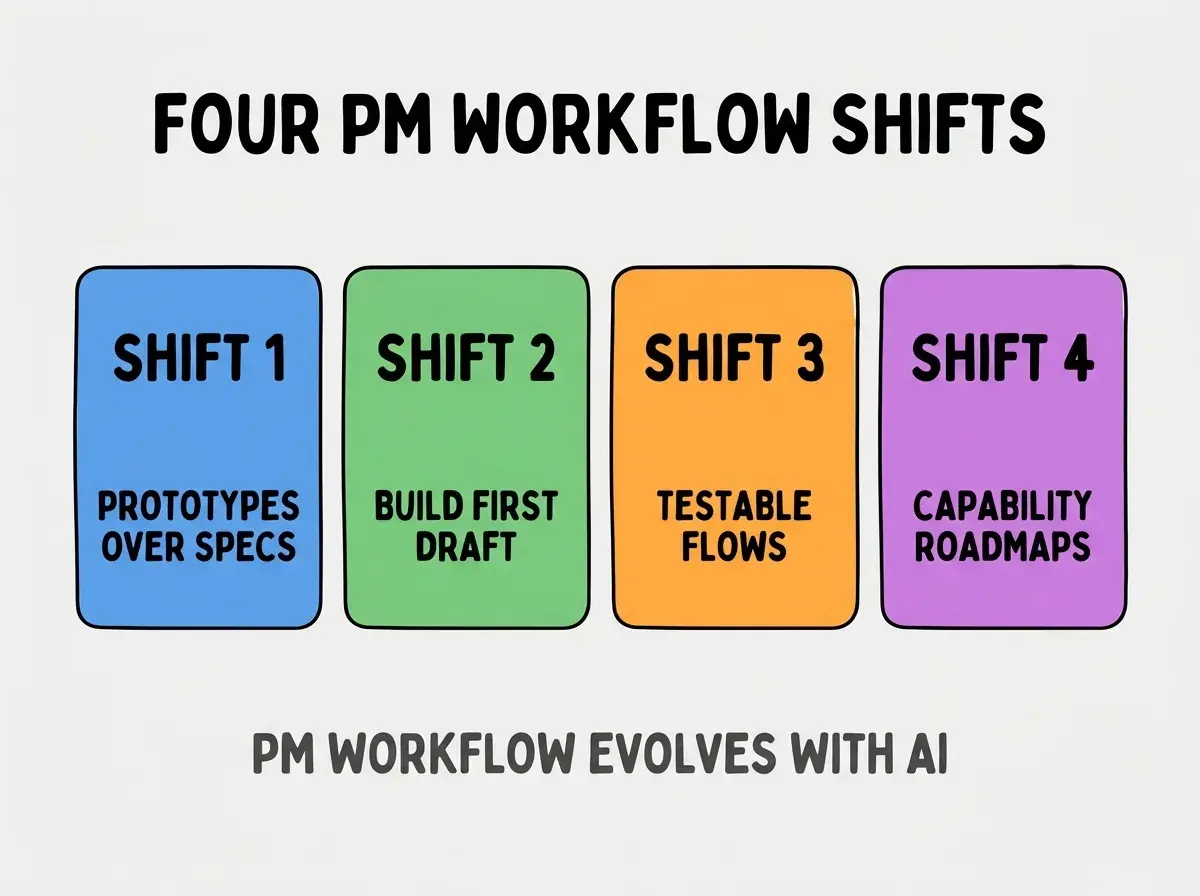
Shift 3, imagined user flows to testable user flows. Working prototypes enable user testing of intended flows before engineering investment.
Shift 4, feature roadmaps to capability roadmaps. Roadmaps shift from specific features to capabilities the product should have; specifics emerge through prototyping.
What PMs Are Saying About Effectiveness
Three findings emerge from PM reports on AI prototyping.
Finding 1, decision quality improves with prototyping. Decisions made on working prototypes outperform decisions made on documents; reality reveals what abstraction hides.
Browse more pulse
Read more pulseFinding 2, engineer relationships improve. Prototypes become shared artifacts; PMs and engineers discuss prototypes rather than negotiate specs.
Finding 3, user research integrates more naturally. Prototypes test with users immediately; user feedback shapes products before engineering investment.
What The Shifts Mean For PM Career Evolution
Three implications matter for PMs navigating workflow change.
Implication 1, prototyping skills become PM core skills. PMs who cannot prototype face career ceiling; prototyping joins core PM toolkit.
Implication 2, engineering relationship skills shift. Less translation between business and engineering; more collaboration on shared artifacts.
Implication 3, decision quality matters more than spec volume. Old PM evaluation rewarded spec quantity; new evaluation rewards decision quality.
What Makes PM AI Prototyping Sustainable
Three patterns separate sustainable PM AI prototyping from temporary experiments.
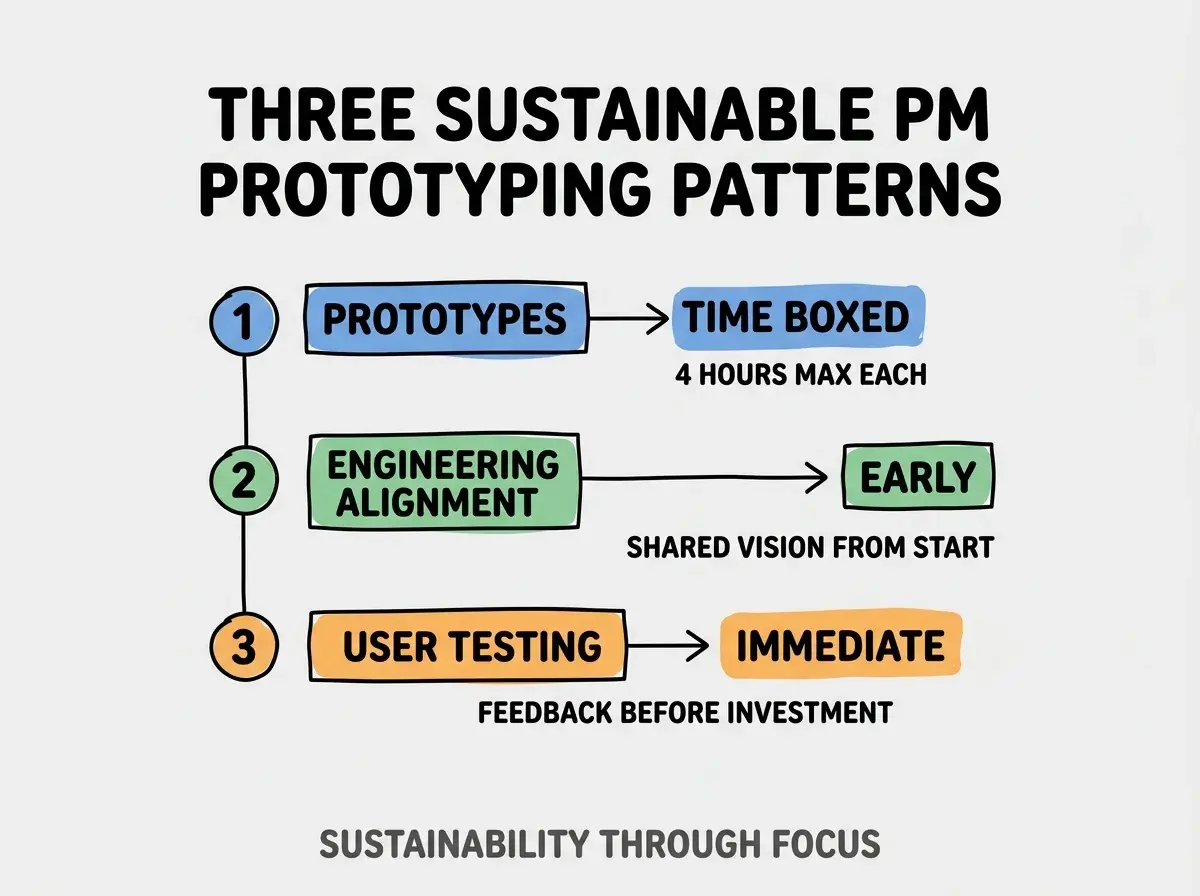
Pattern 1, prototypes time boxed. 4 hours max per prototype prevents prototype perfectionism. Box forces ruthless prioritization.
Pattern 2, engineering alignment early. Engineers see prototypes early; alignment prevents prototypes that engineering cannot reasonably build.
Pattern 3, user testing immediate. Prototypes test with users within days; testing ensures prototypes solve real problems.
The combination produces sustainable PM prototyping. Without these patterns, prototyping becomes ceremony.
How PMs Should Adopt AI Prototyping
Three adoption patterns help PMs shift workflow effectively.
Pattern A, start with simple flows. First prototypes should be single screen flows; complexity grows with skill.
Pattern B, work with engineer mentor. Engineering perspective on prototypes accelerates learning; mentorship helps avoid common pitfalls.
Pattern C, ship one prototype per week as practice. Practice cadence builds skill; weekly skip prevents skill atrophy.
The combination produces sustainable adoption. Without progression, PMs abandon prototyping at first friction point.
Common Questions About PM AI Prototyping
PM AI prototyping raises questions worth addressing directly.
The first question is whether all PMs need to prototype. Most yes; PM roles where prototyping does not apply (deep technical platforms, regulated environments) are exceptions.
The second question is whether prototypes replace specs entirely. No; prototypes complement specs. Specs capture decisions; prototypes demonstrate intent.
The third question is which tools PMs should learn. Lovable or v0 for UI focused PMs; Replit for backend curious PMs. Start with one; add others as needed.
The fourth question is whether prototyping conflicts with engineer responsibility. Initially feels like overstep; engineers usually appreciate clearer intent demonstration.
How PM AI Prototyping Affects Product Organizations
PM AI prototyping affects product organizations in compounding ways. Organizational effects compound across years.
The first compounding effect is product cycle time. Faster cycles produce more iterations; iterations compound learning.
The second compounding effect is decision quality. Working prototypes inform better decisions than abstract specs; quality compounds across decisions.
The third compounding effect is PM career velocity. Adapted PMs advance faster; adoption affects individual trajectories.
The combination produces product organizations that learn faster. Without PM adaptation, AI accelerated engineering hits PM bottlenecks.
How PM Roles Will Likely Evolve
PM roles will likely continue evolving as AI prototyping matures.
The first likely evolution is prototyping becoming required skill. Job descriptions list prototyping as expected; non prototyping PMs face hiring difficulty.
The second likely evolution is PM headcount changes. Faster PMs may mean fewer PMs needed for same scope; or same PMs covering more scope.
The third likely evolution is PM seniority redefinition. Senior PMs become senior through judgment, not through years; AI compresses traditional senior signals.
The combination produces PM role evolution that requires individual adaptation. Without adaptation, PM careers stall.
The most damaging PM AI prototyping mistake is treating prototypes as specifications. Prototypes demonstrate intent; specifications capture commitments. The fix is to use prototypes for intent and specs for commitments; both have roles. PMs who confuse the two produce prototypes engineers cannot build from and specs that miss what prototypes would have revealed.
The other mistake is over investing in prototype polish. Prototypes communicate intent; polish does not improve intent communication and consumes time.
A third mistake is skipping user testing on prototypes. Prototypes without user testing produce same blindness as specs without testing; testing is the value.
A fourth mistake is treating PM prototyping as engineering replacement. Engineering judgment about feasibility, performance, security all matter; prototypes do not address these.
What This Means For You
Product managers using AI assisted prototyping have shifted PM workflow in measurable ways. The four shifts, PM findings, and adoption patterns produce framework for PM workflow evolution.
- If you're a product manager: Build prototyping skills now; the workflow change is industry wide and PMs without prototyping skills face career ceiling.
Browse more pulse
Read more pulse