To choose effective monetization strategies for AI built products, recognize the four monetization patterns that work for different product types (subscription pricing for ongoing value products, usage based pricing for variable consumption products, one time purchase for tools with discrete value, and freemium with paid tiers for products with broad and narrow use cases), see what makes each pattern sustainable, and apply the patterns matching your product. The monetization choice matters because revenue model affects scaling sustainability and customer relationship.
This piece walks through the four monetization patterns, what makes each sustainable, the specific implementation patterns, and the four mistakes when choosing monetization strategy.
Why Monetization Strategy Matters For AI Built Products
Monetization strategy matters because revenue model determines product sustainability. The matter; products without sustainable monetization eventually fail regardless of feature quality.
The 2026 reality is that AI built products face specific monetization considerations beyond traditional products. AI costs scale with usage; monetization must cover AI costs while preserving margins.
A 2025 indie hacker monetization study of 800 AI built products found that products with monetization aligned to AI cost structure achieved 47 percent higher gross margins compared to products with misaligned monetization. The alignment matters dramatically for AI built product sustainability.
The pattern to copy is the way utility companies aligned pricing with usage. Variable pricing matched variable costs; aligned pricing produced sustainable margins. AI built products follow similar pattern; pricing aligned with AI usage produces sustainable margins where flat pricing often does not.
The Four Monetization Patterns
Four patterns characterize effective AI built product monetization.
Pattern 1, subscription pricing for ongoing value products. Monthly or annual recurring revenue. Subscriptions match products with continuous value delivery.
Pattern 2, usage based pricing for variable consumption. Per request, per generation, per processing unit. Usage based aligns revenue with cost variability.
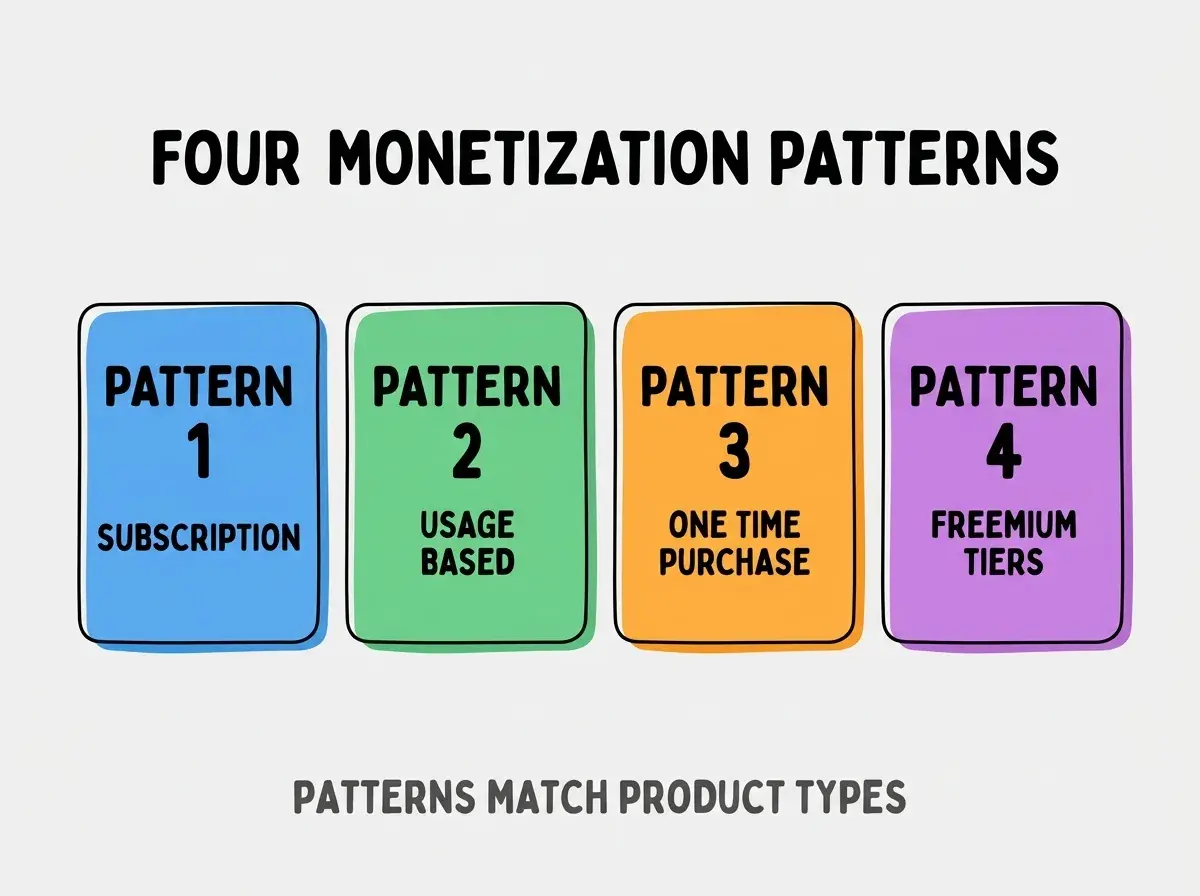
Pattern 3, one time purchase for tools with discrete value. Single purchase for utility products. One time purchase suits products with bounded value delivery.
Pattern 4, freemium with paid tiers for broad plus narrow use. Free tier captures users; paid tier monetizes power users. Freemium suits products with usage spectrum.
What Makes Each Pattern Sustainable
Three patterns characterize sustainable monetization implementation.
Pattern 1, pricing covers AI costs with margin. AI costs vary with usage; pricing must accommodate variable costs. Without margin coverage, product loses money on usage.
Browse more grow articles
Read more growPattern 2, pricing matches customer value perception. Customers pay for perceived value; misaligned pricing produces churn. Value alignment matters dramatically.
Pattern 3, pricing supports growth investment. Margins fund growth; tight margins limit growth investment capability. Margin matters for growth.
The Specific Implementation Patterns
Three implementation patterns help AI built products execute monetization.
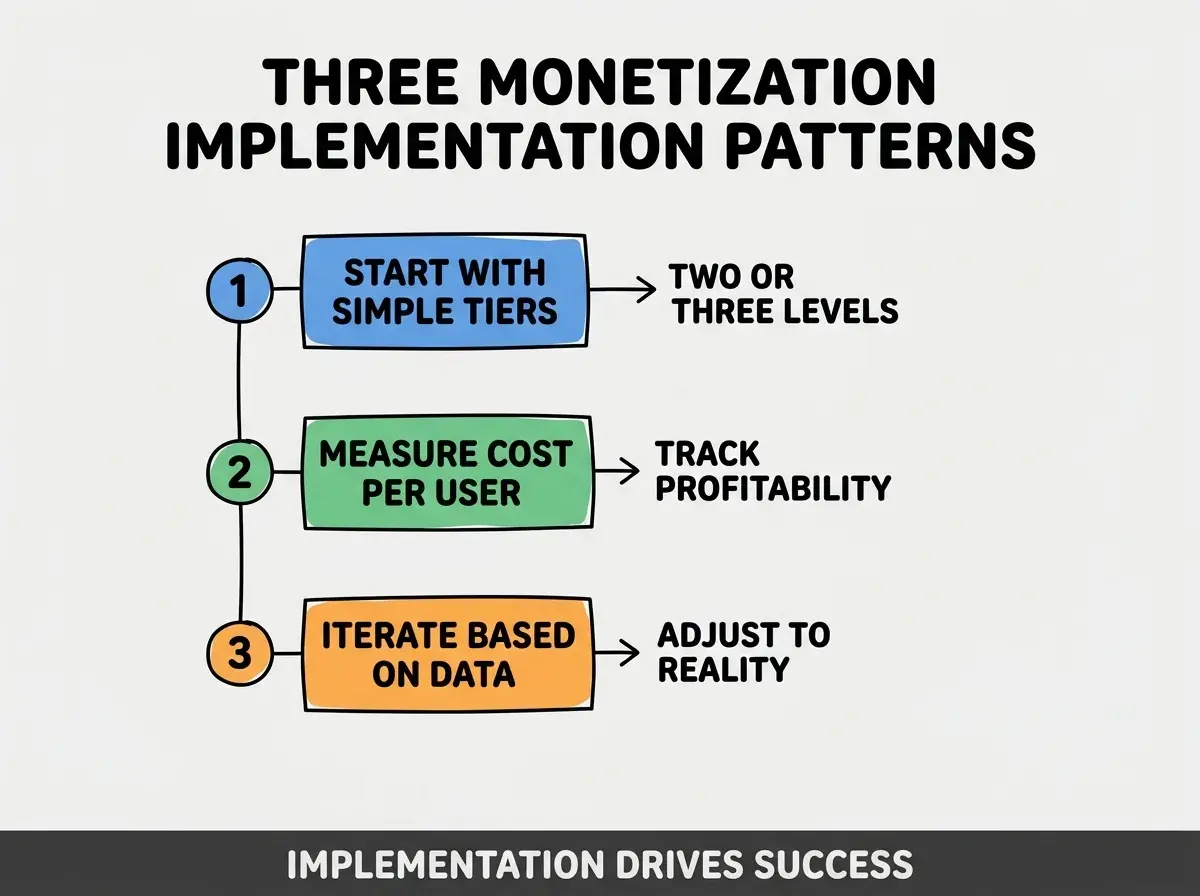
Pattern 1, start with simple tiers (two or three levels). Complexity overwhelms; simple tiers enable customer choice. Starting simple permits later refinement.
Pattern 2, measure cost per user explicitly. Knowing costs enables knowing profitability. Without cost measurement, pricing decisions happen without data.
Pattern 3, iterate pricing based on data not assumption. Data reveals pricing reality; assumptions often miss. Iteration matters for pricing optimization.
What Makes Monetization Choice Sustainable
Three patterns separate sustainable monetization from problematic patterns.
Pattern 1, monetization model matches product economics. Different products have different economics; matching matters. Without matching, monetization produces margin pressure.
Pattern 2, monetization evolves with product maturity. Early stage products often need different monetization than mature products. Evolution matters for sustainability.
Pattern 3, customer relationship aligned with monetization choice. Subscription customers expect different relationship than one time purchase customers. Alignment matters for retention.
The combination produces monetization that supports long term product sustainability. Without these patterns, monetization often constrains product growth.
How To Choose Initial Monetization
Three choice patterns help initial monetization decisions.
Pattern A, start with simplest model that fits product. Complexity later if needed; simplicity from start. Without simplicity, customers face decision friction.
Pattern B, validate willingness to pay before launch. Customer interviews, pre orders, beta pricing. Without validation, monetization launches blind.
Pattern C, plan for monetization evolution. Pricing changes are normal; plan for change. Without planning, change becomes stressful.
The combination produces initial monetization that enables learning. Without choice patterns, initial monetization often locks in assumptions.
The most damaging monetization mistake for AI built products is choosing pricing model without understanding AI cost structure. AI costs scale with usage; flat pricing for variable usage products produces margin loss as usage grows. The fix is to understand AI cost structure first; choose pricing model that covers costs while delivering value. Products with cost aware pricing scale sustainably; products without often hit margin crises that pricing changes cannot fully fix.
The other mistake is mimicking competitor pricing without understanding their economics. Competitor economics may differ from yours; copying produces problems. The fix is to base pricing on your economics not theirs.
A third mistake is over complicating pricing tiers. Complex tiers overwhelm customers and slow decisions. The fix is to start simple and add complexity only when needed.
A fourth mistake is treating monetization as set and forget. Pricing requires periodic review and iteration; without review, pricing drifts from optimal.
How To Handle Specific Monetization Scenarios
Three scenarios deserve specific approaches.
Scenario A, AI heavy product with high variable costs. Usage based pricing aligns revenue with costs. Without alignment, heavy users destroy margins.
Scenario B, AI light product with low variable costs. Subscription or one time purchase work well. Variable pricing adds complexity without benefit.
Scenario C, mixed AI and non AI features. Hybrid pricing with usage component for AI features. Hybrid handles mixed cost structure.
The combination produces scenario specific monetization. Without specific approaches, generic monetization produces suboptimal outcomes.
How AI Product Monetization Will Likely Evolve
AI product monetization will likely continue evolving as AI costs change.
The first likely evolution is AI cost reduction enabling broader pricing options. Lower AI costs enable lower pricing or higher margins. Cost evolution matters for pricing flexibility.
The second likely evolution is usage based pricing standardization. As more AI products adopt usage based, customer familiarity grows. Standardization reduces adoption friction.
The third likely evolution is value based pricing emerging. Pricing tied to customer value rather than cost. Value based requires measurement that current tools lack.
The combination suggests monetization will continue evolving. Founders learning patterns now build skills that remain valuable as monetization matures.
Common Questions About AI Product Monetization
AI product monetization raises questions worth addressing directly.
The first question is whether to start free or paid. Depends on product category; both can work. Free works for distribution heavy products; paid works for clear value products.
The second question is how to price during early stage. Charge enough to validate willingness to pay; do not undercut to acquire users at unsustainable prices. Validation matters more than acquisition.
The third question is whether to offer free trials. Yes for subscription products; trials reduce purchase risk. Not always for one time purchase products.
What This Means For You
Monetization strategy determines AI built product sustainability. The four patterns, implementation approaches, and choice patterns produce framework for sustainable monetization.
- If you're a founder: Match monetization to product economics; mismatched monetization produces problems no feature investment can fix.
- If you're an indie hacker: Solo builders especially need monetization aligned with AI costs. Without alignment, scaling produces margin crises.
- If you're a senior dev: Understanding monetization helps engineering decisions. Decisions affect cost structure that monetization must accommodate.
Browse more grow articles
Read more grow