Lifetime deals make sense for vibe coded SaaS in four specific scenarios: early stage validation, growth funding without dilution, post launch attention burst, and competitive market entry. Outside these scenarios, lifetime deals destroy long term value. Implementation requires careful pricing, clear scope, and operational readiness for influx of customers. Done right, lifetime deals fund growth and validate product market fit. Done wrong, they create unsustainable customer base and destroy unit economics.
This piece walks through the four scenarios where lifetime deals work, the implementation patterns, what makes them sustainable, and the four mistakes builders make on lifetime deals.
Why Lifetime Deals Matter For Vibe Coded SaaS
Lifetime deals matter because indie hackers and bootstrapped founders need capital alternatives. Traditional capital expensive; lifetime deals provide capital at cost of long term recurring revenue.
The 2026 reality is that lifetime deal platforms (AppSumo, Dealify, similar) have matured to where serious revenue possible. Maturation makes lifetime deals strategic option, not just desperate move.
A 2025 indie hacker survey of 400 SaaS founders found that lifetime deal launches generated average $30K-100K in initial revenue, with 23 percent reporting deals as best capital efficiency move. Lifetime deals work when used strategically; without strategy, they damage businesses.
The pattern to copy is the way restaurants offer founder memberships. Founder memberships fund opening; memberships expire eventually. Lifetime deals follow similar logic; cap eventually limits damage.
The Four Scenarios Where Lifetime Deals Work
Four scenarios make lifetime deals strategic.
Scenario 1, early stage validation. Lifetime deals validate willingness to pay and produce feedback at scale.
Scenario 2, growth funding without dilution. Capital from lifetime deals funds growth without equity dilution.
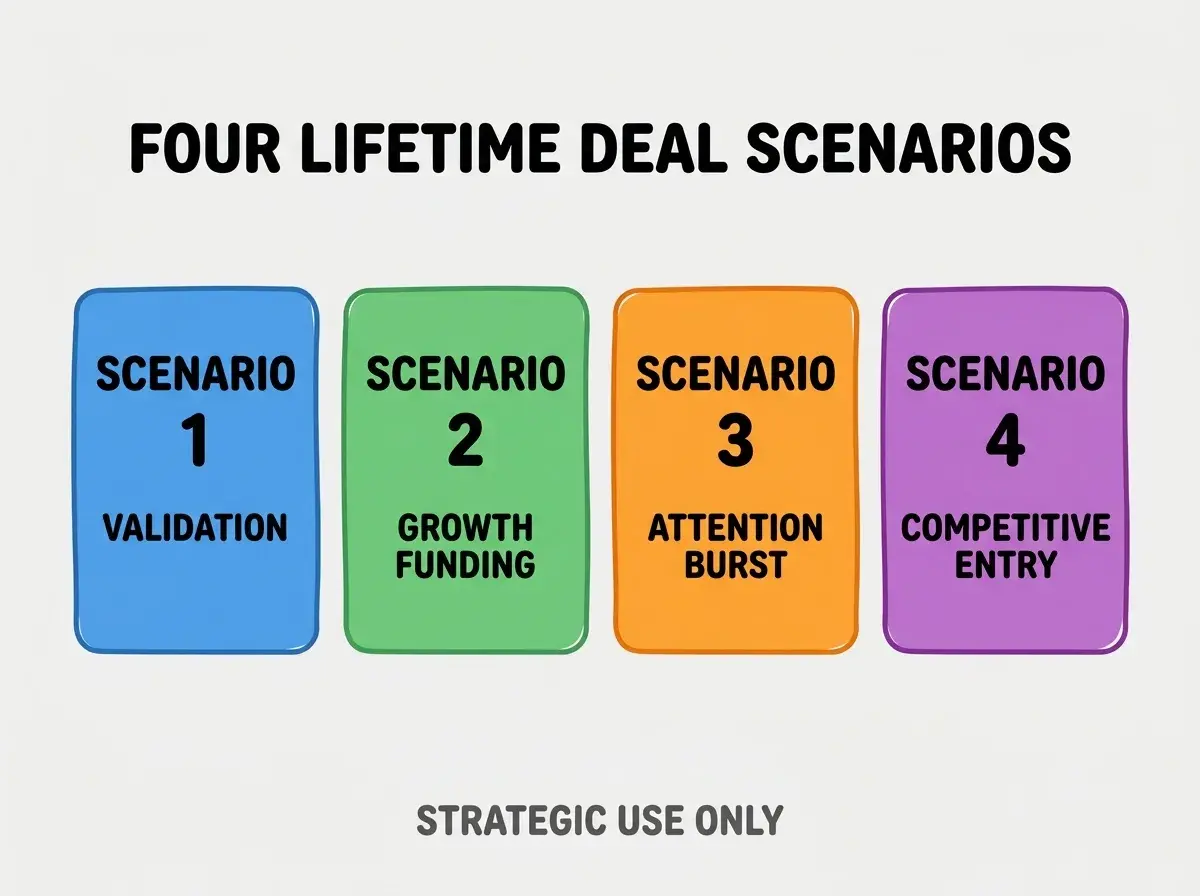
Scenario 3, post launch attention burst. Lifetime deals amplify launch attention; attention compounds awareness.
Scenario 4, competitive market entry. Lifetime deals differentiate from incumbents; differentiation attracts users.
How To Implement Lifetime Deals Well
Three implementation patterns produce successful deals.
Pattern 1, careful pricing relative to lifetime value. Price to make lifetime deal NPV positive after 18-24 months; below produces loss.
Browse more grow articles
Read more growPattern 2, clear scope and limitations. Specify what is included; what is not. Specify quantity limits if any.
Pattern 3, operational readiness for influx. Customer support, server capacity, onboarding all ready. Influx breaks unprepared businesses.
What Makes Lifetime Deals Sustainable
Three patterns separate sustainable lifetime deals from damage.
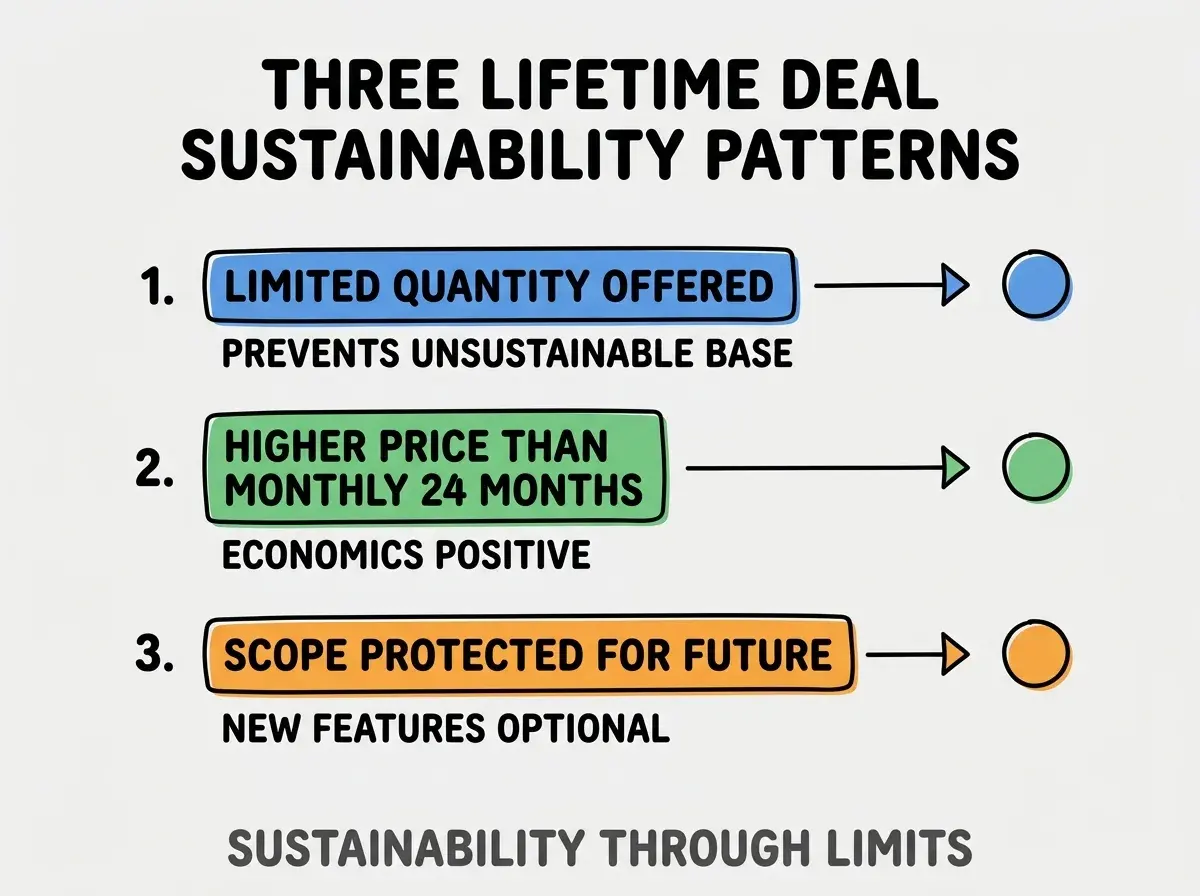
Pattern 1, limited quantity offered. Limited quantity prevents unsustainable customer base; cap matters.
Pattern 2, higher price than monthly 24 months. Pricing matches typical lifetime; below produces loss.
Pattern 3, scope protected for future. New features may require new pricing; scope protection enables future.
The combination produces sustainable lifetime deals. Without these patterns, deals damage business.
How To Choose Lifetime Deal Platform
Three patterns guide platform choice.
Pattern A, AppSumo for largest audience. Largest audience, highest revenue potential, most rules.
Pattern B, Dealify for less competitive market. Smaller audience, fewer rules, often better terms.
Pattern C, direct sales via your site for control. Maximum control, requires marketing, less audience.
Common Questions About Lifetime Deals
Lifetime deals raise questions worth addressing directly.
The first question is whether to do lifetime deals at all. Yes if scenario fits; no otherwise. Strategy required.
The second question is what fees platforms charge. AppSumo 70 percent typical; competitors lower. Match to expected volume.
The third question is whether to limit features for lifetime customers. Sometimes; future features may justify new pricing.
The fourth question is how to handle customer support burden. Usually significant; preparation required.
How Lifetime Deals Affect Business Long Term
Lifetime deals affect business in compounding ways. Effects compound across years.
The first compounding effect is customer base composition. Lifetime customers different from monthly customers; composition affects support and feedback.
The second compounding effect is unit economics. If priced wrong, lifetime deals destroy unit economics permanently.
The third compounding effect is growth funding. If priced right, lifetime deals fund growth that compounds.
The combination produces business outcomes shaped by lifetime deal execution. Without strategy, lifetime deals often damage.
How To Recover From Bad Lifetime Deal
Three patterns help recover from poorly executed deals.
Pattern A, grandfathered scope on lifetime customers. Old features lifetime; new features paid. Limits ongoing damage.
Pattern B, separate product for new customers. New product line outside lifetime deal scope. Enables new pricing.
Pattern C, sunset clause if possible. Some lifetime deals can be sunset legally; check terms.
Common Mistakes On Lifetime Deals
Lifetime deals attract specific common mistakes.
Mistake pattern 1, pricing below 24 month equivalent. Below 24 months produces loss; loss compounds.
Mistake pattern 2, no quantity limit. Unlimited deals produce unsustainable customer base.
Mistake pattern 3, no scope protection. Without scope protection, future features must be lifetime too.
Mistake pattern 4, operational unpreparedness. Influx breaks unprepared businesses.
The most damaging lifetime deal mistake is doing lifetime deals to fix bad unit economics. Lifetime deals do not fix unit economics; they crystallize them. The fix is to ensure unit economics work first; then consider lifetime deals as growth amplifier. Founders who fix unit economics first benefit from lifetime deals; founders who use lifetime deals as fix damage businesses permanently.
The other mistake is doing lifetime deals without operational readiness. Influx breaks unprepared businesses; preparation matters.
A third mistake is missing the customer support burden. Lifetime customers expect lifetime support; cost continues forever.
A fourth mistake is treating lifetime deal as one off event. Lifetime deals create lifetime obligations; treat strategically.
What This Means For You
Lifetime deals make sense for vibe coded SaaS in specific scenarios with careful implementation. The four scenarios, implementation patterns, and sustainability approaches produce lifetime deals that fund growth rather than damage business.
- If you're an indie hacker: Evaluate scenarios before considering lifetime deals; strategy beats opportunism.
Browse more grow articles
Read more grow