To evaluate whether an AI-built MVP is investor-ready in 2026, check it against four readiness gates that investors consistently use (the demo works reliably for non-technical viewers, the codebase is professional enough that a hired CTO would not need to rewrite it, the metrics show real usage rather than vanity counts, and the founder can explain the technical decisions clearly), fix any gaps before pitching, and recognize that "investor-ready" today still requires substantial work beyond getting a demo running. The bar for AI-built MVPs has risen as investors have seen many; differentiation comes from rigor, not from existence.
This piece walks through the four readiness gates, what investors actually check during due diligence, the patterns that pass and fail, and the four mistakes founders make when pitching AI-built MVPs to investors.
Why the Bar Is Higher Than It Was
In 2023, an AI-built MVP that worked at all impressed investors. By 2026, investors have seen hundreds of AI-built demos and have learned to differentiate the substantive ones from the impressive-but-shallow ones. The bar has risen accordingly.
The 2026 reality is that investors apply increasing scrutiny to AI-built MVPs because they have seen too many that fall apart on examination. Founders who anticipate the scrutiny and prepare accordingly raise faster than founders who treat the demo as proof enough.
A 2025 First Round Capital portfolio analysis of 200 AI-built MVP pitches found that 73 percent failed initial technical due diligence even though the demo worked. The most common failure modes were: poor codebase quality (38 percent), lack of real user data (28 percent), and founder inability to explain technical decisions (23 percent). The implication is that "demo works" is necessary but not sufficient; investor-readiness requires the substantive work behind the demo. Treat the demo as the start of the conversation, not the close.
The pattern to copy is the way real estate inspections work for home sales. The home looks great in showings; the inspection reveals what is actually load-bearing. Investor due diligence for AI-built MVPs follows the same pattern; the demo is the showing, the technical and metrics review is the inspection.
The Four Readiness Gates
Four gates consistently determine whether an AI-built MVP passes investor scrutiny. Failing any one is usually disqualifying.
Gate 1, the demo works reliably. Not just for the founder; for non-technical viewers across multiple browsers and devices. Demos that break under unfamiliar use kill investor confidence immediately.
Gate 2, the codebase is professional. A hired CTO should be able to take it over without rewriting. AI-generated codebases vary wildly; investor-grade codebases need explicit attention to structure and quality.
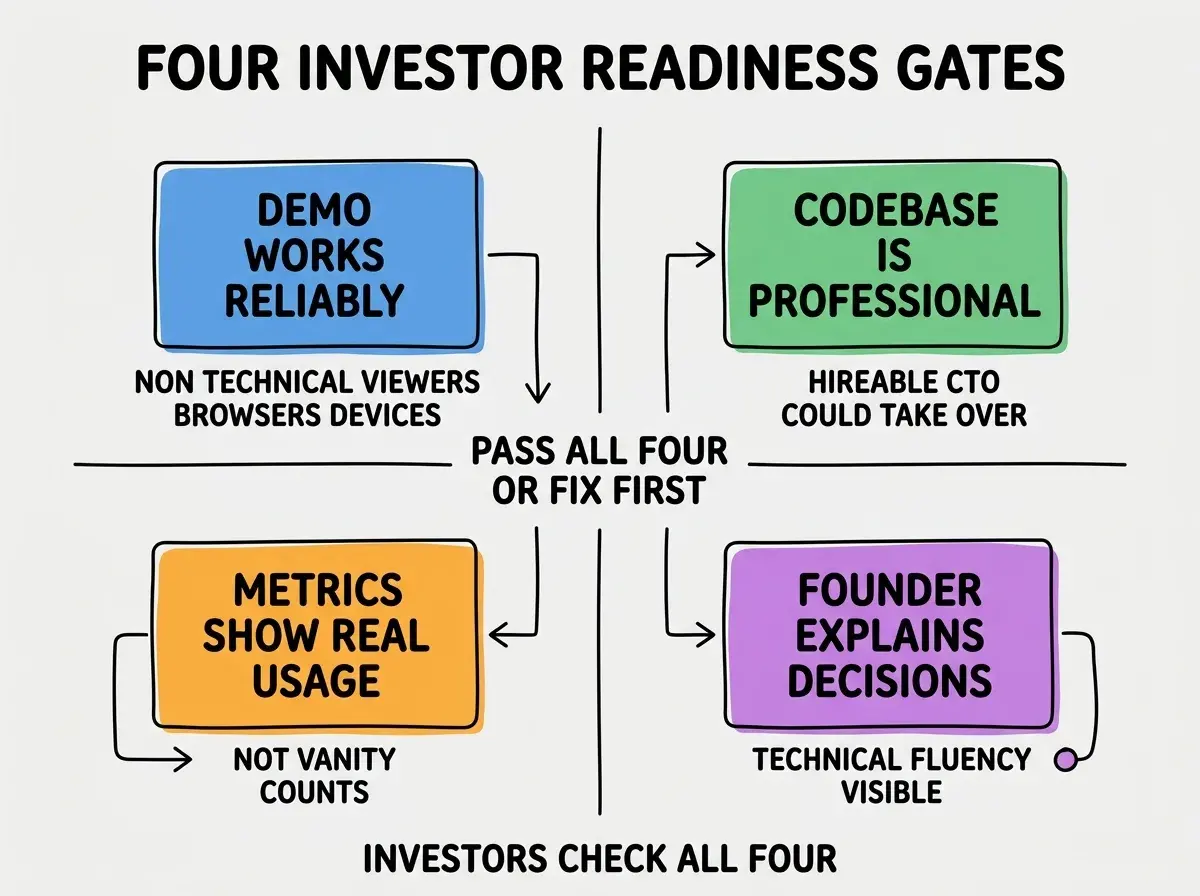
Gate 3, metrics show real usage. Vanity metrics (signups, total accounts) are insufficient. Real metrics (DAU, retention, revenue) demonstrate genuine traction.
Gate 4, founder can explain technical decisions. Investors test technical fluency by asking why specific decisions were made. Founders who cannot answer raise red flags about long-term technical leadership.
What Investors Actually Check During Due Diligence
Three checks consistently appear in AI-built MVP due diligence. Knowing them helps prepare appropriately.
Check 1, code review by a friendly engineer. Investors often ask a portfolio CTO or technical advisor to spend an hour with your codebase. The goal is identifying serious risks, not perfection.
Browse more fundraising guides
Read more foundations articlesCheck 2, demo with edge cases. Investors deliberately try things you did not show: invalid inputs, multiple browser tabs, mobile viewing. Demos that break under unexpected use undermine the polish argument.
Check 3, founder technical interview. 30-60 minutes of questions about how things work. Why this database; how does auth work; what would scaling require. Fluency matters more than perfect answers.
The Patterns That Pass and Fail
Three patterns separate AI-built MVPs that pass due diligence from those that fail.
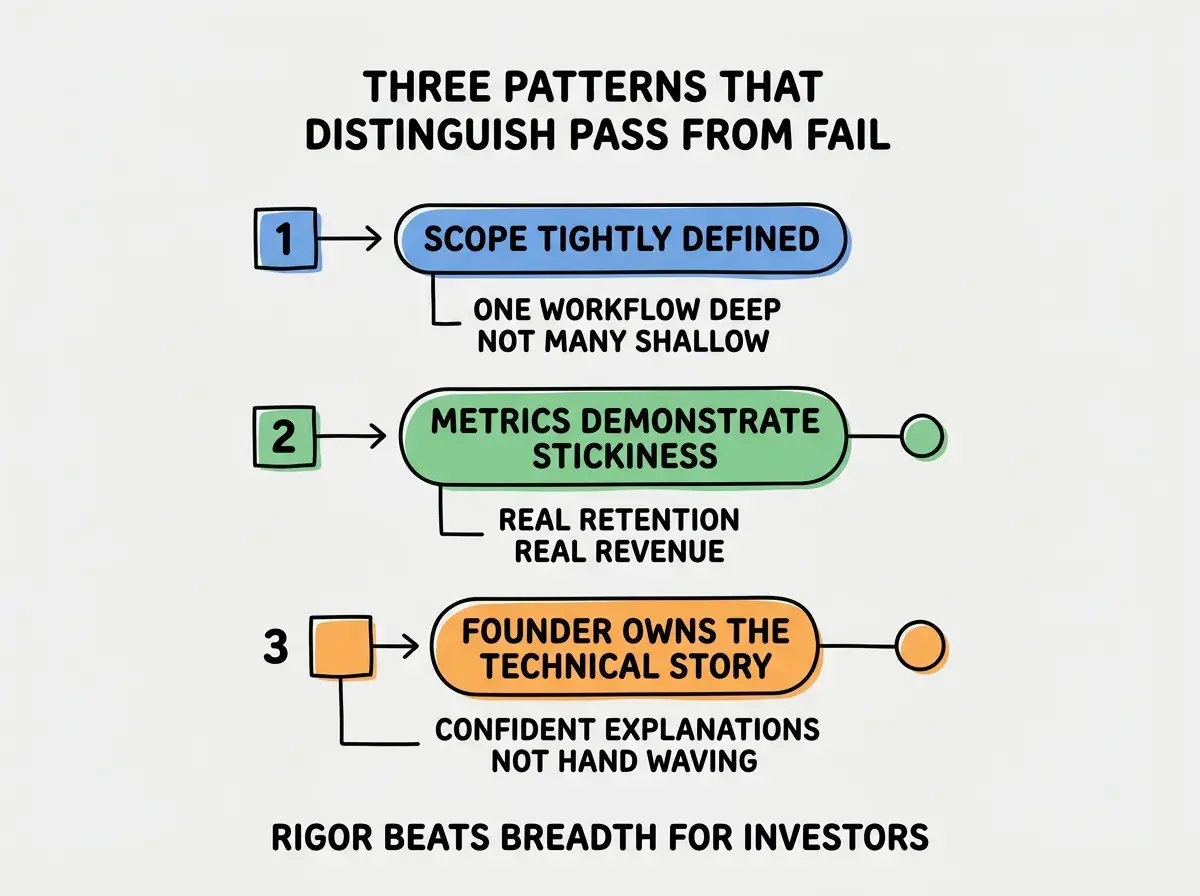
Pattern 1, scope tightly defined. One workflow done well beats five workflows done shallowly. Investors prefer focused excellence over scattered effort.
Pattern 2, metrics demonstrate stickiness. Real retention curves and revenue trends matter more than absolute numbers. A small product with strong retention beats a larger product with leaky retention.
Pattern 3, founder owns the technical story. Confident, specific explanations of why decisions were made. Hand-waving or "the AI built that" answers undermine the entire pitch.
How Investors Differ From Engineers in What They Check
Three differences between investor due diligence and engineering review help calibrate preparation.
Difference 1, investors care about defensibility, not perfection. They check whether the codebase is good enough to build on, not whether it follows every best practice. Strategic decisions matter more than tactical cleanliness.
Difference 2, investors look for technical leadership signals. Can the founder make good technical decisions going forward? The current state matters less than the trajectory and judgment displayed.
Difference 3, investors verify the metrics personally. They will ask to see the actual analytics dashboard, not just slides. Curated screenshots without dashboard access raise suspicion.
The combination shapes preparation differently than engineering review would. Founders who understand the differences prepare appropriately; founders who treat investor review as engineering review over-invest in the wrong areas.
How to Fix Common Gaps Before Pitching
Three remediation patterns address the most common AI-built MVP gaps.
Pattern A, hire a senior engineer for a 2-week codebase audit. Have them produce a written report of strengths and weaknesses; fix the highest-priority issues before any investor sees code.
Pattern B, instrument analytics if you have not. Even basic PostHog or Mixpanel setup produces real metrics. Without instrumentation, you cannot show retention; without retention data, investors discount your traction claims.
Pattern C, prepare a technical decisions document. Write 1-2 pages explaining the major technical choices and why. The document doubles as practice for the technical interview and as material for the data room.
The combination addresses what investors check. Without addressing these gaps, AI-built MVPs face high failure rates in due diligence; with them, the conversion to term sheet improves substantially.
The most damaging investor-pitch mistake for AI-built MVPs is pretending the AI assistance did not exist. Founders sometimes describe their MVP as "we built" without acknowledging the AI tools used. Sophisticated investors notice (the codebase patterns are obvious to experienced reviewers); the perceived dishonesty damages trust. The fix is to be transparent about AI usage and frame it as a competitive advantage. Founders who lead with AI-assisted development as a strength raise at higher valuations than founders who try to hide it. Honesty plus framing beats concealment for investor conversations in 2026.
The other mistake is treating investor-readiness as a one-time achievement. The bar continues rising as investors see more AI-built MVPs. What was investor-ready in early 2025 might fall short by mid-2026. The fix is to continue improving the four gates over time even after raising; the next round will face higher scrutiny than this one. Continuous improvement is the only sustainable approach to investor readiness.
A third mistake is cherry-picking metrics that look good while ignoring metrics that look bad. Investors check both; they specifically ask about the metrics you do not show. The fix is to lead with strengths but be prepared to discuss weaknesses honestly. Founders who acknowledge gaps and explain plans to address them build more credibility than founders who present only the favorable view.
What This Means For You
Investor readiness for AI-built MVPs is achievable in 2026 but requires deliberate work beyond getting the demo running. The four gates and remediation patterns produce reliable results.
- If you're a founder: Apply the four gates honestly to your own MVP. Fix gaps before pitching; the cost of preparation is far less than the cost of failed rounds.
- If you're changing careers into founder roles: Study how investors evaluate technical work even before you have an MVP to evaluate. The framework shapes how you build.
- If you're a student: Apply the four gates to portfolio projects. The discipline of building toward an external bar improves the work substantially.
Browse more fundraising and investor guides
Read more foundations articles