The economic impact question of whether AI built software will crash prices does not have a simple yes or no answer. Four economic forces are simultaneously at play: production cost reduction (downward pressure), supply expansion (downward pressure), differentiation requirements (upward pressure), and integration cost dominance (upward pressure). Net effect varies by software category. Commodity software faces price pressure; differentiated software does not. Understanding the forces helps predict pricing in your specific market.
This piece walks through the four economic forces, how they interact across software categories, what the patterns mean for builders and buyers, and the four mistakes when interpreting AI economic impact.
Why AI Software Pricing Predictions Matter
AI software pricing predictions matter because pricing shapes business decisions. Builders deciding what to build, buyers deciding what to pay, investors deciding what to fund all need accurate predictions.
The 2026 reality is that simplistic predictions ("AI will crash prices" or "AI will not affect prices") miss the nuanced reality. Different categories face different dynamics; aggregation hides important variation.
A 2025 SaaS pricing analysis of 1,200 categories found that 28 percent of software categories experienced 30 percent or larger price drops in the past 18 months attributed to AI driven supply expansion, while 15 percent of categories experienced price increases due to AI capability differentiation. The variance is large; aggregation is misleading.
The pattern to copy is the way economists analyze technology impacts on industries. Different industries experience different effects from same technology. AI impact on software follows the same pattern; sector specific analysis beats sector wide claims.
The Four Economic Forces
Four forces simultaneously affect software prices.
Force 1, production cost reduction (downward). Building software costs less with AI; lower costs enable lower prices.
Force 2, supply expansion (downward). More builders shipping software increases supply; supply expansion pressures prices.
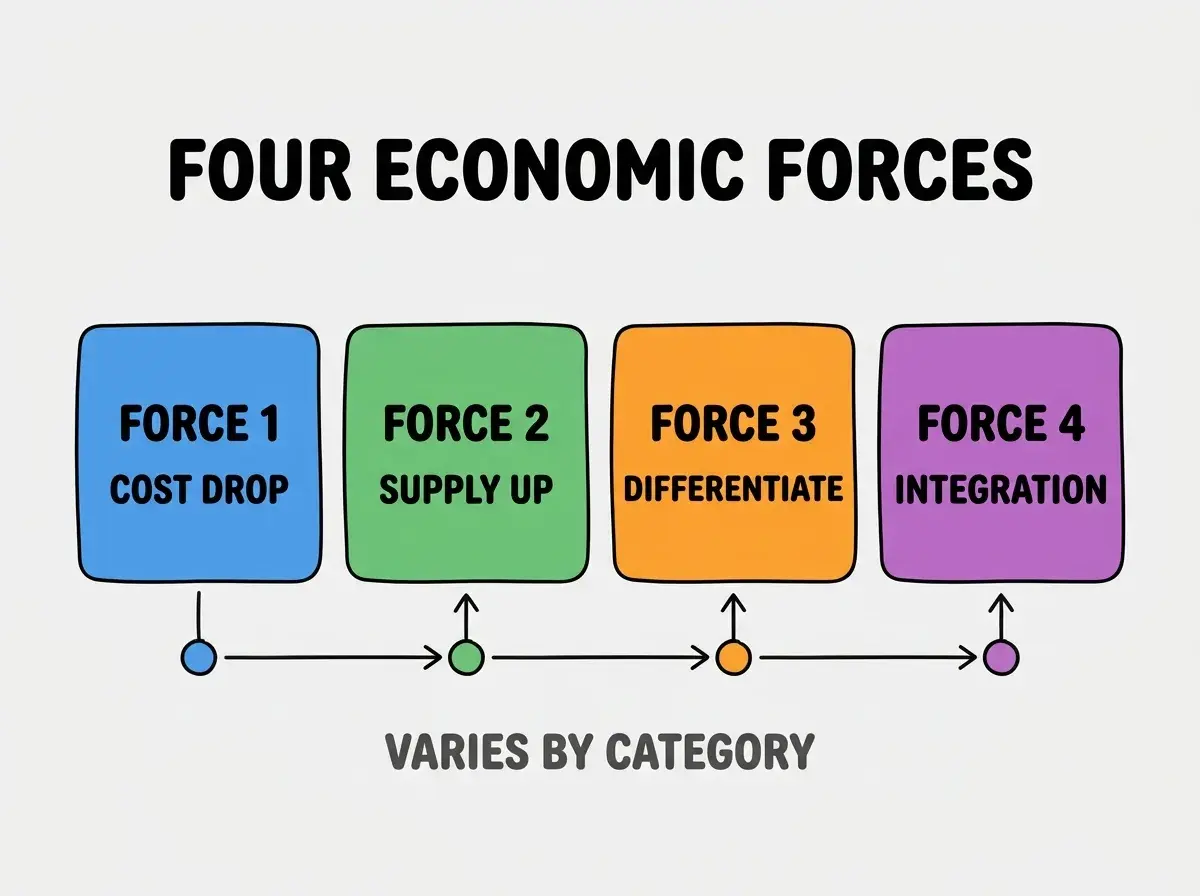
Force 3, differentiation requirements (upward). Standing out in expanded supply requires investment; differentiation costs push prices up.
Force 4, integration cost dominance (upward). Integration with existing systems remains expensive; integration cost dominates total cost.
How Forces Interact Across Software Categories
Three category patterns characterize force interactions.
Category 1, commodity software faces compression. Simple tools with clear specs face full force of cost reduction plus supply expansion. Prices drop substantially.
Browse more pulse
Read more pulseCategory 2, differentiated software faces stable pricing. Software with strong differentiation captures supply expansion benefit through better products at similar prices.
Category 3, integration heavy software faces upward pressure. Enterprise software with complex integration needs faces integration cost dominance; integration cost grows even as production cost falls.
What The Patterns Mean For Builders
Three implications matter for builders facing pricing dynamics.
Implication 1, choose category strategically. Building in commodity categories means competing on price; differentiated categories enable margin preservation.
Implication 2, invest in differentiation. Differentiation moves you from commodity to premium category; investment pays back through pricing power.
Implication 3, address integration if relevant. Integration heavy software commands premium because integration matters; lean into integration where applicable.
What The Patterns Mean For Buyers
Three implications matter for software buyers.
Implication 1, expect compression in commodity tools. Price comparison shopping in commodity categories pays back; tools commoditizing face downward pressure.
Implication 2, expect stable pricing in differentiated tools. Differentiated tools maintain pricing; switching for price savings rarely available.
Implication 3, integration cost dominates total cost. True cost includes integration; license price misleads about total spend.
What Makes Pricing Predictions Sustainable
Three patterns separate sustainable predictions from speculation.
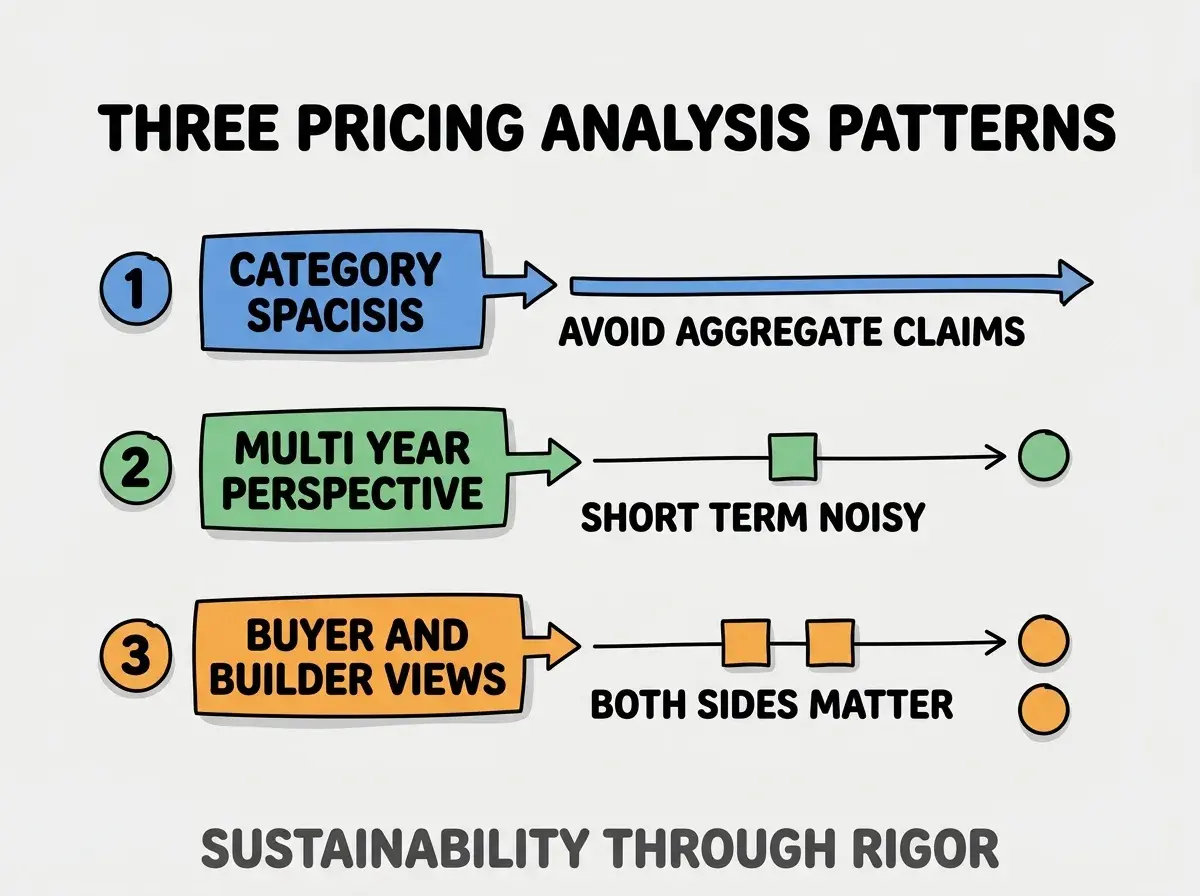
Pattern 1, category specific analysis. Aggregate claims hide variance; category analysis reveals truth.
Pattern 2, multi year perspective. Short term price moves include noise; multi year reveals trends.
Pattern 3, buyer and builder views. Both perspectives matter; one sided analysis misses dynamics.
The combination produces sustainable pricing analysis. Without these patterns, predictions become noise.
How To Position Software For Price Resilience
Three positioning patterns help builders preserve pricing power.
Pattern A, depth over breadth. Deep specialization beats broad coverage; specialization commands premium.
Pattern B, integration depth. Integration with customer workflows builds switching cost; switching cost preserves pricing.
Pattern C, network effects. Network effects make alternatives less valuable; less valuable alternatives mean less price pressure.
Common Questions About AI Software Pricing
AI software pricing raises questions worth addressing directly.
The first question is whether all software prices will fall. No; commodity falls, differentiated stable, premium with strong moats may rise.
The second question is whether buyers should delay purchases hoping for price drops. Sometimes; depends on category. Commodity yes; differentiated rarely worth waiting.
The third question is whether AI tool pricing itself will crash. Some yes (basic AI APIs face commoditization); some no (specialized AI tools maintain pricing).
The fourth question is whether to bet career on AI built software. Yes for differentiated work; questionable for commodity work where price compression squeezes margins.
How AI Pricing Affects Industry Structure
AI pricing dynamics affect industry structure in compounding ways. Structure effects compound across years.
The first compounding effect is consolidation in commodity categories. Price compression squeezes margins; weak players exit; consolidation accelerates.
The second compounding effect is fragmentation in long tail. Lower production cost enables more niche software; long tail expands.
The third compounding effect is differentiation premium growth. Differentiation matters more as commodity compresses; differentiated commands more premium.
The combination produces industry structure that bifurcates. Without strategic positioning, builders face structure dynamics unprepared.
How To Track Pricing Dynamics In Your Category
Three tracking patterns help category specific awareness.
Pattern A, monitor competitor pricing changes. Direct competitors signal category dynamics; price changes reveal direction.
Pattern B, watch new entrant pricing. New entrants reveal price floor expectations; entrant pricing predicts incumbent pressure.
Pattern C, survey customers on price perception. Customers signal pricing tolerance; tolerance changes predict pricing power.
The combination produces category awareness. Without tracking, pricing decisions follow assumption rather than data.
The most damaging AI pricing mistake is treating "AI will crash software prices" as universal truth. Crash applies to commodity categories; non commodity categories face different dynamics. The fix is to analyze your specific category; sector specific analysis beats sector wide claims. Builders who analyze specifically produce informed pricing decisions; builders who follow universal claims produce wrong pricing for half their categories.
The other mistake is panic discounting in response to AI hype. Premature discounts surrender pricing power that may not need surrendering.
A third mistake is missing the integration cost reality. Integration cost dominates total cost in many enterprise contexts; ignoring integration miscalculates pricing.
A fourth mistake is treating pricing as one decision rather than ongoing strategy. Pricing requires continuous adjustment to dynamics.
What This Means For You
The economic impact question of whether AI built software will crash prices requires category specific analysis rather than aggregate prediction. The four forces, category patterns, and positioning approaches produce framework for pricing decisions in specific contexts.
- If you're a founder: Analyze your category specifically; aggregate claims about AI pricing impact mislead category specific decisions.
- If you're an indie hacker: Position for differentiation; commodity categories face margin pressure that hurts indie economics.
Browse more pulse
Read more pulse