Design systems for vibe coded apps prevent UI drift that AI generation produces. Four design system components matter: design tokens (colors, spacing, typography as variables), component library (consistent reusable components), documentation (how to use, when to use), and governance (who decides what changes when). Without design system, AI generates inconsistent UI; with design system, AI generates consistent UI within constraints.
This piece walks through the four components, the implementation patterns, what makes design systems sustainable, and the four mistakes builders make on design systems for vibe coded apps.
Why Design Systems Matter For AI Generated UI
Design systems matter because AI generates plausible UI that lacks consistency without constraints. Inconsistency compounds across pages; design system prevents.
The 2026 reality is that AI tools (v0, Cursor, Claude) respect design systems when provided. Capability removed barrier; using system requires discipline.
A 2025 design quality study of 600 vibe coded apps found that apps with design systems achieved 67 percent better UI consistency than apps without, primarily through design system constraining AI generation. Design system measurably affects consistency.
The pattern to copy is the way LEGO bricks work. Standard bricks; many combinations; consistency guaranteed by brick standard. Design systems work the same way for UI; standard tokens and components.
The Four Design System Components
Four components form complete design system.
Component 1, design tokens. Colors, spacing, typography. Foundation.
Component 2, component library. Consistent reusable components. Building blocks.
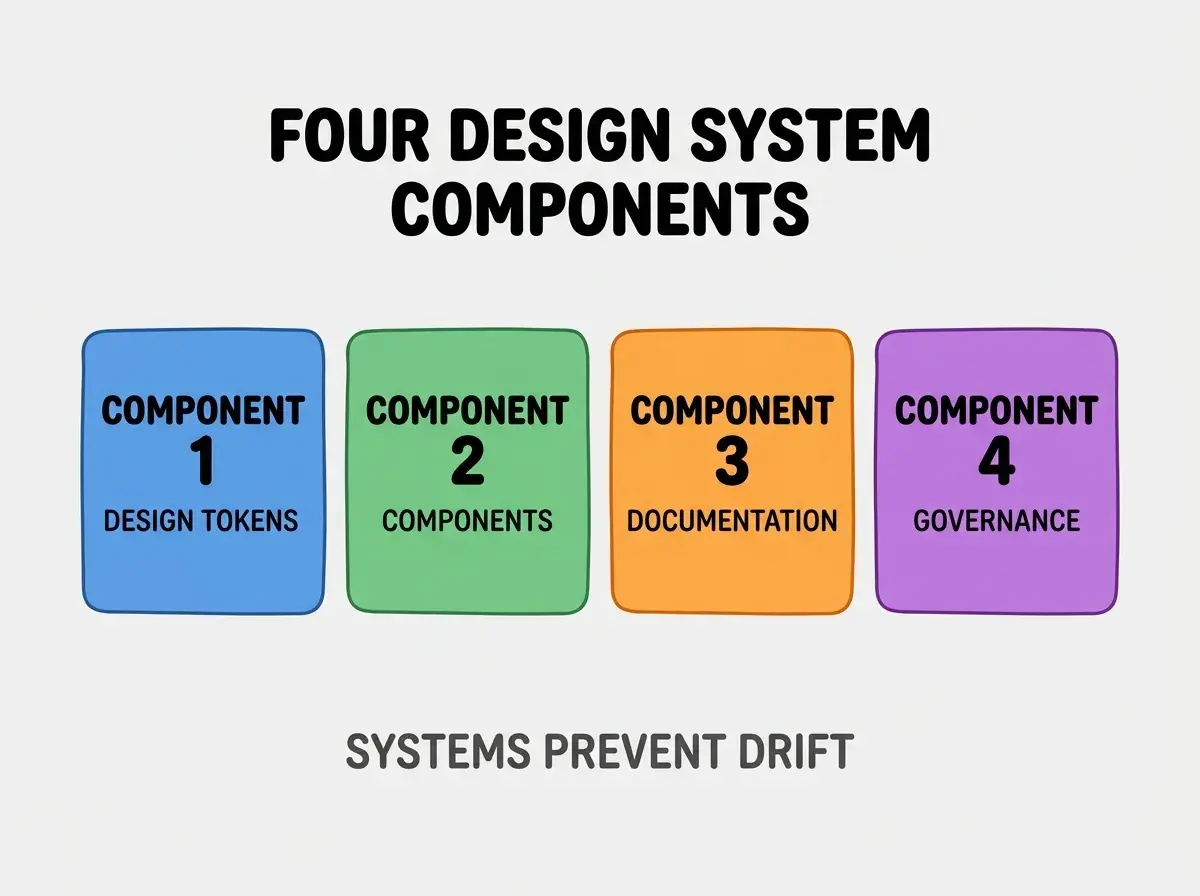
Component 3, documentation. How to use, when to use. Knowledge.
Component 4, governance. Who decides what changes when. Process.
How To Implement Each Component
Four implementation patterns address each component.
Implementation 1, Tailwind config plus CSS variables. Standard token implementation.
Browse more build
Read more buildImplementation 2, shadcn/ui or custom components. Library compounds value.
Implementation 3, Storybook for documentation. Visual documentation; standard.
Implementation 4, design council with rotation. Decision body; rotation prevents bottleneck.
What Makes Design Systems Sustainable
Three patterns separate sustainable systems from abandoned ones.
Pattern 1, used by all features. Comprehensive use; without comprehensive, drift.
Pattern 2, evolves with product. Updates with product; static decays.
Pattern 3, low friction adoption. Easy adoption matters; friction kills.
What Makes Design Systems Effective For AI
Three patterns separate effective AI design systems from theatrical.
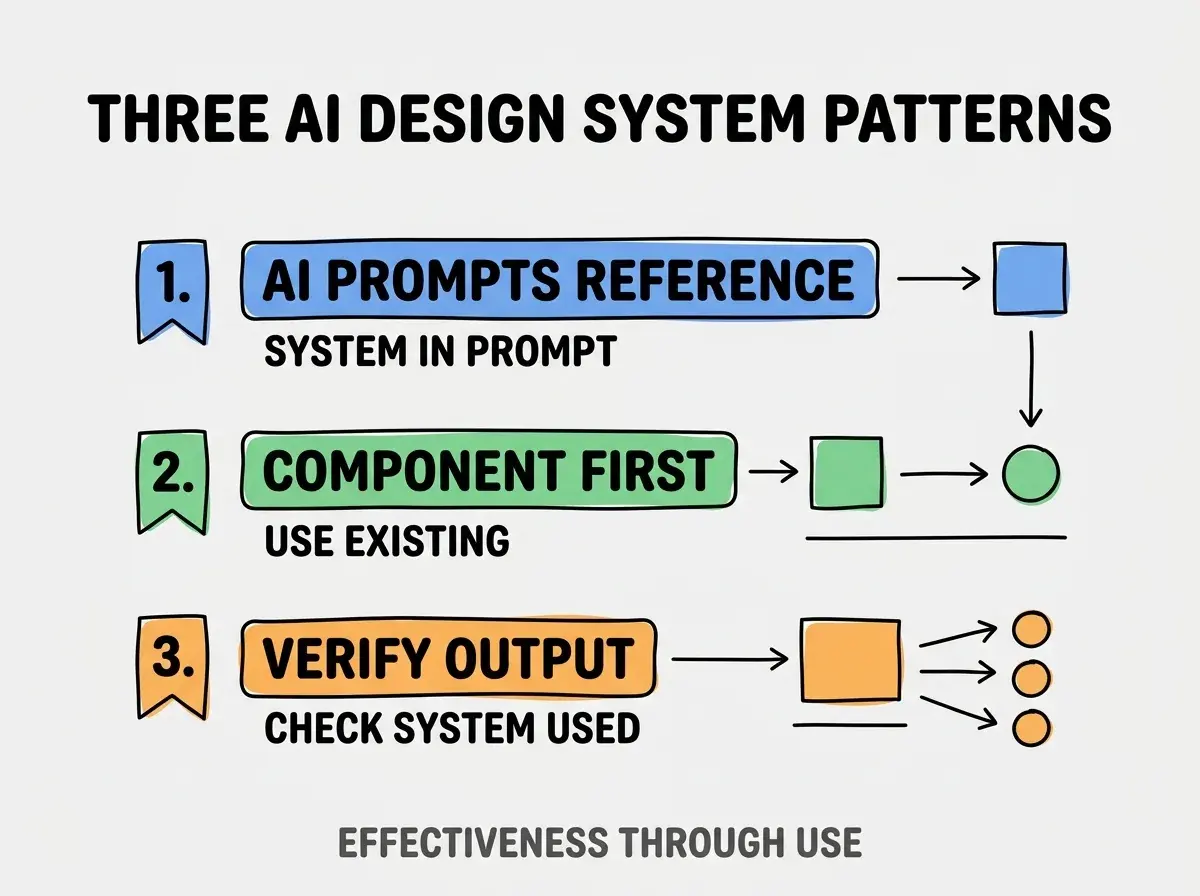
Pattern 1, AI prompts reference. System in prompt; AI follows.
Pattern 2, component first. Use existing; new only when needed.
Pattern 3, verify output. Check system used; without verification, drift.
The combination produces effective AI design systems. Without these patterns, drift compounds.
How To Set Up Design Tokens
Three patterns help token setup.
Pattern A, Tailwind config customization. Tailwind tokens in config.
Pattern B, CSS variables in root. Variables enable runtime changes.
Pattern C, Style Dictionary for cross platform. Cross platform tokens via Style Dictionary.
Common Questions About Design Systems
Design systems raise questions worth addressing directly.
The first question is whether to use shadcn/ui or build custom. shadcn/ui starting; custom for differentiation.
The second question is what about Material UI or Chakra. Both work; choice based on design needs.
The third question is whether AI handles design systems well. With good prompts yes; without poor.
The fourth question is when to formalize design system. As soon as multiple features ship.
How Design Systems Affect AI Output
Design systems affect AI output in compounding ways. Output effects compound across UI.
The first compounding effect is consistency. Constrained AI consistent.
The second compounding effect is faster generation. AI generates faster within constraints.
The third compounding effect is brand integrity. System maintains brand; integrity compounds.
The combination produces output shaped by design system. Without system, output bounded by AI defaults.
How To Document Design System Effectively
Three patterns help documentation.
Pattern A, examples per component. Examples teach; abstract rules confuse.
Pattern B, when to use vs not. Decision guidance matters.
Pattern C, accessibility notes per component. A11y embedded in docs.
The combination produces effective documentation. Without examples, docs unused.
The most damaging design system mistake is building it without using it. System exists in Storybook; AI generates without it. The fix is to make system primary; AI prompts reference it; PRs verify use. Builders who use system maintain consistency; builders who build but skip drift.
The other mistake is over engineering before validation. Start small; grow with use.
A third mistake is missing the AI integration component. AI must reference system.
A fourth mistake is treating design system as one off project. Systems evolve; ongoing investment.
What This Means For You
Design systems for vibe coded apps prevent UI drift AI generation produces. The four components, implementation patterns, and sustainability approaches produce design systems that compound UI consistency.
- If you're a designer: Design system fluency expected; learn patterns deeply.
- If you're a senior dev: AI design system integration emerging skill; learn early.
- If you're a founder: Brand consistency affects perception; investment justified.
Browse more build
Read more build