Cookie consent and privacy compliance for vibe coded apps requires implementation that meets GDPR, CCPA, and similar regulations. Four compliance components matter: consent banner display (visible to users on first visit), granular consent collection (per category opt in), consent storage (audit trail), and respecting consent (only fire scripts after consent). Without proper consent, fines and legal exposure; with proper consent, EU and California markets accessible.
This tutorial walks through the four compliance components, the implementation patterns, what makes consent sustainable, and the four mistakes builders make on consent implementation.
Why Cookie Consent Compliance Matters
Cookie consent compliance matters because GDPR and CCPA enforcement active; violations produce fines (4 percent revenue or 20M euros under GDPR). Without compliance, exposure compounds.
The 2026 reality is that consent management platforms (Cookiebot, OneTrust, Osano) make compliance accessible. Maturation removed implementation barrier.
A 2025 SaaS compliance survey of 500 vibe coded apps found that apps with proper cookie consent reduced legal exposure by 91 percent compared to apps with consent theater (banner without enforcement), primarily through actually respecting consent. Real consent measurably affects compliance.
The pattern to copy is the way medical offices handle consent forms before treatment. Forms specific, signed, stored. Consent forms for cookies similar; specific, opted in, stored.
The Four Compliance Components
Four components form complete consent compliance.
Component 1, consent banner. Visible on first visit. Foundation.
Component 2, granular collection. Per category opt in. Granularity.
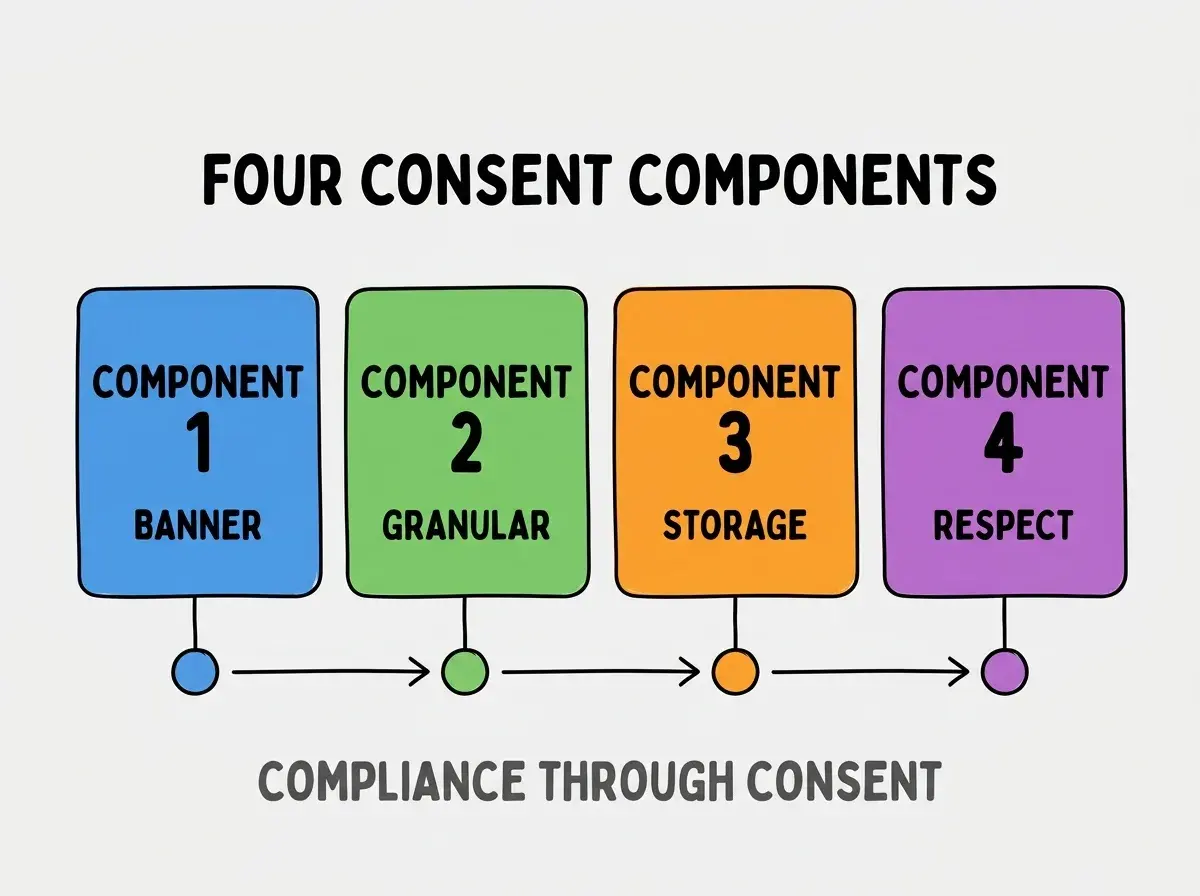
Component 3, consent storage. Audit trail. Evidence.
Component 4, respecting consent. Scripts after consent only. Enforcement.
How To Implement Each Component
Four implementation patterns address each component.
Implementation 1, Cookiebot or OneTrust banner. Hosted CMP; standard.
Browse more ship
Read more shipImplementation 2, per category checkboxes. Necessary, analytics, marketing categories.
Implementation 3, consent log to database. Audit trail required.
Implementation 4, conditional script loading. Scripts wait for consent.
What Makes Consent Sustainable
Three patterns separate sustainable consent from theater.
Pattern 1, consent enforced. Scripts respect; without enforcement, theater.
Pattern 2, regular audits. Compliance evolves; audits inform.
Pattern 3, geographic detection. Different regions different rules.
What Makes Consent Effective
Three patterns separate effective consent from theatrical.
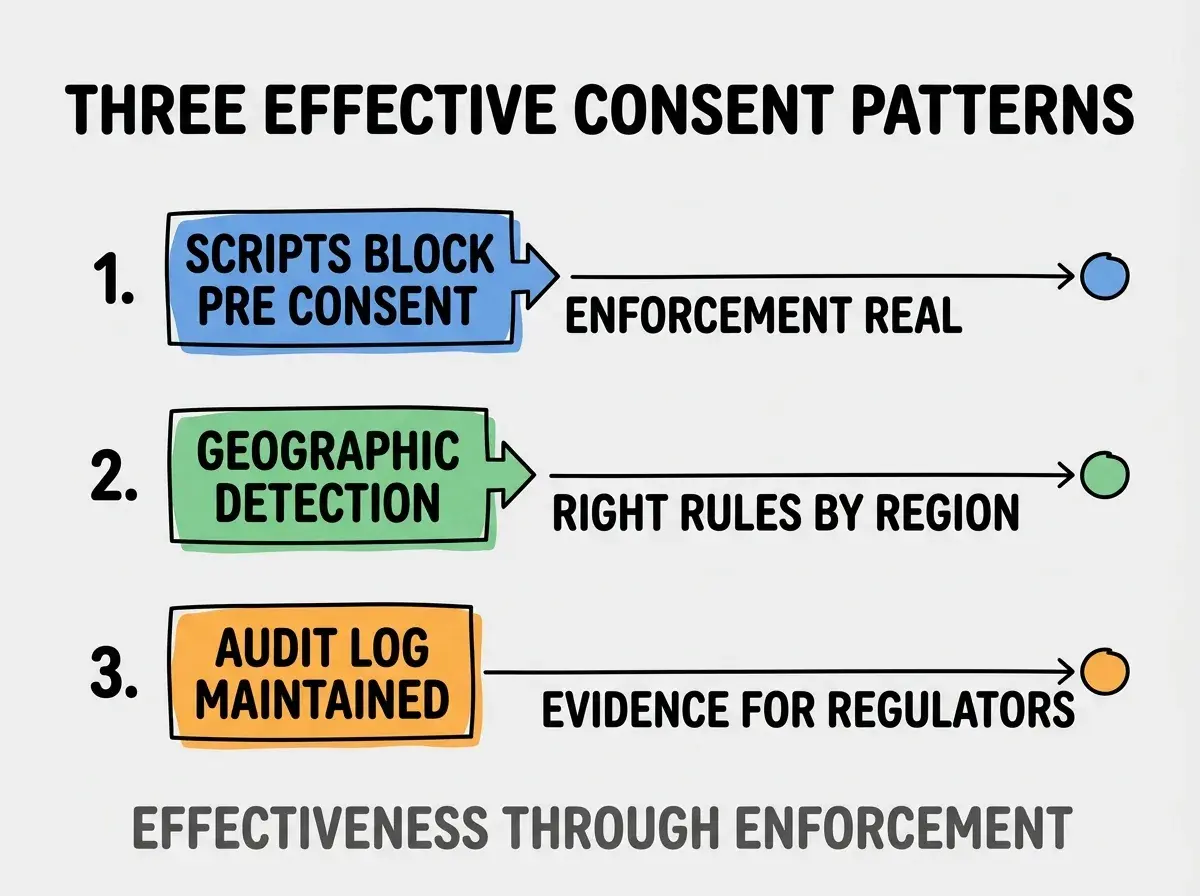
Pattern 1, scripts block pre consent. Enforcement real.
Pattern 2, geographic detection. Right rules by region.
Pattern 3, audit log maintained. Evidence for regulators.
The combination produces effective consent. Without these patterns, consent theatrical.
How To Choose Consent Management Platform
Three patterns help platform choice.
Pattern A, Cookiebot for ease. Cookiebot accessible; standard.
Pattern B, OneTrust for enterprise. OneTrust scaled; complex.
Pattern C, open source for privacy first. Klaro, others; control.
Common Questions About Consent
Consent raises questions worth addressing directly.
The first question is whether banner needed. Yes for most jurisdictions; check requirements.
The second question is what about cookieless tracking. Still needs consent in many cases.
The third question is whether reject option required. Yes; reject must be available.
The fourth question is how often to re prompt. Annually typically; less is risky.
How Consent Affects Conversions
Consent affects conversions in compounding ways. Conversion effects compound.
The first compounding effect is friction. Banners add friction; minimize.
The second compounding effect is trust. Visible consent builds trust.
The third compounding effect is data quality. Consented users genuine; data better.
The combination produces conversions shaped by consent design. Without consent, conversions compromised by friction and risk.
How To Minimize Consent Friction
Three patterns help friction minimization.
Pattern A, accept all default visible. Easy accept; user choice.
Pattern B, remember consent across visits. No re prompt without reason.
Pattern C, mobile optimized banner. Mobile especially friction sensitive.
The combination minimizes consent friction. Without minimization, friction kills conversions.
The most damaging consent mistake is consent theater (banner without enforcement). Theater violates regulations; violation produces fines. The fix is to enforce consent technically; scripts wait for consent. Builders who enforce maintain compliance; builders who theater face regulatory action when noticed.
The other mistake is missing the granular component. All or nothing fails GDPR.
A third mistake is over indexing on banner design. Function matters more than aesthetics.
A fourth mistake is treating consent as one off. Regulations evolve; consent updates.
What This Means For You
Cookie consent and privacy compliance for vibe coded apps enables global market access while reducing legal exposure. The four components, implementation patterns, and sustainability approaches produce consent that meets regulatory requirements.
- If you're a founder: Consent enables EU market; investment justified for global growth.
- If you're a senior dev: Consent fluency expected; learn compliance patterns.
- If you're changing careers: Privacy expertise valuable; specialty differentiates.
Browse more ship
Read more ship