On April 16, 2026, Anthropic announced the general availability of their Opus 4.7 model. The vendor claims that Claude Opus 4.7 offers improved reliability for hard software engineering problems, long tasks, instruction following, self-verification, and vision capabilities compared to the previous 4.6 version. You can read the official announcement on their website official documentation. As artificial intelligence continues to integrate into developer workflows, understanding how to evaluate these updates becomes critical for engineering teams.
Retrospective edition for April 22, 2026. Researched and published September 9, 2026. Product details reflect documentation checked at publication unless explicitly identified as historical.
Evaluating the Anthropic Opus 4.7 Developer Update
Analyzing the vendor claims regarding software engineering capability and instruction following
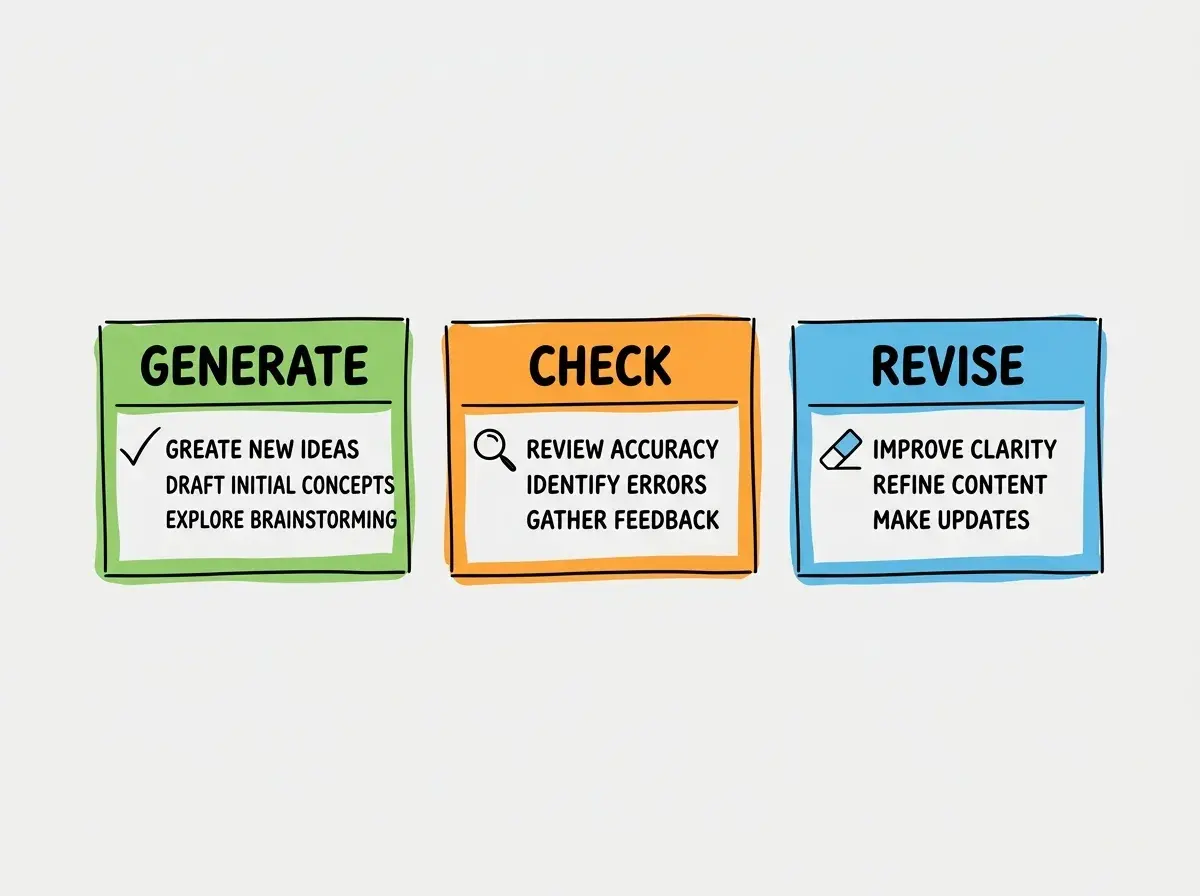
When a new model version arrives, the initial reaction often involves rushing to test it on complex codebases. However, a documentation-based review provides a more structured approach to understanding the intended improvements. Anthropic specifically highlights self-verification and long task execution in Opus 4.7. This suggests the model is tuned to handle extended contexts where it must continually check its own logic against the initial prompt constraints.
For software engineers, instruction following is paramount. A model might generate syntactically correct code, but if it ignores specific architectural guidelines provided in the prompt, the output requires extensive human revision. The stated improvements in Opus 4.7 aim to reduce this revision time by adhering more strictly to complex, multi-step instructions.
Vision capabilities also receive a mention in the update. In a coding context, this typically translates to providing the model with architectural diagrams, user interface mockups, or database schemas in image format, expecting it to generate corresponding structural code. While text remains the primary interface for software engineering, multimodal inputs are slowly becoming a standard part of the developer toolkit.
It is important to approach vendor claims with a structured evaluation plan rather than relying on isolated, fabricated hands-on anecdotes. The true test of a model lies in how well it integrates into your specific team workflows, which requires understanding both the benchmarks used by the industry and the practical trials you can run internally.
Vendor claims about improved instruction following and self-verification should be tested against your team's specific coding standards and architectural guidelines rather than accepted at face value.
Understanding Modern Software Engineering Benchmarks
How evaluation harnesses distribute tasks and calculate pass rates for coding models
To contextualize the performance of models like Opus 4.7, the industry relies on standardized benchmarks. However, benchmark charts cannot be treated as absolute results. They are indicators of specific capabilities tested under highly controlled conditions. Two prominent examples in the software engineering space are SWE-bench and Terminal-Bench.
SWE-bench evaluates large language models on real world software issues resolved on GitHub. The benchmark tests if a model can edit a codebase to resolve a given issue description official documentation. This requires the model to understand the repository structure, locate the relevant files, and propose correct modifications.
Similarly, Terminal-Bench focuses on evaluating AI agents in coding environments. It provides a framework to measure how well these systems handle tasks requiring multiple steps and tool usage official documentation. Both platforms utilize complex evaluation harnesses to automate the testing process.
| Feature | SWE-bench | Terminal-Bench |
|---|---|---|
| Primary Focus | Resolving real GitHub issues in existing codebases | Evaluating agentic tool usage and multi-step tasks |
| Evaluation Method | Applying generated patches and running existing test suites | Automated harness checking task completion and tool interaction |
An evaluation harness is a software framework designed to run these tests consistently. It sets up the environment, feeds the prompt to the model, applies the generated code, and runs the associated test suite. The task distribution depends on the benchmark and its version.
The pass rate is the primary metric reported, representing the percentage of tasks the model successfully resolved. However, this metric can be heavily influenced by retries. Some benchmarks allow the model multiple attempts to fix the code if the initial test fails, simulating a developer debugging their own work. When reviewing benchmark scores, always check the methodology to understand if the pass rate reflects one agent run, multiple independent attempts, or a run with a particular tool and retry budget.
Explore clear explanations of AI coding tools, project context, and reliable development workflows.
Explore the blogStructuring a Six Task Trial for Code Generation
A practical framework for testing acceptance criteria and calculating review time
To move beyond public benchmarks, engineering teams should design internal trials. A concrete six task trial provides a structured way to evaluate a model's utility for daily operations. This trial should cover different aspects of software development, from boilerplate generation to complex debugging.
The first task should focus on boilerplate generation. The acceptance check involves verifying that the model produces syntactically correct scaffolding that adheres to your framework's conventions. The review minutes for this task should be minimal, as the output is highly predictable.
The second task involves refactoring legacy code. You provide a poorly structured function and ask the model to improve its readability and performance. The acceptance check requires the new code to pass all existing unit tests while demonstrating clear structural improvements. Review minutes here will be higher, as a senior engineer must verify that the refactoring did not introduce subtle regressions.
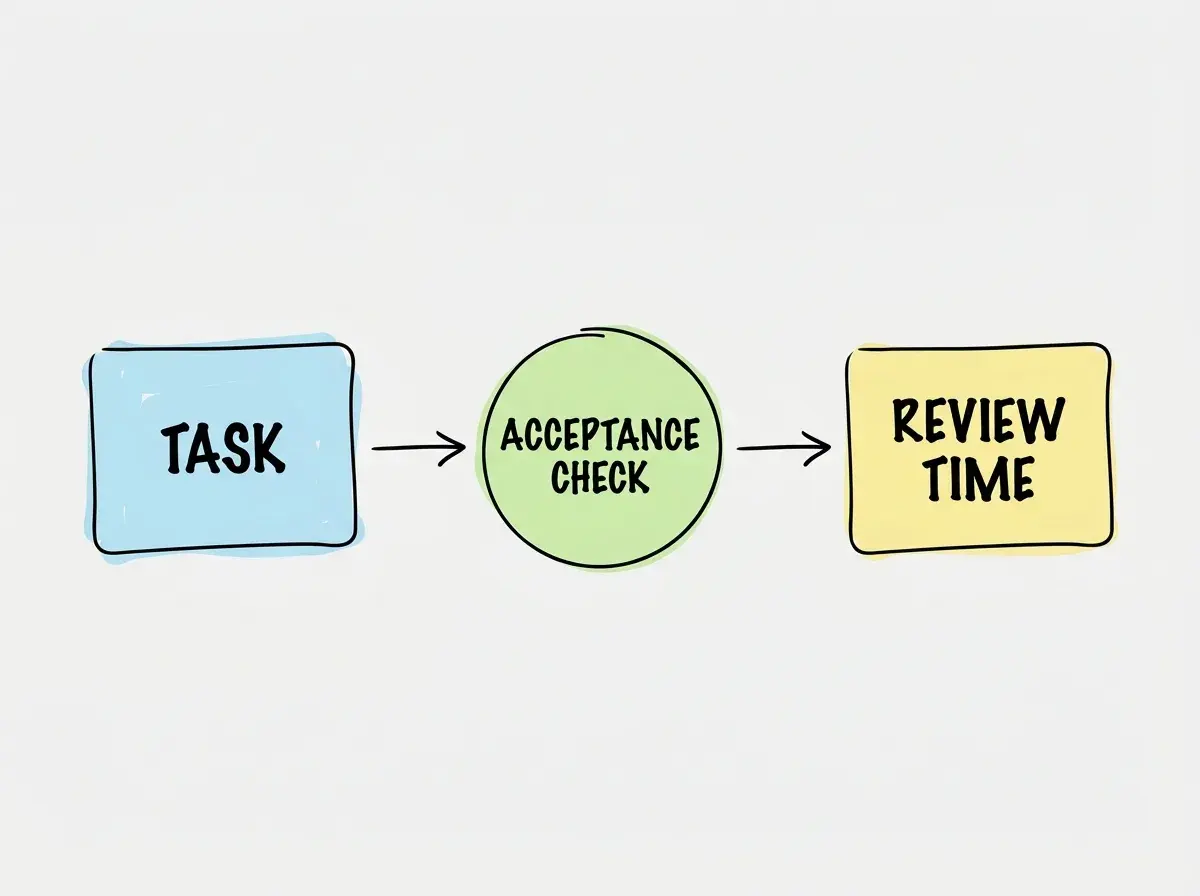
The third task is writing unit tests for an undocumented function. The model must infer the function's purpose and generate comprehensive test coverage. Execute the tests and inspect their assertions. Check that they fail against a deliberately faulty implementation; passing tests alone do not show that meaningful edge cases are covered.
The fourth task tests the model's debugging capabilities. Provide a code snippet containing a known race condition and ask for a fix. The acceptance check is the successful resolution of the concurrency issue without introducing deadlocks. This task heavily tests the model's deep reasoning capabilities.
Failing to track the human review minutes required for each task. A model that generates code quickly but requires extensive human revision is not actually saving the team time or money.
The fifth task involves API integration. The model must write a client to interact with a third-party service based on provided documentation. The acceptance check verifies correct authentication handling and data parsing.
The final task is UI component creation based on a design system. The acceptance check ensures the generated component matches the required styling and accessibility standards.
When conducting this trial, calculate the cost using a symbolic formula. Let C equal the total cost. C = (Input Tokens * Input Rate) + (Output Tokens * Output Rate) + (Human Review Minutes * Engineer Hourly Rate / 60). This formula highlights that the true cost of using AI for coding includes the expensive human time required to verify the output. If a model requires excessive retries or generates code that takes hours to review, the symbolic cost C will quickly exceed the cost of writing the code manually.
Choosing Deep Reasoning Over Fast Prompting Tasks
Balancing expensive inference against repetitive and cheap workflows
Understanding when to deploy a sophisticated model like Opus 4.7 versus a faster, cheaper alternative is crucial for managing engineering resources. Deep reasoning models are computationally expensive, and their use should be reserved for tasks that provide a high return on investment.
Complex architectural design, debugging intricate concurrency issues, and refactoring core business logic are areas where deep reasoning is worth trying. These tasks require the model to hold a large amount of context, understand subtle dependencies, and verify its own logic before generating a response. The self-verification improvements claimed by Anthropic for Opus 4.7 make it a candidate for these high stakes scenarios.
Conversely, repetitive and cheap work should be routed to smaller, faster models or automated entirely without AI. Generating standard boilerplate, formatting JSON payloads, or writing basic getter and setter methods do not require deep reasoning. Using an expensive model for these tasks inflates your token costs without providing a proportional increase in quality.
For a concrete concurrency trial, provide an existing queue implementation and require a positive integer concurrency limit, stable result ordering, explicit rejection behavior, and no unhandled promise rejections. Test empty input, one failed worker, and cancellation. This is an evaluation brief, not an untested queue implementation to copy into production.
When evaluating a task, ask yourself if the problem requires judgment or simply pattern matching. If it requires judgment, such as deciding between two different database indexing strategies based on specific query patterns, the expensive deep reasoning model is appropriate. If it only requires pattern matching, such as converting a CSV file to a specific XML format, opt for the cheaper workflow.
Frequently Asked Questions
What this means for you
The release of models with improved instruction following and self-verification capabilities requires engineering teams to mature their evaluation strategies. You can no longer rely solely on public benchmark charts to make tooling decisions.
You must implement structured internal trials that measure not just the technical correctness of the generated code, but the human cost of reviewing and integrating that code. By separating tasks that require deep reasoning from those that are repetitive and cheap, you can optimize your workflows and manage token costs effectively. The goal is not to replace the engineering process, but to augment it with the right tool for the specific complexity of the task at hand.
Read more practical articles for choosing tools, reviewing changes, and shipping useful software.
Read more guides