To build a property management dashboard with AI tools, follow the four phase approach (define what property types and management workflows the dashboard must support, build the data model that handles units, tenants, and maintenance, design the operations interface that surfaces what landlords need to act on, and ship with the tenant portal patterns that improve tenant satisfaction), recognize what separates property management dashboards landlords use daily from dashboards that gather dust, and apply the patterns that produce sustained operations value. The property management dashboard becomes valuable when it makes daily landlord operations faster while improving tenant experience; without both, paper logs and email tag win.
This piece walks through the four phases, the tenant portal patterns, the specific tooling, and the four mistakes that produce property management dashboards that landlords abandon.
Why Property Management Dashboards Matter
Property management dashboards turn fragmented property operations into structured workflows. The transformation matters; landlords with multiple units handle leases, maintenance, payments, and tenant communications; without dashboards, this happens through scattered spreadsheets and email.
The 2026 reality is that AI tools dramatically accelerate property dashboard building while AI integration during operation can categorize maintenance requests, draft tenant responses, and detect rent payment patterns faster than manual operations. The combination means independent landlords can have dashboard quality matching what enterprise property management platforms previously required.
A 2025 small landlord survey of 600 property owners managing 5-50 units found that landlords using purpose built dashboards saved an average of 12 hours per week on property operations compared to spreadsheet based management. The time savings compound dramatically across years of property ownership.
The pattern to copy is the way restaurant POS systems transformed restaurant operations. POS replaced paper tickets with structured digital workflows; the structure produced both efficiency and analytics that paper could not provide. Property management dashboards play similar role for landlord operations; structure produces efficiency that ad hoc management cannot match.
The Four Phase Approach
Four phases produce property management dashboards landlords use daily.
Phase 1, define what property types and management workflows the dashboard must support. Single family, multi unit, commercial. Different property types need different features.
Phase 2, build the data model that handles units, tenants, and maintenance. Properties, units, tenants, leases, maintenance requests, payments. AI tools generate the schema effectively given clear specifications.
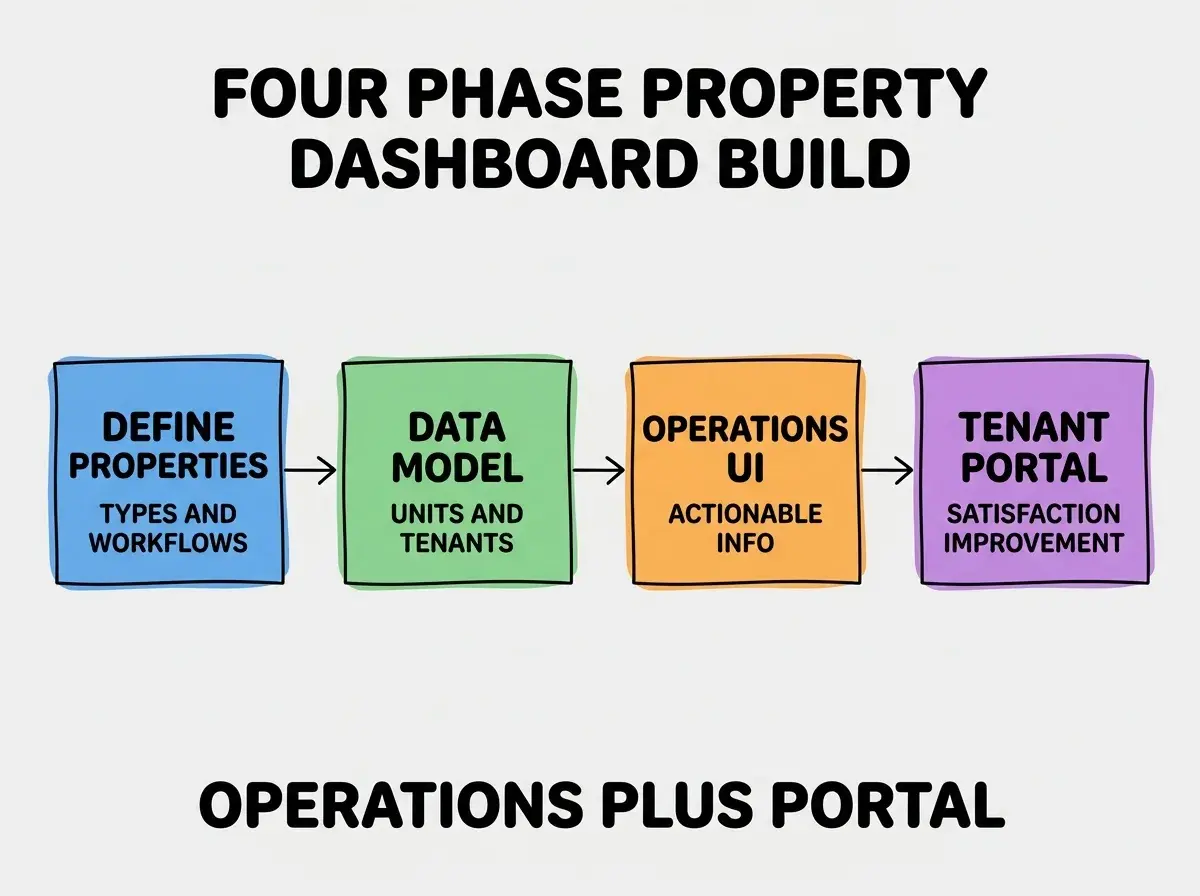
Phase 3, design the operations interface that surfaces what landlords need to act on. Late rent, maintenance requests, lease expirations, vacancy. Operational visibility determines daily use.
Phase 4, ship with tenant portal patterns that improve tenant satisfaction. Tenant rent payment, maintenance request submission, lease document access. Tenant portal matters; tenants who can self serve produce fewer landlord interruptions.
The Tenant Portal Patterns That Help
Three patterns produce tenant portals that improve satisfaction.
Pattern 1, online rent payment with multiple payment methods. Bank transfer, card, ACH. Multiple payment options reduce late payments by reducing friction.
Browse more business tutorials
Read more build tutorialsPattern 2, maintenance request with photo upload from phone. Tenants describe issues with photos. Visual context reduces back and forth that text only requests produce.
Pattern 3, document access for lease, receipts, notices. Tenants access their own documents. Self service reduces landlord interruptions for routine document requests.
The Specific Tooling That Worked
Three tool categories combine effectively for property dashboard building.
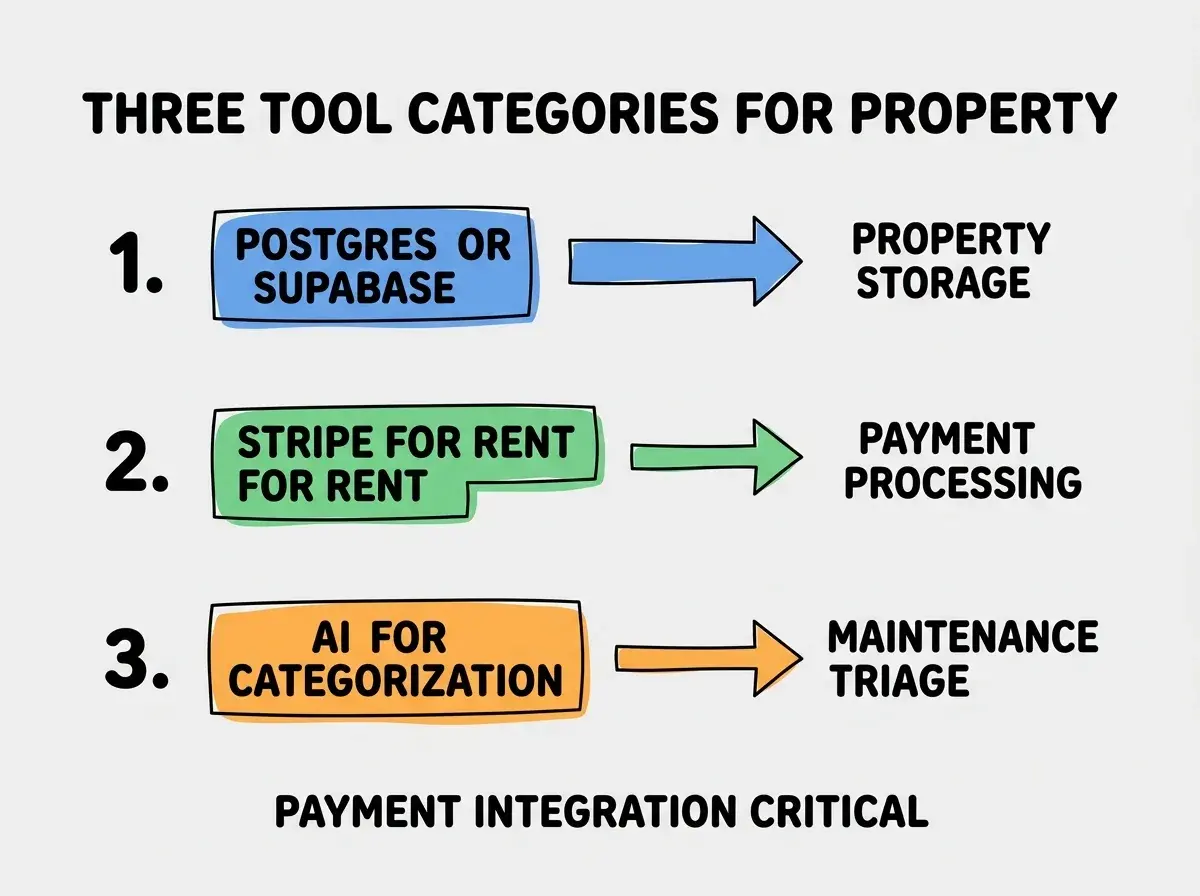
Tool 1, Postgres or Supabase for property data. Properties, units, tenants, leases, payments. Relational data fits naturally.
Tool 2, Stripe for rent payment processing. ACH for low fee bank transfers; card for convenience. Payment integration handles the financial complexity.
Tool 3, AI for maintenance request categorization. Claude or GPT classifies maintenance urgency and category. Categorization accelerates triage that manual review slows.
What Makes Property Dashboards Get Sustained Use
Three patterns separate sustained landlord use from dashboard abandonment.
Pattern 1, faster than spreadsheets for daily operations. If dashboard takes longer than spreadsheet for routine tasks, landlords default to spreadsheets.
Pattern 2, mobile friendly for on site property work. Landlords visit properties; mobile design matters for on site work. Desktop only dashboards exclude mobile use cases.
Pattern 3, integration with accounting software for tax season. QuickBooks or Xero integration. Without integration, year end tax preparation requires manual data export.
The combination produces dashboards landlords use daily across years of property ownership. Without these patterns, dashboards get tried then abandoned for established alternatives.
How to Build Your First Property Dashboard
Three implementation patterns help first property dashboards succeed.
Pattern A, start with one property type, not all property types. Single family or multi unit. Single type validates the patterns.
Pattern B, dogfood with own properties before external launch. Own property use reveals operational issues. Personal use catches problems before external exposure.
Pattern C, instrument daily use patterns from day one. What features get used, what gets ignored. Without instrumentation, feature priority stays guesswork.
The combination produces first dashboards that establish landlord use patterns. Without these patterns, first dashboards often launch with features landlords do not use while missing features they need.
The most damaging property management dashboard mistake is missing tenant portal features. Landlord only dashboards force landlords to handle tenant interactions that tenants could self serve; the result is landlords doing manual work that automation could eliminate. The fix is to build tenant portal alongside landlord dashboard; the tenant portal reduces landlord interruptions dramatically while improving tenant satisfaction. Both sides win when the platform serves both.
The other mistake is overcomplicating the lease management features. Most leases follow standard patterns; complex lease features often add friction without value. The fix is to handle standard leases simply; complex leases can use document upload rather than structured fields.
A third mistake is failing to handle late rent gracefully. Late rent happens; punitive late rent flows produce tenant relationship damage. The fix is to design late rent flows that preserve relationships while ensuring collection.
A fourth mistake is missing tax season features. Tax season requires income statements, expense reports, and document access. The fix is to build tax season features ahead of January; landlords value tax season support.
A fifth mistake is failing to handle eviction workflows respectfully. Evictions are difficult but happen; software that handles them poorly produces both legal risk and emotional damage. The fix is to design eviction flows with care; legal compliance, clear documentation, respectful tone matter for the rare but consequential cases.
What This Means For You
The property management dashboard built with AI tools becomes valuable through landlord operations efficiency, tenant portal features, and tax season support. The four phases, tenant portal patterns, and tool combinations produce dashboards landlords use daily across years.
- If you're a founder: Property management software has substantial market with established competitors. Niche property platforms (specific property type, specific landlord size) often outcompete general platforms.
- If you're an indie hacker: Property dashboards have sustainable business models with monthly recurring revenue per unit. Build for landlords with 5-50 units; this segment is underserved by enterprise platforms while being substantial enough to monetize.
- If you're a senior dev: AI tools handle property dashboard implementation effectively. The bottleneck is property domain understanding and tenant portal design, not implementation; invest in those areas more than feature breadth.
Browse more business tutorials
Read more build tutorials