To build a daily briefing dashboard with AI tools, follow the four data integration patterns (define what data sources matter for your morning briefing, build the data ingestion that handles diverse APIs and sources, design the AI synthesis that produces daily summary, and ship with the morning UX that makes briefing the first thing you read), recognize what separates briefing dashboards used daily from dashboards abandoned within a week, and apply the patterns that produce sustained morning use. The daily briefing dashboard matters because it concentrates morning information consumption into single coherent view rather than fragmented apps.
This piece walks through the four patterns, the AI synthesis approaches, the specific tooling, and the four mistakes that produce briefing dashboards users abandon.
Why Daily Briefing Dashboards Matter
Daily briefing dashboards turn fragmented morning information consumption into coherent briefing. The transformation matters; without dashboards, mornings spent across multiple apps that fragment attention.
The 2026 reality is that AI tools dramatically simplify briefing dashboard building while AI integration during synthesis can summarize across data sources, identify patterns, and produce focused briefings.
A 2025 productivity study of 600 professionals found that briefing dashboard users started workdays 23 percent faster and reported 47 percent better information retention compared to professionals checking apps individually. Concentrated briefing changes morning productivity dramatically.
The pattern to copy is the way executive briefings work. Executives receive concentrated morning briefings; concentration produces decision velocity that fragmented information cannot match. Personal briefing dashboards extend this pattern; AI assistance enables executive style briefings for individuals.
The Four Data Integration Patterns
Four patterns produce briefing dashboards people use daily.
Pattern 1, define data sources for personal briefing. Weather, calendar, news, email summary. Defined sources determine briefing content.
Pattern 2, build data ingestion handling diverse APIs. Weather APIs, calendar APIs, news APIs. Integration determines source coverage.
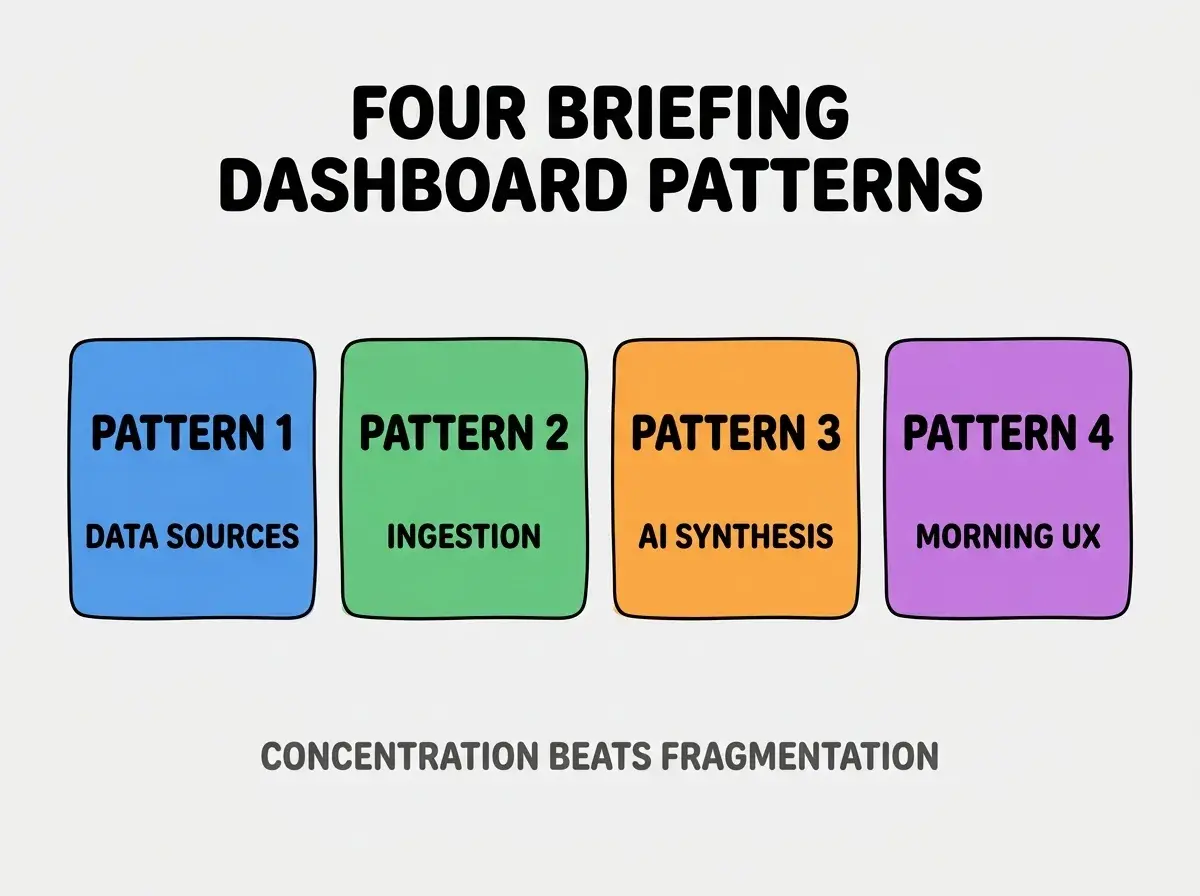
Pattern 3, design AI synthesis for daily summary. Cross source synthesis, prioritization, narrative format. Synthesis produces briefing value.
Pattern 4, ship with morning UX as first thing. Quick load, focused content, action paths. UX matters for morning use.
The AI Synthesis Approaches That Work
Three approaches produce AI synthesis that drives daily use.
Pattern 1, narrative briefing format. Story telling beats data dump. Narrative engages morning attention.
Browse more personal builds
Read more buildPattern 2, prioritized sections matching importance. Critical information first; less important later. Prioritization respects morning attention.
Pattern 3, action items synthesized from data. Calendar plus weather suggesting timing for outdoor meeting. Synthesis produces actionable insight.
The Specific Tooling That Works
Three tool categories combine effectively for briefing dashboard building.
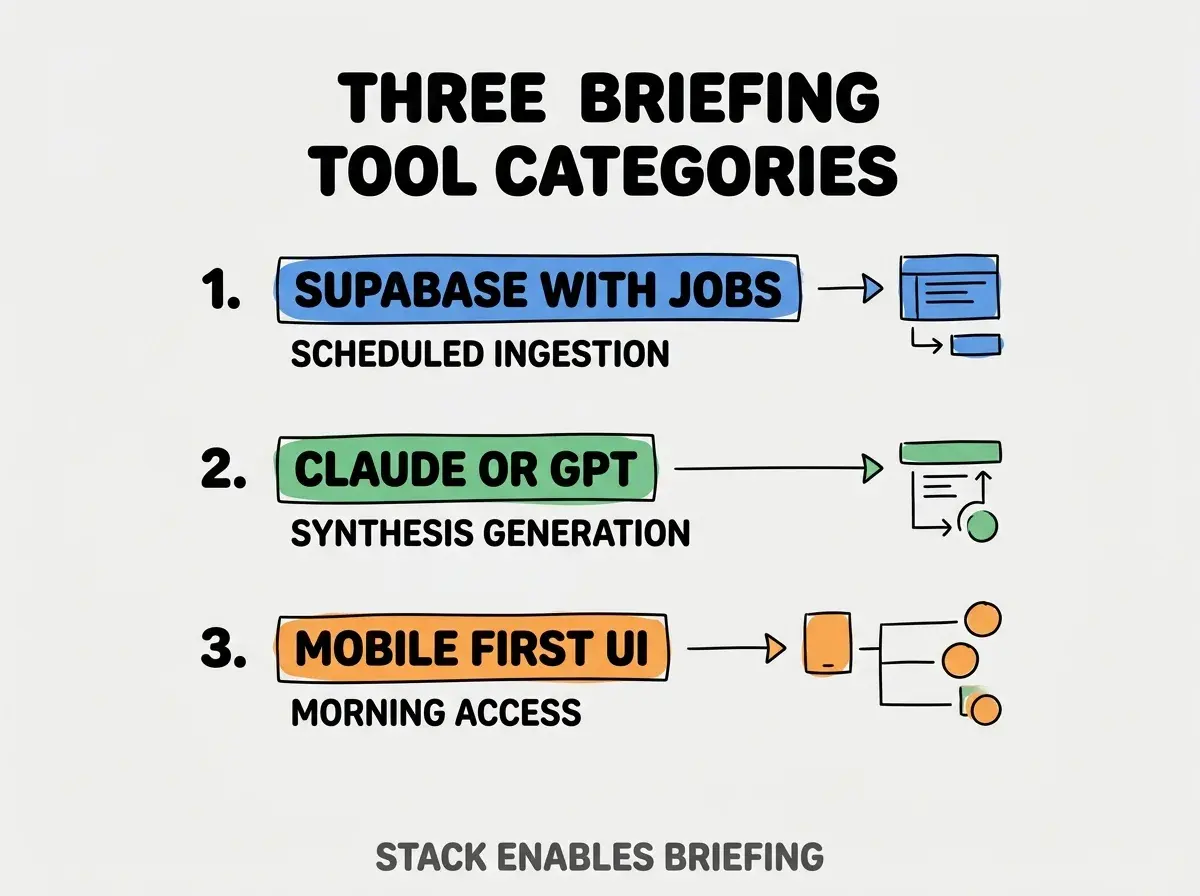
Tool 1, Supabase with scheduled jobs for ingestion. Background ingestion populates fresh briefing. Scheduled matters for morning freshness.
Tool 2, Claude or GPT for synthesis generation. AI synthesizes diverse data into briefing. AI choice affects briefing quality.
Tool 3, mobile first UI for morning access. Morning checks happen on phone. Without mobile, briefing gets bypassed.
What Makes Briefing Dashboards Get Sustained Use
Three patterns separate sustained use from quick abandonment.
Pattern 1, briefing ready before user wakes. Pre generated briefing available immediately. Without pre generation, briefing feels slow.
Pattern 2, briefing length under five minute read. Long briefings overwhelm; short briefings get read. Length matters dramatically.
Pattern 3, briefing personalization improving over time. Personalization based on what user actually reads. Without personalization, briefings stay generic.
The combination produces briefing dashboards that become morning habits. Without these patterns, dashboards get tried then abandoned.
How To Build Your First Briefing Dashboard
Three implementation patterns help first dashboards succeed.
Pattern A, start with three data sources. Three sources validate without overwhelming. More sources later as patterns establish.
Pattern B, dogfood for two weeks of morning use. Personal use validates with real morning patterns.
Pattern C, instrument morning open rate. Are users opening dashboard mornings? Without opens, dashboard value stays anecdotal.
The combination produces first dashboards that establish morning habits. Without patterns, dashboards launch with features that miss morning needs.
The most damaging briefing dashboard mistake is including too much data in pursuit of comprehensive briefing. Comprehensive briefings overwhelm; selective briefings get read. The fix is to ruthlessly limit briefing scope; better to have focused briefing that gets read than comprehensive briefing that gets skipped. Dashboards that respect morning attention produce sustained use; dashboards that exceed morning attention get abandoned regardless of feature completeness.
The other mistake is missing pre generation timing. Briefings generated when opened feel slow. Pre generation matters for morning UX.
A third mistake is treating briefing as static template. Briefings should evolve based on what user reads. Without evolution, briefings stay generic.
A fourth mistake is over emphasizing data over synthesis. Raw data harder to consume than synthesized narrative.
How To Handle Specific Briefing Sources
Three sources deserve specific approaches.
Source A, calendar with daily schedule. Today's events, conflicts, preparation needed. Calendar core to briefing.
Source B, news from selected feeds. Selected feeds prevent overwhelm. Without selection, news dominates.
Source C, email summary for important threads. AI summarizes important email. Summary prevents email checking.
The combination produces source specific briefing. Without source specific approaches, generic briefing serves sources mediocrely.
How Briefing Dashboards Will Likely Evolve
Briefing dashboards will likely continue evolving with AI capabilities.
The first likely evolution is voice briefings. Listen to briefing during morning routines. Voice expands briefing modes.
The second likely evolution is predictive briefings. AI anticipating what user needs based on day patterns. Prediction produces more relevant briefings.
The third likely evolution is integration with smart home. Briefings displayed on smart speakers and displays. Integration extends briefing reach.
The combination suggests briefing dashboards will become more capable. Builders learning patterns now build skills that remain valuable.
Common Questions About Briefing Dashboards
Briefing dashboard building raises questions worth addressing directly.
The first question is how to handle data source rate limits. Caching, scheduled fetching, fallbacks. Rate limits common; planning matters.
The second question is whether to build or use existing briefing services. Build for personal customization; use existing for commodity needs.
The third question is how to handle privacy of personal data. Local processing where possible; transparent data handling. Personal data sensitive.
The fourth question is whether briefings work for non morning use. Yes; evening briefings, weekly briefings work too. Time of day flexible.
How Briefing Dashboards Build Personal Productivity
Building briefing dashboards builds productivity beyond pure reading. Productivity effects compound over time.
The first compounding effect is morning routine quality. Concentrated briefing produces focused morning. Focus matters for day quality.
The second compounding effect is reduced phone scrolling. Briefing replaces social scrolling. Reduction frees attention.
The third compounding effect is information awareness without overwhelm. Awareness through briefing without information anxiety. Balance matters for sustainability.
The combination produces morning quality improvements that compound across days, weeks, and years of consistent briefing use. Quality matters for life beyond productivity metrics.
Building a personal briefing dashboard demonstrates AI capability through immediate personal value rather than abstract demos, making it ideal first AI project for builders learning AI integration patterns.
What This Means For You
Daily briefing dashboards turn fragmented morning information consumption into focused briefing. The four patterns, AI approaches, and tool combinations produce dashboards that change morning productivity.
- If you're a creative: Briefing dashboards reduce attention fragmentation. Building for yourself produces both tool and morning quality improvement.
- If you're a career changer: Briefing dashboards demonstrate AI capability through personal value. Building produces tool and learning.
- If you're a senior dev: Briefing dashboards combine interesting technical work with personal value. Building produces useful tool while building skills.
Browse more personal builds
Read more build