To understand AI code quality metrics in 2026, recognize the four key metric categories the data organizes into (defect rates measuring bug frequency in AI generated code, security vulnerability rates measuring exploitable patterns in AI generated code, revert rates measuring how often AI generated code gets removed within 6 months, and maintainability metrics measuring whether AI generated code stays workable over time), see what the data reveals about real AI code quality beyond marketing claims, and consider what the metrics mean for engineering practice decisions. The metrics provide grounded view of AI code quality that vendor marketing or critic dismissal both obscure.
This piece walks through the four metric categories, what the data reveals, the implications for engineering teams, and the four mistakes when interpreting quality metrics.
Why AI Code Quality Metrics Matter
AI code quality metrics matter for grounding AI tool decisions in evidence rather than anecdote. The grounding matters; vendors cite favorable quality data, critics cite unfavorable quality data, and the actual metrics tell more nuanced story than either side acknowledges.
The 2026 reality is that substantial quality data exists from production deployments. The data converges on certain findings while diverging on others; understanding the convergence helps engineering practice decisions.
A 2025 production engineering study of 200 organizations using AI coding heavily found that AI generated code without review showed defect rates 22 percent higher than human written code, while AI generated code with mandatory human review showed defect rates 8 percent lower than pure human code. Review discipline matters dramatically for quality outcomes.
The pattern to copy is the way medical research handles drug efficacy and safety data. Single studies rarely settle questions; meta analyses across many studies produce more reliable conclusions. AI code quality benefits from similar meta analytical thinking; understanding the variance and convergence across studies produces better decisions than relying on any single study.
The Four Key Metric Categories
Four metric categories organize AI code quality data.
Category 1, defect rates. Bug frequency in AI generated code. Studies show 22 percent higher than human code without review, 8 percent lower with review. Review discipline determines defect outcomes.
Category 2, security vulnerability rates. Exploitable patterns in AI generated code. Studies show 30-40 percent higher than human code without scanning, similar to human code with automated scanning. Scanning discipline determines security outcomes.
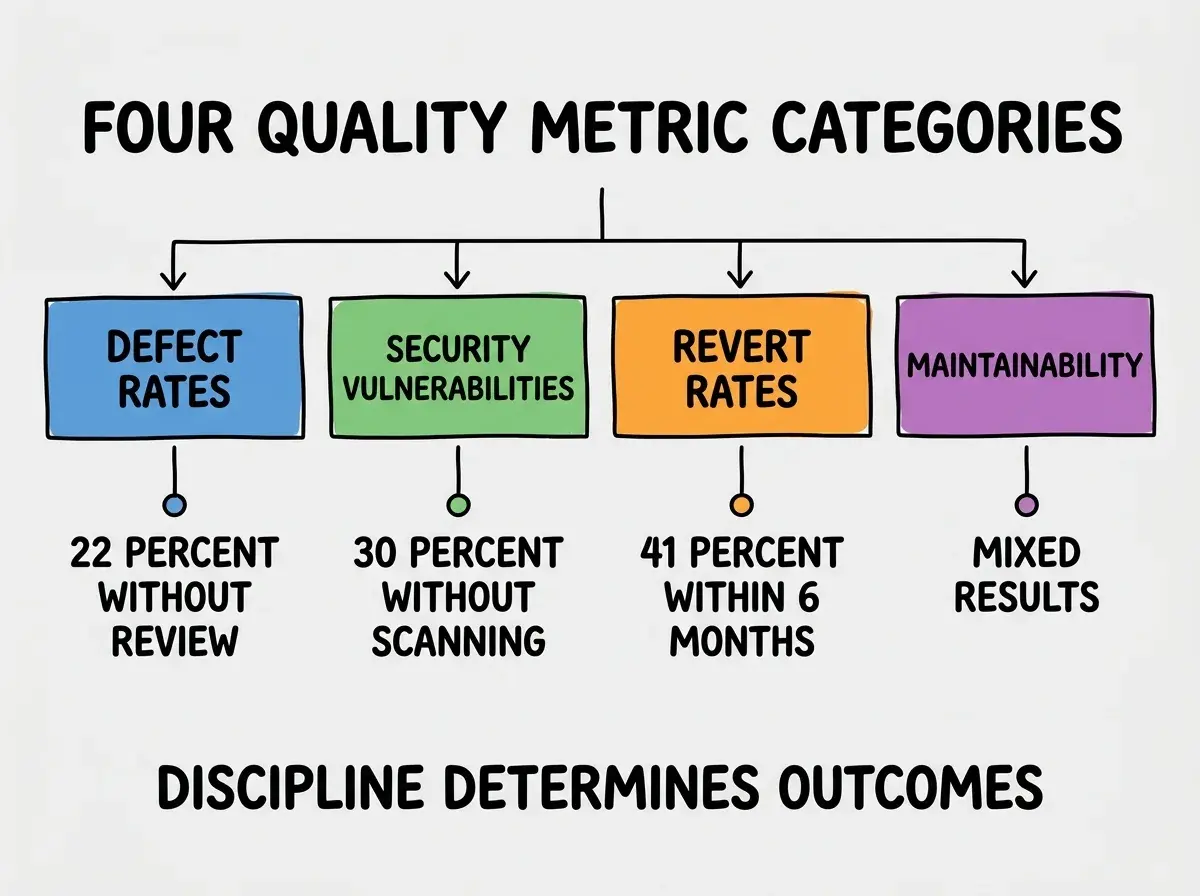
Category 3, revert rates. How often AI generated code gets removed within 6 months. Studies show 41 percent average revert rate for AI generated code versus 23 percent for human code. The revert rate gap reveals quality issues that ship despite review.
Category 4, maintainability metrics. Whether AI generated code stays workable over time. Studies show mixed results; some metrics favor AI code, others favor human code. Maintainability requires more research before clear conclusions emerge.
What the Data Reveals
Three patterns from the metrics reveal AI code quality reality.
Pattern 1, discipline transforms quality outcomes dramatically. With discipline, AI generated code can match or exceed human written code quality. Without discipline, AI generated code substantially underperforms. Discipline is the difference.
Browse more engineering analysis
Read more pulse articlesPattern 2, the 41 percent revert rate is the most concerning quality signal. Code shipped successfully but reverted within 6 months indicates quality issues that ship review missed. The revert rate gap between AI and human code reveals systematic quality challenges.
Pattern 3, security rates respond best to automated tooling. Manual security review for AI generated code volume is impractical. Automated security scanning produces sustainable security outcomes that manual review cannot.
What the Metrics Mean For Engineering Practice
Three implication patterns matter for engineering teams thinking about AI code quality.
Implication 1, mandatory human review of AI generated code is non negotiable for quality. Teams that skip review see substantially worse quality outcomes. Review discipline is the foundation of sustainable AI tool use.
Implication 2, automated security scanning should be mandatory for AI generated code. Manual review cannot scale to AI generation volume; automated scanning fills the gap that human review cannot.
Implication 3, revert rate tracking reveals quality issues that ship review misses. Monitoring 6 month revert rates produces feedback that improves both AI tool use and review discipline.
How Engineering Teams Should Apply These Metrics
Three application patterns help engineering teams apply quality metrics.
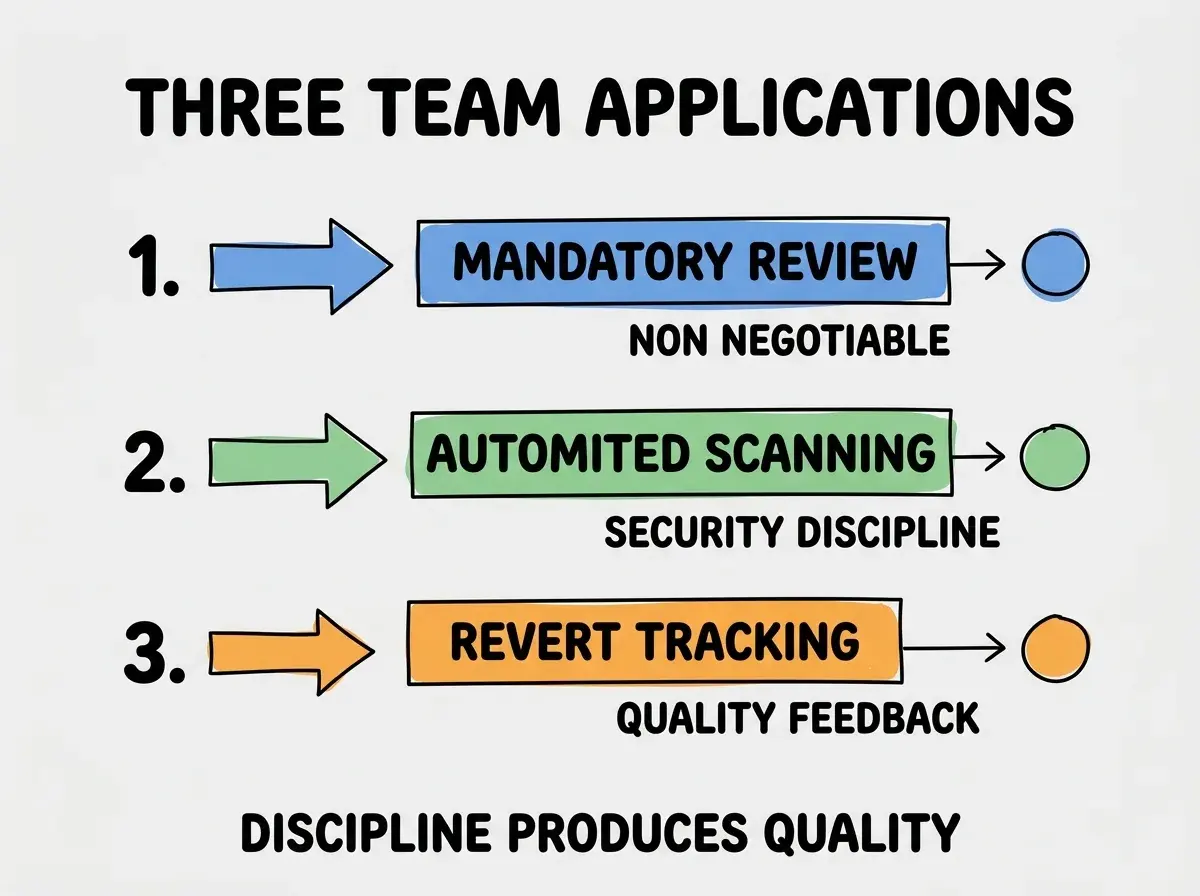
Pattern 1, make code review mandatory before any AI generated code merges. No exceptions, no shortcuts. Discipline starts with mandatory review.
Pattern 2, automate security scanning in CI/CD pipelines. Every AI generated code change triggers security scanning. Automation prevents the security gaps that manual scanning misses.
Pattern 3, track revert rates monthly to identify quality patterns. Which types of AI generated code get reverted most often. The data informs both AI tool use patterns and review focus areas.
The combination produces AI tool use with quality outcomes that match or exceed pure human code. Without these patterns, teams that adopt AI tools eagerly often see quality degradation that affects long term productivity more than initial AI gains help.
The most damaging quality metric interpretation mistake is treating quality outcomes as fixed properties of AI tools rather than as outcomes of team practices. AI tools do not have fixed quality outcomes; team practices around review, scanning, and tracking determine outcomes. The fix is to focus on practice changes rather than tool changes; better practices with any AI tool beat worse practices with the best AI tool. Quality is determined by what teams do with AI tools, not by which AI tools teams use.
The other mistake is treating quality metrics as static. AI tool capabilities improve continuously; quality outcomes shift as tools improve. The fix is to track metrics over time rather than treating point in time data as permanent.
A third mistake is missing the connection between quality metrics and business outcomes. Code quality affects business outcomes through bugs, security incidents, and maintenance costs. The fix is to connect quality metrics to business metrics; quality matters because of business impact, not as an end in itself.
A fourth mistake is treating all code as equally important for quality. Critical paths require higher quality than experimental code. The fix is to apply quality discipline proportional to code importance; uniform discipline often produces wrong allocation of quality investment.
A fifth mistake is overinvesting in defect rate optimization while ignoring revert rate. Defect rates measure shipping; revert rates measure outcomes after shipping. The fix is to track both; defect optimization without revert tracking misses the larger quality picture that revert rates reveal.
What This Means For You
The AI code quality metrics reveal that discipline determines outcomes more than tool choice. The four categories, application patterns, and team implications produce framework for thinking about AI code quality with data grounding.
- If you're a senior dev: Code review discipline is your highest leverage AI quality intervention. Make review non negotiable for AI generated code; the discipline produces quality outcomes that no AI tool can produce alone.
- If you're a founder: Engineering quality affects business outcomes through bugs and incidents. Invest in quality discipline as engineering culture; the investment compounds across all engineering output.
- If you're a student or career changer: Learning quality discipline now produces career foundations that compound over decades. AI tools without discipline produce shipped code that does not last; discipline produces sustainable engineering careers.
Browse more engineering analysis
Read more pulse articles