The state of vibe coding in Q4 2026 reflects year of dramatic maturation with four key trends defining year end: market consolidation completing for major categories, AI native organizations clearly outperforming AI adopters, vertical AI as established category, and 2027 outlook focused on autonomous coding scale. Total market estimated at $6.4B annualized run rate, finishing year up 87 percent. 2026 transformed vibe coding from emerging category to established industry.
This piece walks through the four Q4 2026 trends, what year end data reveals, what 2027 outlook means for builders, and the four mistakes when interpreting year end data.
Why Q4 2026 Year End Matters
Q4 2026 year end matters because annual data establishes baseline for 2027 strategy. Strategy informed by annual context outperforms strategy informed by single quarter.
The 2026 reality is that 2026 transformed industry; awareness of transformation shapes 2027 positioning.
A 2025 industry tracking study estimated total vibe coding market at $6.4B annualized run rate as of Q4 2026, finishing year up 87 percent from $3.4B end of 2025. Annual growth substantial but decelerating; 2027 expected 40-50 percent growth as market matures.
The pattern to copy is the way industry analysts produce annual reports for mature tech categories. Annual perspective reveals patterns single quarters cannot. Vibe coding now warrants annual analytical attention.
The Four Q4 2026 Trends
Four trends define Q4 2026 year end state.
Trend 1, market consolidation completing. Major categories now have 2-3 winners; consolidation phase essentially complete.
Trend 2, AI native organizations clearly outperforming. Performance gap with AI adopters now 50-80 percent; gap likely widens further.
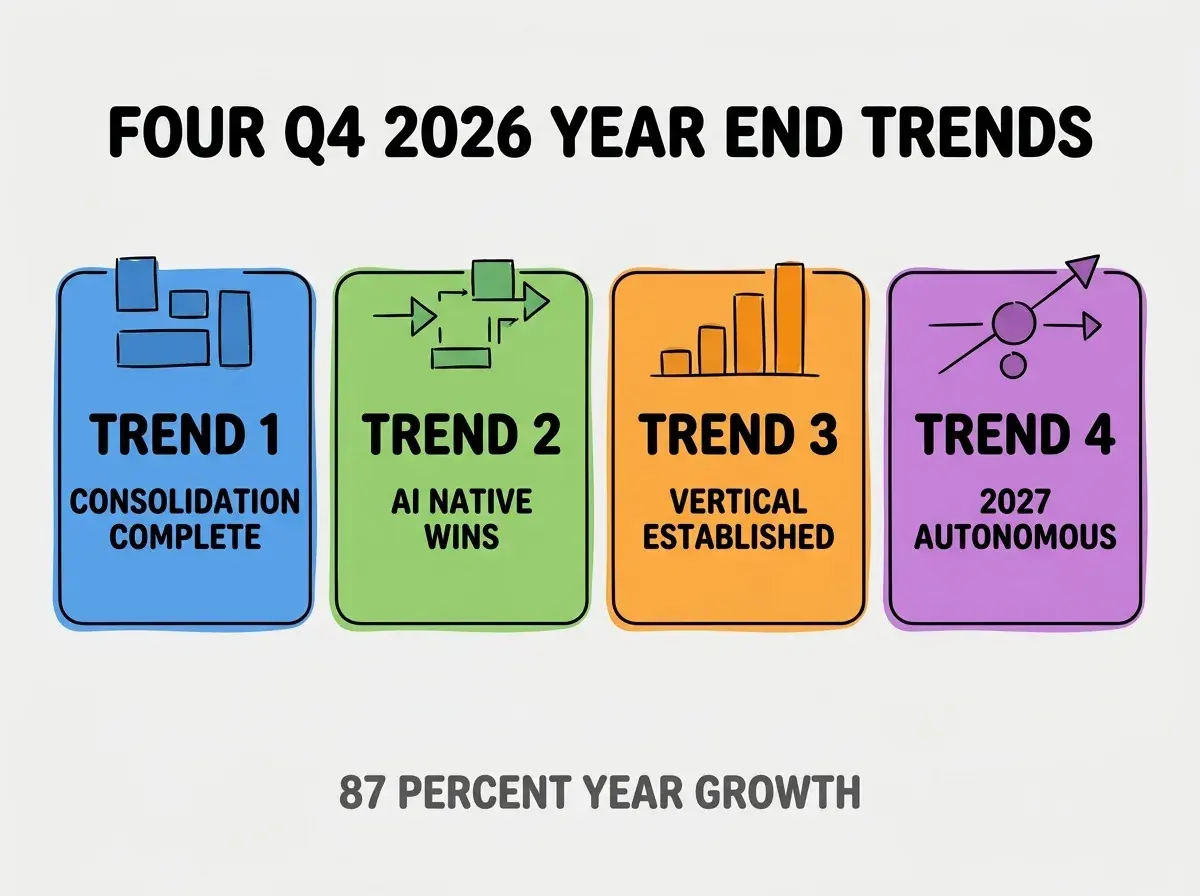
Trend 3, vertical AI as established category. Healthcare, fintech, ecommerce vertical tools all reaching commercial maturity.
Trend 4, 2027 outlook focused on autonomous coding scale. Autonomous AI coding production deployments growing rapidly; 2027 likely autonomous year.
What Year End Data Reveals
Three patterns characterize year end revelations.
Pattern 1, growth deceleration but absolute size dramatic. 87 percent growth slower than 2025; absolute size now major industry.
Browse more pulse
Read more pulsePattern 2, AI native gap widening fast. Organizations not transforming face increasing competitive disadvantage.
Pattern 3, regulatory frameworks now substantially in place. EU, US, China all major frameworks enacted; 2027 enforcement focus.
What Year End Means For 2027 Strategy
Three strategic implications matter for 2027.
Implication 1, ride established categories or specialize verticals. Mass market established; vertical opens.
Implication 2, AI native transformation now mandatory. Not transforming means accepting competitive disadvantage.
Implication 3, autonomous coding skills increasingly valuable. Autonomous scale opening; specialized skills compound.
What Makes Year End Analysis Sustainable
Three patterns separate sustainable annual analysis from single year snapshots.
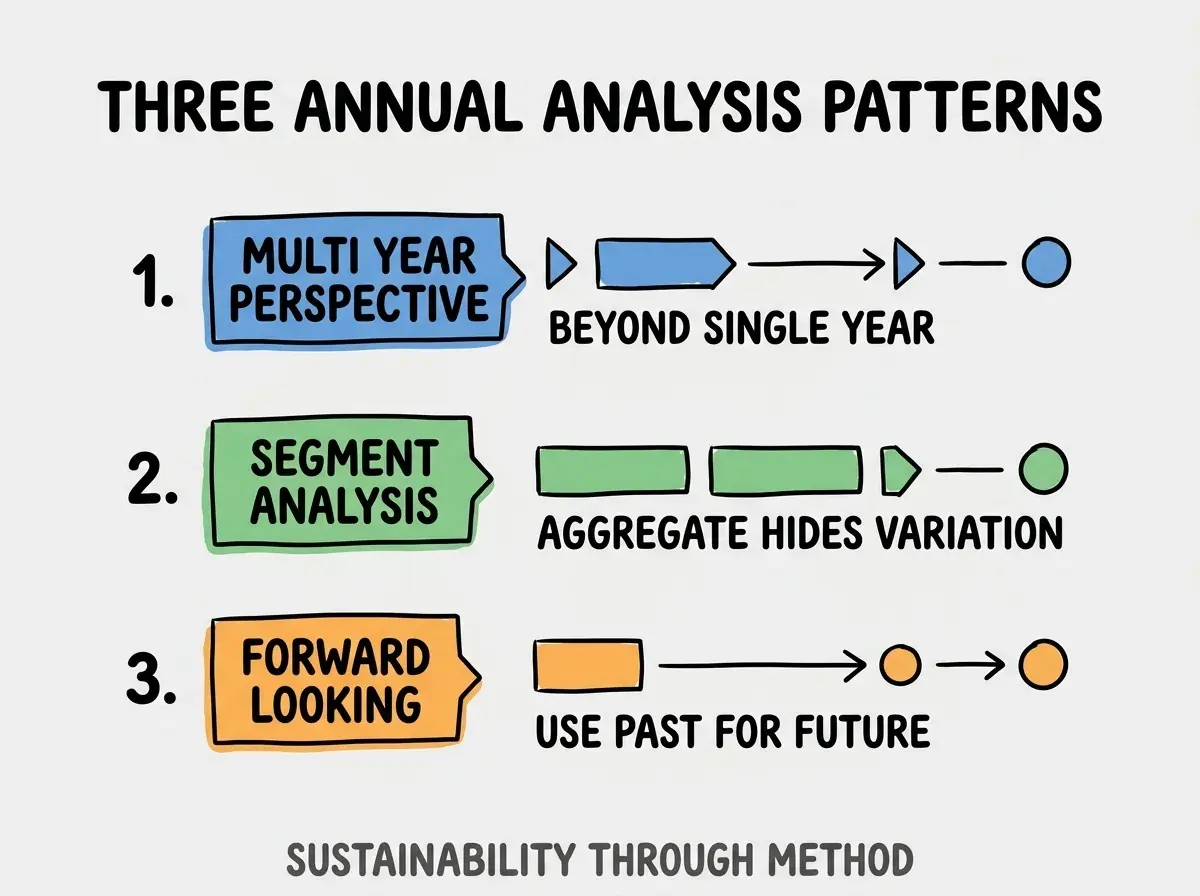
Pattern 1, multi year perspective. Single year noisy; multiple years reveal trends.
Pattern 2, segment analysis beyond aggregate. Aggregate hides variation; segments reveal nuance.
Pattern 3, forward looking application. Past data inform future decisions; backward looking produces no value.
The combination produces sustainable annual analysis. Without these patterns, annual reports stay backward looking.
How To Use Year End Data For 2027 Planning
Three application patterns convert year end into 2027 planning.
Pattern A, identify established vs emerging categories. Established categories saturate; emerging categories opportunity.
Pattern B, evaluate AI native readiness. Self assessment reveals gap; gap informs investment.
Pattern C, position for autonomous coding wave. Skills, products, services for autonomous coming faster than expected.
Common Questions About Q4 2026 Year End
Q4 2026 year end raises questions worth addressing directly.
The first question is whether 2027 growth continues. Yes; deceleration to mature growth pace. Substantial absolute growth still.
The second question is whether to enter market in 2027. Yes for differentiated; no for commodity. Differentiation matters more than entry timing.
The third question is whether AI native transformation worth investment in 2027. Yes; gap widening makes investment imperative.
The fourth question is when autonomous coding becomes default. 2027-2028 likely transition; 2029+ established.
How Year End State Affects Career Decisions
Year end state affects career decisions in compounding ways. Career effects compound across decades.
The first compounding effect is industry choice. Vibe coding established; career investment justified.
The second compounding effect is skill prioritization. AI native and autonomous skills increasingly valuable.
The third compounding effect is geographic decisions. Hot markets now established; relocation decisions clearer.
The combination produces career trajectories shaped by year end awareness. Without awareness, decisions follow chance.
How To Track Year End State Personally
Three patterns help individuals track year end specifically.
Pattern A, compile annual personal observations. Personal observations from work and community supplement public data.
Pattern B, write year end reflection. Reflection synthesizes awareness; synthesis produces insight.
Pattern C, share annual observations publicly. Sharing produces feedback; feedback refines understanding.
The combination produces personal year end tracking. Without tracking, year end patterns missed.
The most damaging year end analysis mistake is treating 2026 patterns as predictive of 2027 directly. Markets evolve; pattern continuation not guaranteed. The fix is to use 2026 patterns as foundation for 2027 hypotheses; hypotheses tested against 2027 data. Analysts who use as foundation produce useful 2027 strategy; analysts who project directly produce wrong predictions.
The other mistake is over indexing on year end as inflection. Year boundaries arbitrary; trends span boundaries.
A third mistake is missing the autonomous coding signal. Autonomous coming faster than most builders expect; missing signal misses positioning.
A fourth mistake is treating consolidation as stability. Consolidation produces winners but winners face new threats; vigilance matters.
What This Means For You
The state of vibe coding in Q4 2026 reflects year of dramatic transformation with patterns that inform 2027 strategy. The four trends, year end revelations, and strategic implications produce annual perspective for 2027 planning.
- If you're a founder: Position for established market dynamics; 2026 was transformation, 2027 is establishment phase.
- If you're a senior dev: AI native and autonomous skills increasingly valuable; investment compounds.
- If you're a product manager: Vertical AI opportunities established; explore vertical fits in your domain.
Browse more pulse
Read more pulse