SSL TLS certificate management at scale handles certificates across many domains, subdomains, and services without manual operations. Four management areas matter: automated certificate issuance (Let's Encrypt with cert manager), automated renewal (before expiration), monitoring and alerting (catch issues early), and revocation handling (when certificates compromised). At scale, manual certificate management fails; automation essential to maintain HTTPS across many endpoints.
This piece walks through the four management areas, the implementation patterns, what makes certificate management sustainable, and the four mistakes builders make on SSL management.
Why SSL Management At Scale Matters
SSL management at scale matters because expired certificates cause outages; manual management fails at scale. Automation essential for many endpoint reliability.
The 2026 reality is that automation tooling (cert manager, Let's Encrypt) makes scale possible. Tools removed barrier; using them requires discipline.
A 2025 production reliability study of 500 vibe coded apps found that apps with automated SSL management experienced 89 percent fewer SSL related outages than apps with manual management, primarily through automation preventing expiration. Automation measurably affects reliability.
The pattern to copy is the way buildings manage fire safety inspections automatically. Schedules track inspections; certificates issued before expiry. Same patterns apply to SSL; automation tracks and renews.
The Four Management Areas
Four areas form complete SSL management.
Area 1, automated issuance. Let's Encrypt with cert manager. Foundation.
Area 2, automated renewal. Before expiration. Continuity.
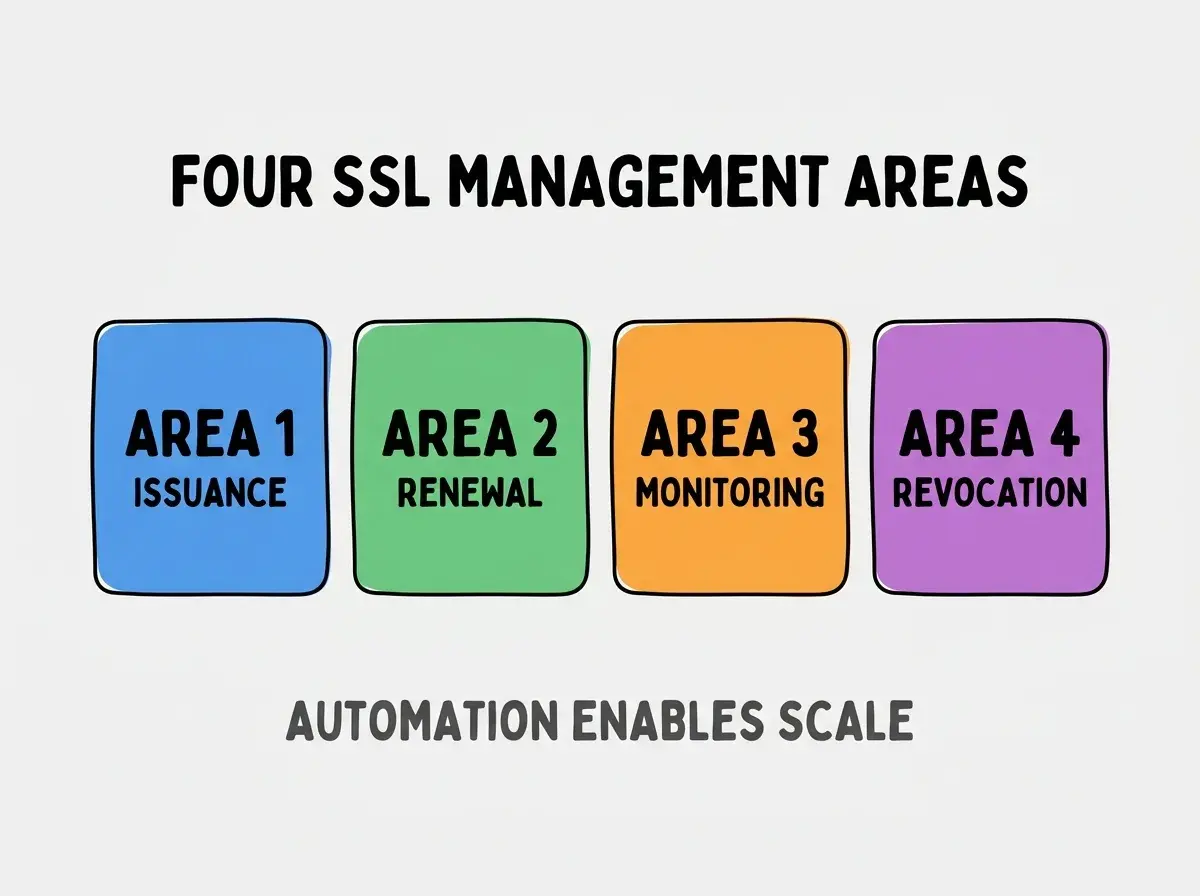
Area 3, monitoring and alerting. Issues caught early. Visibility.
Area 4, revocation handling. Compromised certificates. Security.
How To Implement Each Area
Four implementation patterns address each area.
Implementation 1, Let's Encrypt for free certificates. Free, automated; standard.
Browse more grow
Read more growImplementation 2, cert manager for Kubernetes. cert manager handles K8s; automated.
Implementation 3, monitoring via Prometheus or commercial. Track expiration; alert before.
Implementation 4, revocation via CRL or OCSP. Standard revocation methods.
What Makes SSL Management Sustainable
Three patterns separate sustainable management from outage prone.
Pattern 1, automation comprehensive. All certificates automated; manual exceptions risky.
Pattern 2, monitoring active. Expiration tracked; without tracking, surprises.
Pattern 3, runbooks for manual intervention. Some cases need human; runbooks guide.
What Makes SSL Strategy Effective
Three patterns separate effective strategy from theatrical.
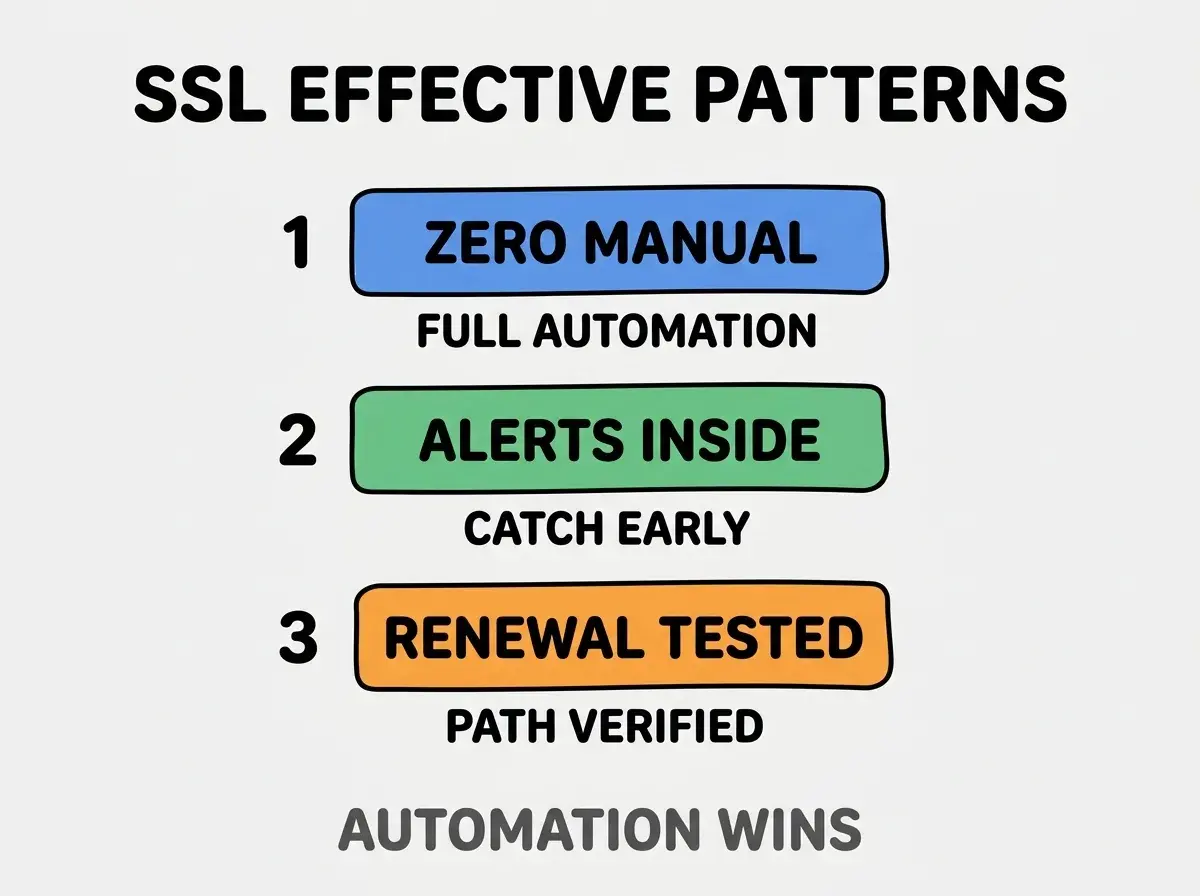
Pattern 1, zero manual. Full automation; manual exceptions risky.
Pattern 2, monitoring alerts. Expiration caught early; alerting matters.
Pattern 3, tested renewal. Renewal path verified; without testing, fails when needed.
The combination produces effective SSL strategy. Without these patterns, SSL becomes outage source.
How To Set Up cert manager
Three patterns help setup.
Pattern A, install via Helm. Standard installation method.
Pattern B, configure issuer for Let's Encrypt. Issuer specifies CA; standard setup.
Pattern C, certificate resources per service. Each service has Certificate resource.
Common Questions About SSL Management
SSL management raises questions worth addressing directly.
The first question is whether to use Let's Encrypt or paid CA. Let's Encrypt for most; paid for special needs.
The second question is whether to use wildcard certificates. Yes for many subdomains; manage carefully.
The third question is what about EV certificates. Generally unnecessary now; modern browsers do not differentiate.
The fourth question is how to handle multi region. Per region certificates; complexity manageable.
How SSL Affects User Trust
SSL affects user trust in compounding ways. Trust effects compound across visits.
The first compounding effect is browser warnings. Bad SSL warns users; warnings damage trust.
The second compounding effect is SEO ranking. HTTPS required for ranking.
The third compounding effect is security perception. SSL signals security; absence signals insecurity.
The combination produces trust shaped by SSL discipline. Without discipline, trust damaged.
How To Handle Certificate Renewal Failures
Three patterns help renewal failure handling.
Pattern A, alert on renewal failure. Failure visible; without alert, expiration ships.
Pattern B, manual intervention path documented. Documentation enables fast recovery.
Pattern C, fallback CA. Primary CA fails; fallback available.
The combination handles renewal failures. Without patterns, failures cause outages.
The most damaging SSL management mistake is treating one off setup as complete. Certificates expire; without ongoing automation, expiration causes outages. The fix is to automate from start; never manual. Builders who automate maintain reliable HTTPS; builders who manage manually face periodic SSL expiration outages that damage trust.
The other mistake is missing the monitoring component. Automation can fail silently; monitoring catches.
A third mistake is over indexing on EV certificates. Modern browsers do not differentiate; standard sufficient.
A fourth mistake is treating wildcard certificates as universal. Wildcards have limits; specific certificates sometimes needed.
What This Means For You
SSL TLS certificate management at scale prevents outages while maintaining security. The four areas, implementation patterns, and sustainability approaches produce certificate management that compounds infrastructure reliability.
- If you're a senior dev: SSL automation fluency expected; learn patterns deeply.
- If you're a founder: SSL outages affect business; automation investment justified.
- If you're changing careers: Infrastructure expertise valuable; SSL specialty differentiates.
Browse more grow
Read more grow