Progressive enhancement working without JavaScript is the discipline of building apps that function with HTML and CSS first, then layering JavaScript for enhanced experiences. Four enhancement layers matter: semantic HTML (forms work without JS), CSS styling (presentation without JS), basic JavaScript (small enhancements), and advanced JavaScript (interactivity layers). Combined layers produce resilient apps; without progressive enhancement, JavaScript failures break entire experience.
This piece walks through the four layers, the implementation patterns, what makes progressive enhancement sustainable, and the four mistakes builders make on progressive enhancement.
Why Progressive Enhancement Matters
Progressive enhancement matters because JavaScript fails. Network conditions, browser bugs, slow devices, content blockers all break JS. Apps that depend entirely on JS fail entirely.
The 2026 reality is that AI code generation often produces JS only solutions; progressive enhancement requires conscious choice.
A 2025 web reliability study of 1000 production apps found that apps with progressive enhancement maintained 23 percent higher availability under poor network conditions than apps requiring JavaScript, primarily through HTML form fallbacks. Enhancement measurably affects resilience.
The pattern to copy is the way commercial buildings have stairs even with elevators. Elevators enhance; stairs work always. Same patterns apply to web apps; HTML works always, JavaScript enhances.
The Four Enhancement Layers
Four layers form complete progressive enhancement.
Layer 1, semantic HTML. Forms, links, content. Foundation works without JS.
Layer 2, CSS styling. Presentation. Visual without JS.
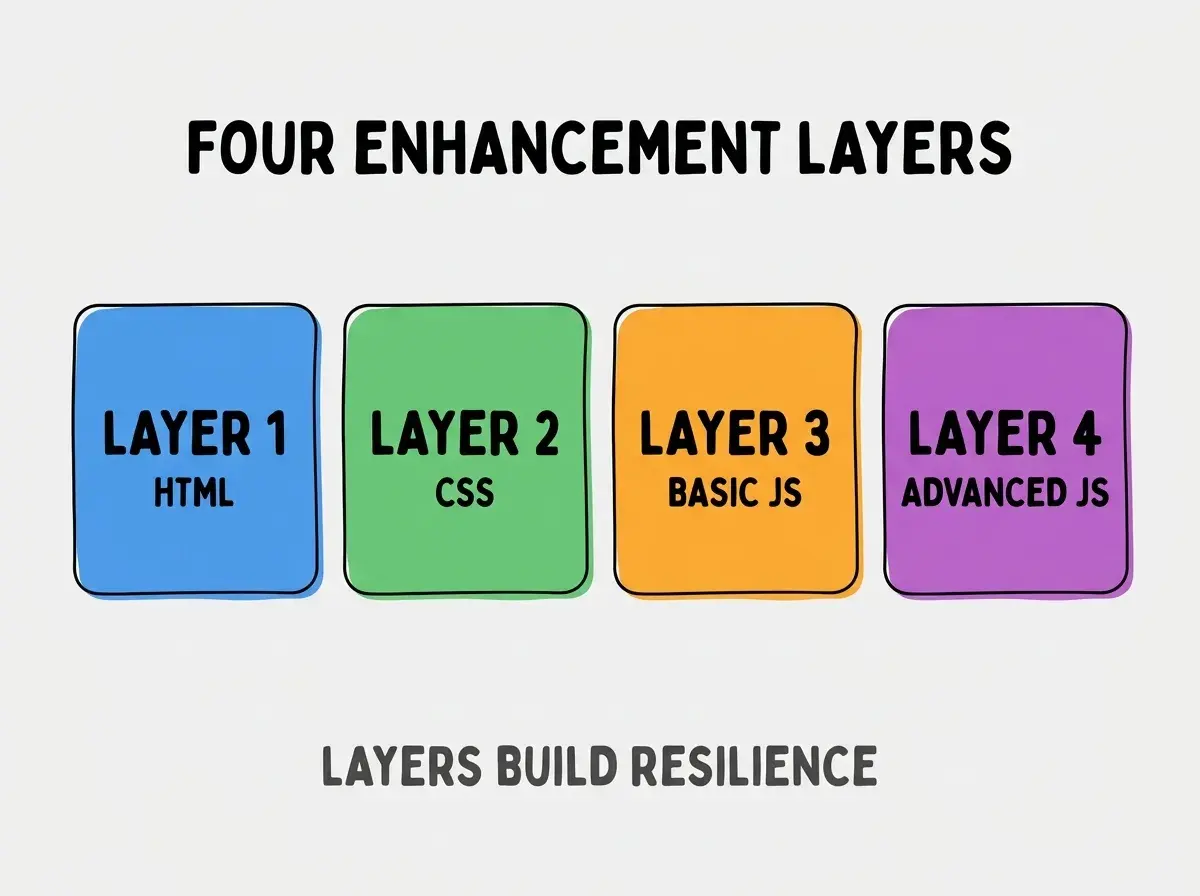
Layer 3, basic JavaScript. Small enhancements. Improves UX.
Layer 4, advanced JavaScript. Rich interactivity. Best experience.
How To Implement Each Layer
Four implementation patterns address each layer.
Implementation 1, HTML forms with action attributes. Forms post without JS via standard browser behavior.
Browse more ship
Read more shipImplementation 2, CSS only navigation patterns. Hover dropdowns, modal dialogs work in CSS.
Implementation 3, JS validation enhancement. HTML validation works; JS adds inline feedback.
Implementation 4, JS rich interactions. Drag and drop, animations require JS; gracefully absent.
What Makes Progressive Enhancement Sustainable
Three patterns separate sustainable from theatrical.
Pattern 1, server side rendering default. SSR ensures HTML works without JS execution.
Pattern 2, JS adds not replaces. JS enhances HTML behavior; not replaces.
Pattern 3, no JS testing in CI. Automated tests with JS disabled; catches regressions.
What Makes Enhancement Strategy Effective
Three patterns separate effective from theatrical.
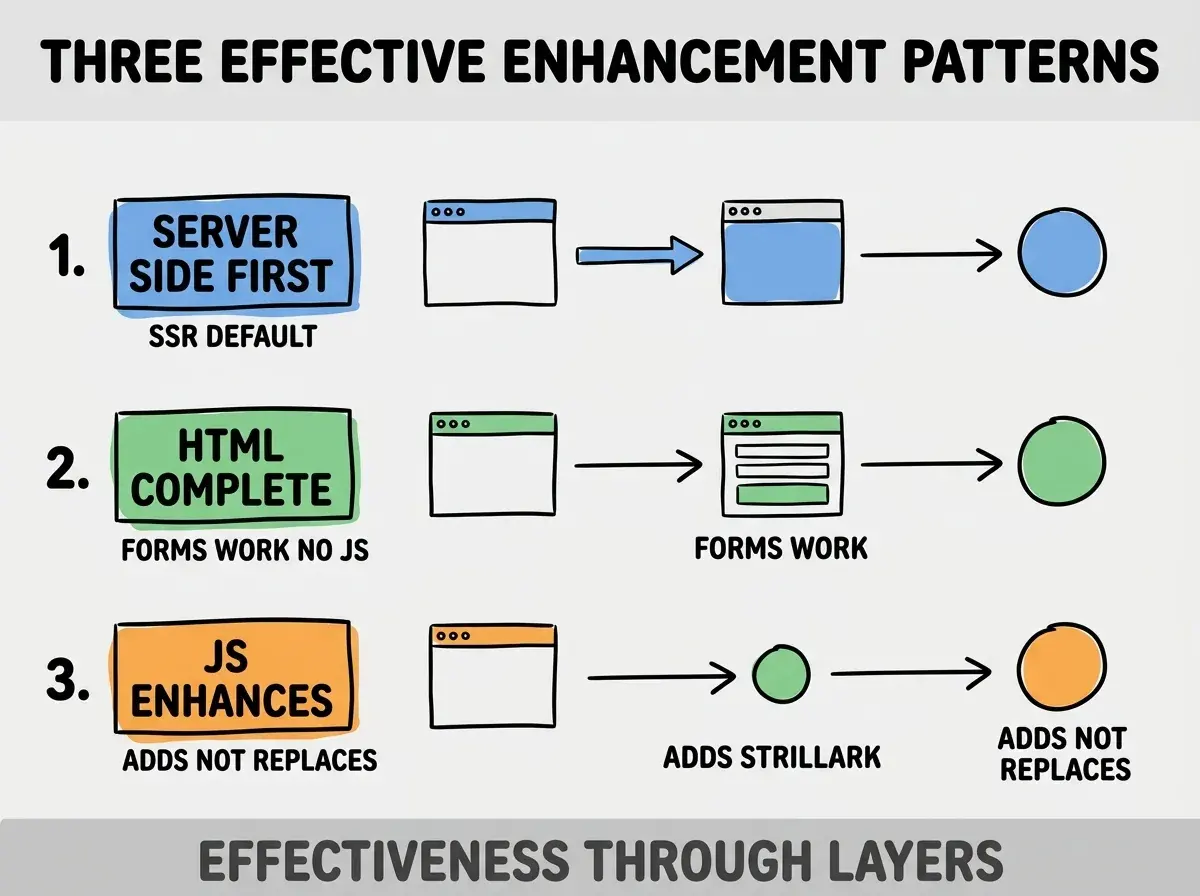
Pattern 1, server side first. SSR default for content.
Pattern 2, HTML complete. Forms function without JS.
Pattern 3, JS enhances. Adds; not replaces.
The combination produces effective enhancement. Without these patterns, apps fragile.
How To Test Progressive Enhancement
Three patterns help testing.
Pattern A, disable JS in browser. Manual testing path.
Pattern B, slow network simulation. Throttling reveals JS dependencies.
Pattern C, automated noscript tests. CI tests with JS off.
Common Questions About Progressive Enhancement
Progressive enhancement raises questions worth addressing directly.
The first question is whether SPA can be progressive. Yes; SSR plus hydration enables.
The second question is what about React. React supports SSR; progressive achievable.
The third question is whether to support fully without JS. Most features yes; some interactive can require.
The fourth question is how to handle authentication. Forms work without JS; OAuth redirects use HTML.
How Progressive Enhancement Affects Reliability
Enhancement affects reliability in compounding ways. Reliability effects compound across users.
The first compounding effect is bad network resilience. App works on slow networks.
The second compounding effect is accessibility. Screen readers benefit from HTML.
The third compounding effect is SEO. Crawlers see content.
The combination produces reliability shaped by enhancement. Without enhancement, reliability bounded.
How To Refactor Existing Apps
Three patterns help refactoring.
Pattern A, audit JS dependencies. Identify what breaks without.
Pattern B, add SSR incrementally. Page by page conversion.
Pattern C, fix forms first. Critical paths progressively enhanced first.
The combination produces refactored apps. Without patterns, refactor stalls.
The most damaging progressive enhancement mistake is treating it as nice to have. Apps without enhancement break for users who need it most (slow networks, accessibility tools, content blockers). The fix is to set HTML form fallback as design requirement; JS layers on. Builders who design progressive enhancement maintain reach; builders who treat as optional limit reach to ideal conditions only.
The other mistake is missing the no JS test path. Without testing, regressions sneak in.
A third mistake is over enhancing. Some features genuinely require JS; that is okay.
A fourth mistake is treating enhancement as separate workflow. Should be default development pattern.
What This Means For You
Progressive enhancement working without JavaScript ensures apps function when JavaScript fails. The four layers, implementation patterns, and sustainability approaches produce resilient apps that compound reach across user contexts.
- If you're a senior dev: Progressive enhancement is fundamental web skill; learn deeply.
- If you're a founder: Enhancement affects customer reach; investment justified by reliability gains.
- If you're changing careers: Web fundamentals demonstrate craft; valuable signal in hiring.
Browse more ship
Read more ship