To understand content delivery networks for modern applications, recognize the four CDN value patterns that matter (geographic distribution reducing latency for global users, edge caching reducing origin server load, automatic optimization improving asset delivery, and DDoS mitigation absorbing attack traffic), see what makes CDNs essential infrastructure rather than optional optimization, and apply the patterns that produce effective CDN integration. The CDN capability matters because it affects user experience, costs, and reliability simultaneously.
This piece walks through the four CDN value patterns, what makes CDN integration effective, the specific provider patterns, and the four mistakes that produce CDN value gaps.
Why CDNs Matter For Modern Applications
CDNs matter for modern applications regardless of scale. The mattering changes; small applications benefit from latency improvements while large applications benefit from cost and reliability improvements.
The 2026 reality is that CDNs have become baseline infrastructure rather than premium optimization. Most modern application stacks include CDN integration; applications without CDN integration often have measurably worse user experience than equivalent applications with CDN.
A 2025 web performance study of 1,000 applications found that applications with proper CDN integration showed 47 percent faster page load times for international users and 34 percent lower origin server costs compared to applications without CDN integration. The improvements compound to dramatically affect both user experience and infrastructure economics.
The pattern to copy is the way Amazon distributes warehouses globally. Amazon places inventory close to customers; deliveries happen quickly because inventory is nearby. CDNs follow similar pattern; assets cached close to users deliver faster than assets served from distant origin.
The Four CDN Value Patterns
Four patterns characterize CDN value for modern applications.
Pattern 1, geographic distribution reducing latency. CDN nodes globally; users get assets from nearby nodes. Latency reduction matters dramatically for user experience.
Pattern 2, edge caching reducing origin load. Cached assets served from edge; origin handles only cache misses. Caching reduces origin costs and increases reliability.
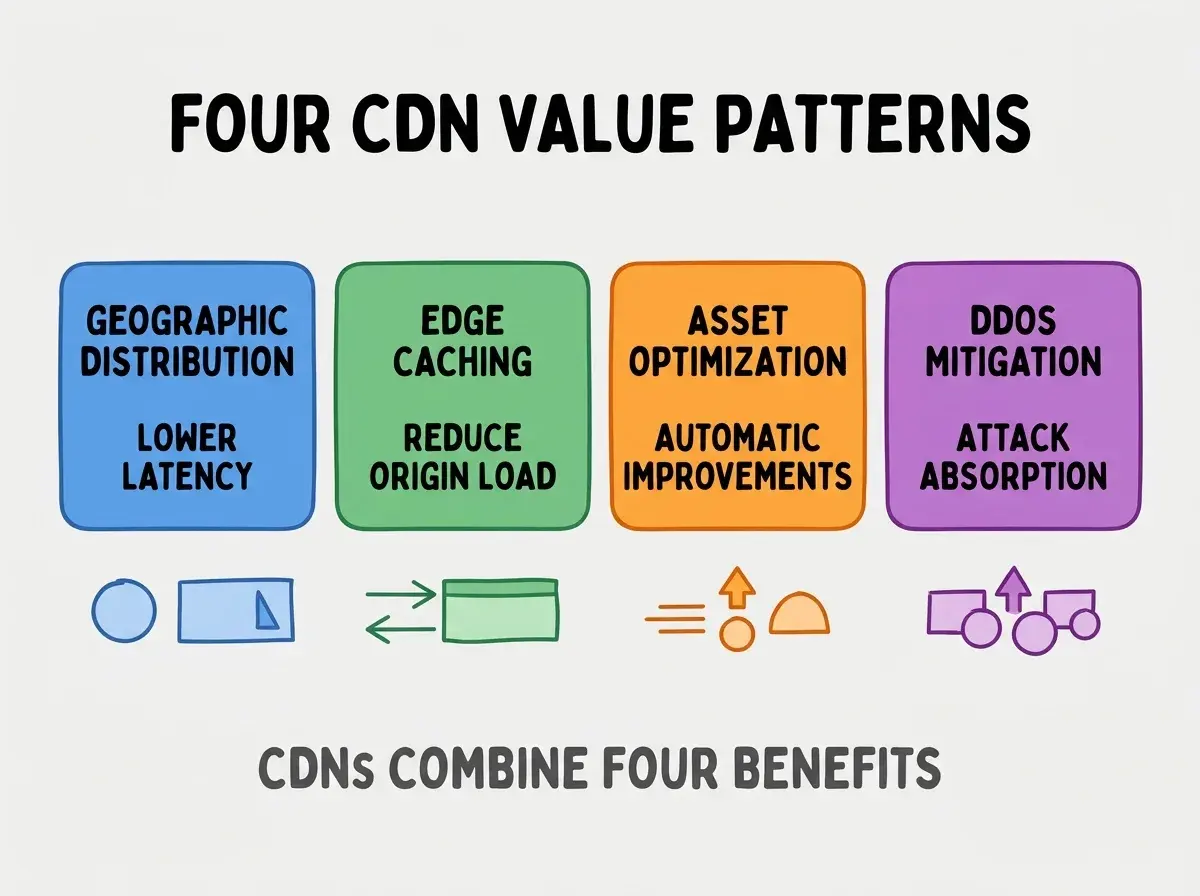
Pattern 3, automatic asset optimization. Image format conversion, compression, format optimization. Optimization improves delivery without application work.
Pattern 4, DDoS mitigation absorbing attack traffic. Attack traffic hits CDN before reaching origin. Mitigation protects origin from attacks.
What Makes CDN Integration Effective
Three patterns characterize effective CDN integration.
Pattern 1, cache headers configured for asset types. Static assets cache long; dynamic content cache short or not at all. Header configuration determines cache effectiveness.
Browse more ship articles
Read more ship articlesPattern 2, cache invalidation strategies for content updates. Content updates require cache invalidation; effective invalidation balances freshness and cache effectiveness. Invalidation patterns matter.
Pattern 3, monitoring of cache hit rates. Hit rate measures CDN effectiveness; without monitoring, CDN value stays unmeasured. Monitoring reveals optimization opportunities.
The Specific Provider Patterns
Three provider categories handle different CDN needs.
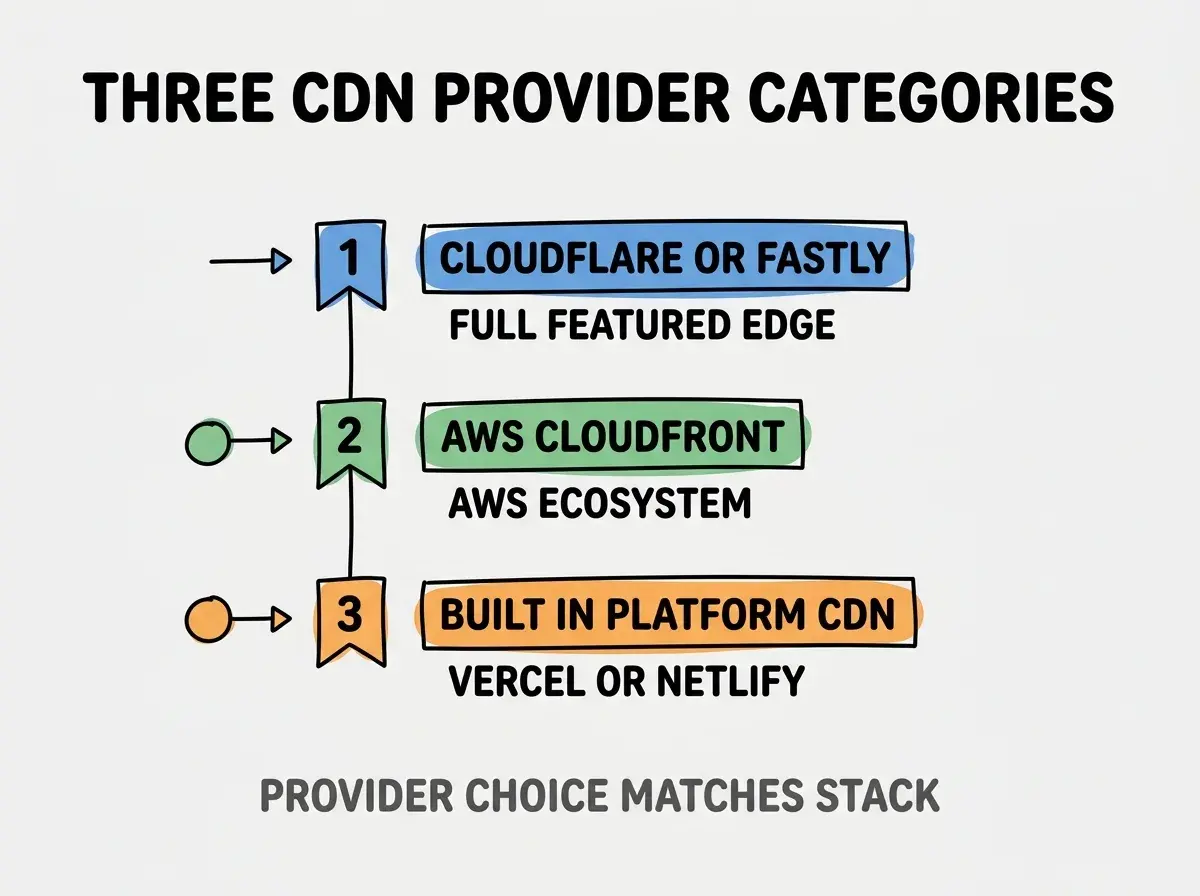
Provider 1, Cloudflare or Fastly for full featured edge. Workers, image optimization, security features. Full featured providers offer most capability.
Provider 2, AWS CloudFront for AWS ecosystem. Tight integration with S3, Lambda@Edge, AWS WAF. CloudFront fits AWS deployments naturally.
Provider 3, built in platform CDNs in Vercel or Netlify. Automatic CDN with platform integration. Built in reduces setup for hosted platforms.
What Makes CDN Use Sustainable
Three patterns separate sustainable CDN use from problematic patterns.
Pattern 1, cache strategy aligned with application patterns. Different content types need different cache strategies; one size fits all approach often produces suboptimal outcomes. Alignment matters.
Pattern 2, monitoring of cache effectiveness over time. Cache patterns drift; monitoring catches drift. Without monitoring, drift erodes CDN value silently.
Pattern 3, CDN configuration in version control. CDN settings affect application behavior; version control enables review and rollback. Without version control, CDN changes happen invisibly.
The combination produces CDN use that maintains value over time. Without these patterns, CDN value erodes as applications evolve.
How To Configure CDN For Specific Asset Types
Three asset type categories deserve specific configurations.
Asset 1, static assets with long cache lifetimes. JavaScript bundles, CSS, images with content hashes. Long cache lifetimes maximize edge serving.
Asset 2, dynamic API responses with short cache. API responses with short TTL or stale while revalidate. Short cache balances freshness and edge value.
Asset 3, user generated content with appropriate cache. Public content cacheable; private content not cacheable. Configuration matches content visibility.
The combination produces configurations matched to asset types. Without type specific configuration, generic settings produce suboptimal outcomes.
The most damaging CDN mistake is treating CDN as transparent infrastructure that works automatically. CDNs require configuration to work effectively; default configurations often produce mediocre cache hit rates and miss optimization opportunities. The fix is to configure CDN explicitly based on application content patterns; teams that configure CDN intentionally produce dramatically better outcomes than teams that rely on defaults. CDN value depends on configuration not just presence.
The other mistake is missing cache invalidation strategy. Content updates require cache invalidation; without strategy, users see stale content. The fix is to design invalidation strategy as part of content workflow.
A third mistake is treating CDN as optional optimization. CDN affects user experience, costs, and reliability simultaneously; treating it as optional misses compounded benefits.
A fourth mistake is choosing CDN without considering full feature needs. Feature needs vary; matching provider to needs matters more than choosing most prominent provider.
How To Measure CDN Value
Three metrics demonstrate CDN value over time.
Metric 1, cache hit rate showing edge effectiveness. Higher rates indicate better CDN value. Lower rates suggest configuration issues.
Metric 2, origin request volume showing offload. Lower origin volume indicates more edge serving. Volume reduction translates to cost savings.
Metric 3, latency percentiles for global users. Lower latencies indicate effective geographic distribution. Latency improvements translate to user experience.
The combination produces metrics that prove CDN value. Without measurement, CDN value stays anecdotal.
How CDN Capabilities Will Likely Evolve
CDNs will likely continue evolving with edge computing trends.
The first likely evolution is edge computing capabilities expanding. CDN edges running application logic, not just serving cached assets. Expansion changes what CDNs can do.
The second likely evolution is AI integration becoming standard. Automatic optimization, intelligent caching, security features powered by AI. Integration improves CDN value automatically.
The third likely evolution is cost models continuing to differentiate. Per request, per byte, per feature pricing models will likely persist. Differentiation matters for choice fit.
The combination suggests CDNs will become more capable but also more strategic to choose. Engineers learning patterns now build skills that remain valuable as capabilities expand.
Common Questions About CDN Use
CDN use raises questions worth addressing directly.
The first question is whether all applications need CDN. Yes, even small applications benefit from CDN; latency improvement helps even small user bases. CDN cost models accommodate small applications well.
The second question is how to handle dynamic content with CDN. Stale while revalidate, edge computing, careful cache headers all enable dynamic content with CDN. Patterns exist for most dynamic content scenarios.
The third question is whether to choose CDN provider before hosting platform. Some hosting platforms include CDN; some require separate CDN. Coordination matters; integrated platforms simplify setup while separate CDN offers more flexibility.
What This Means For You
CDN integration affects user experience, costs, and reliability simultaneously. The four value patterns, integration approaches, and provider categories produce framework for effective CDN use.
- If you're a founder: CDN integration affects user experience for global users dramatically. Plan CDN from start rather than as later optimization.
- If you're a senior dev: CDN configuration determines value; default configurations often miss most CDN benefits. Invest in configuration.
- If you're an indie hacker: Hosted platforms with built in CDN reduce setup burden. Choose platforms with strong CDN integration to capture benefits without operational burden.
Browse more ship articles
Read more ship articles