To build a music collaboration platform with AI tools, follow the four phase approach (define what music collaboration patterns the platform should support, build the data model that handles projects, tracks, and contributors, design the audio interface that handles file sharing and version control, and ship with the credit and royalty patterns that handle attribution fairly), recognize what separates music collaboration platforms musicians use from platforms musicians abandon for established alternatives, and apply the patterns that produce sustained creative use. The music collaboration platform becomes valuable when it makes remote music collaboration easier than coordinating through email and file sharing; without that bar, established alternatives win.
This piece walks through the four phases, the credit patterns, the specific tooling, and the four mistakes that produce music platforms musicians abandon.
Why Music Collaboration Platforms Matter
Music collaboration platforms turn fragmented remote music creation into structured workflows. The transformation matters; without platforms, musicians coordinate through email, file sharing services, and DAW exports that lose context and produce versioning chaos. Platforms produce structure that ad hoc tools cannot match.
The 2026 reality is that AI tools dramatically accelerate music platform building while AI integration during collaboration can suggest stems, draft credit splits, and detect tempo or key conflicts faster than manual coordination. The combination means small platforms can serve musicians at quality matching what enterprise music collaboration tools previously required.
A 2025 music creator survey of 600 independent musicians found that musicians using purpose built collaboration platforms completed remote songs 47 percent faster than musicians coordinating through file sharing services and email. The structure produces creative velocity that ad hoc tools cannot match.
The pattern to copy is the way GitHub transformed code collaboration. GitHub replaced email patches with structured collaboration that produced both efficiency and history that loose coordination could not match. Music collaboration platforms play similar role for musicians; structure produces creative outcomes that ad hoc collaboration cannot match.
The Four Phase Approach
Four phases produce music collaboration platforms musicians use sustainably.
Phase 1, define what music collaboration patterns the platform should support. Songwriting collaboration, beat sharing, full song production, remote band collaboration. Different patterns need different features.
Phase 2, build the data model that handles projects, tracks, and contributors. Projects, tracks, stems, contributors, versions. AI tools generate the schema effectively given clear specifications.
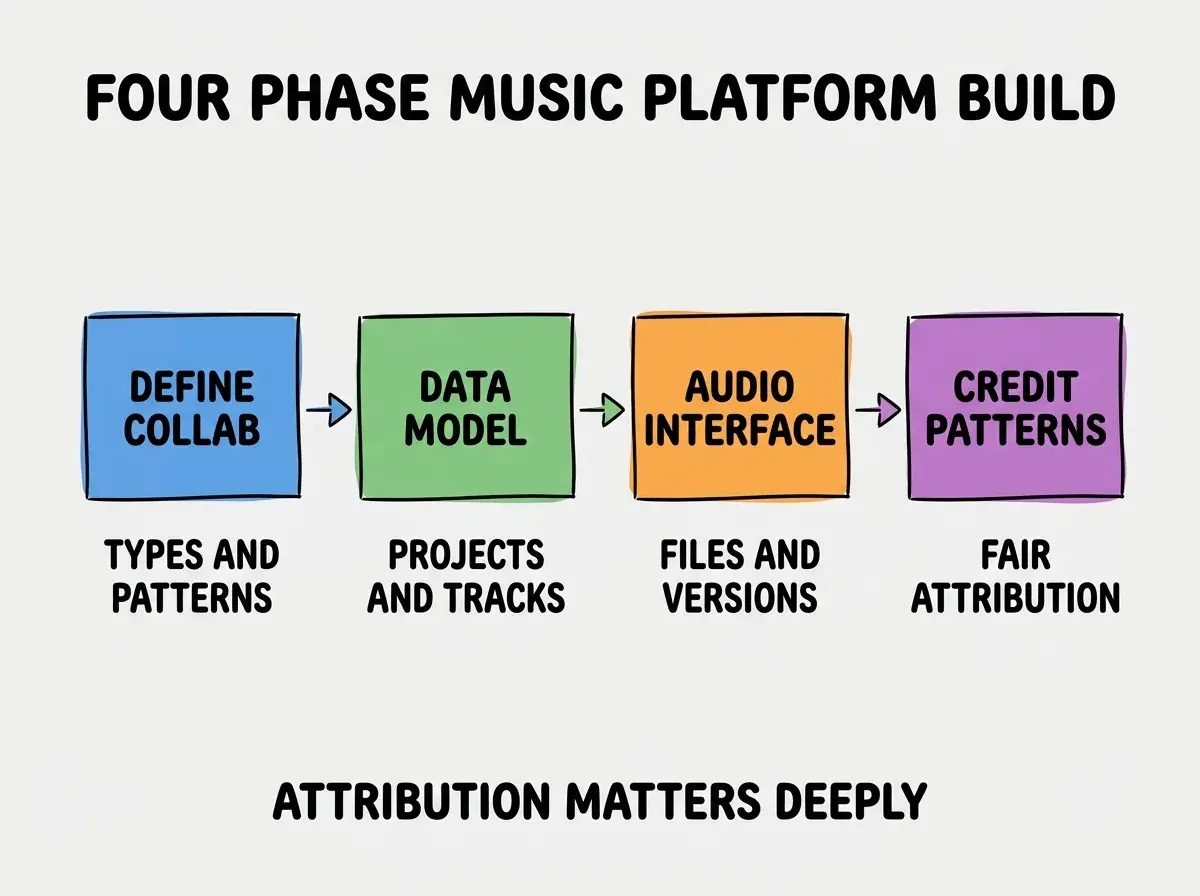
Phase 3, design the audio interface that handles file sharing and version control. Stem upload, version history, comment threads at specific timestamps. Audio interface determines workflow integration with DAWs.
Phase 4, ship with credit and royalty patterns that handle attribution fairly. Contribution tracking, credit splits, royalty calculation. Credit matters dramatically; musicians need fair attribution for collaboration to feel safe.
The Credit Patterns That Build Trust
Three patterns produce credit handling that musicians trust.
Pattern 1, granular contribution tracking with timestamps. Who added which stem at what time. Granular tracking creates auditable contribution history.
Browse more creator tutorials
Read more build tutorialsPattern 2, configurable credit splits with consensus mechanism. Contributors agree to credit splits before song completion. Consensus prevents disputes that destroy collaborations.
Pattern 3, transparent royalty calculation when songs monetize. Clear formulas for splitting any future revenue. Transparency builds trust that opaque calculations destroy.
The Specific Tooling That Worked
Three tool categories combine effectively for music platform building.
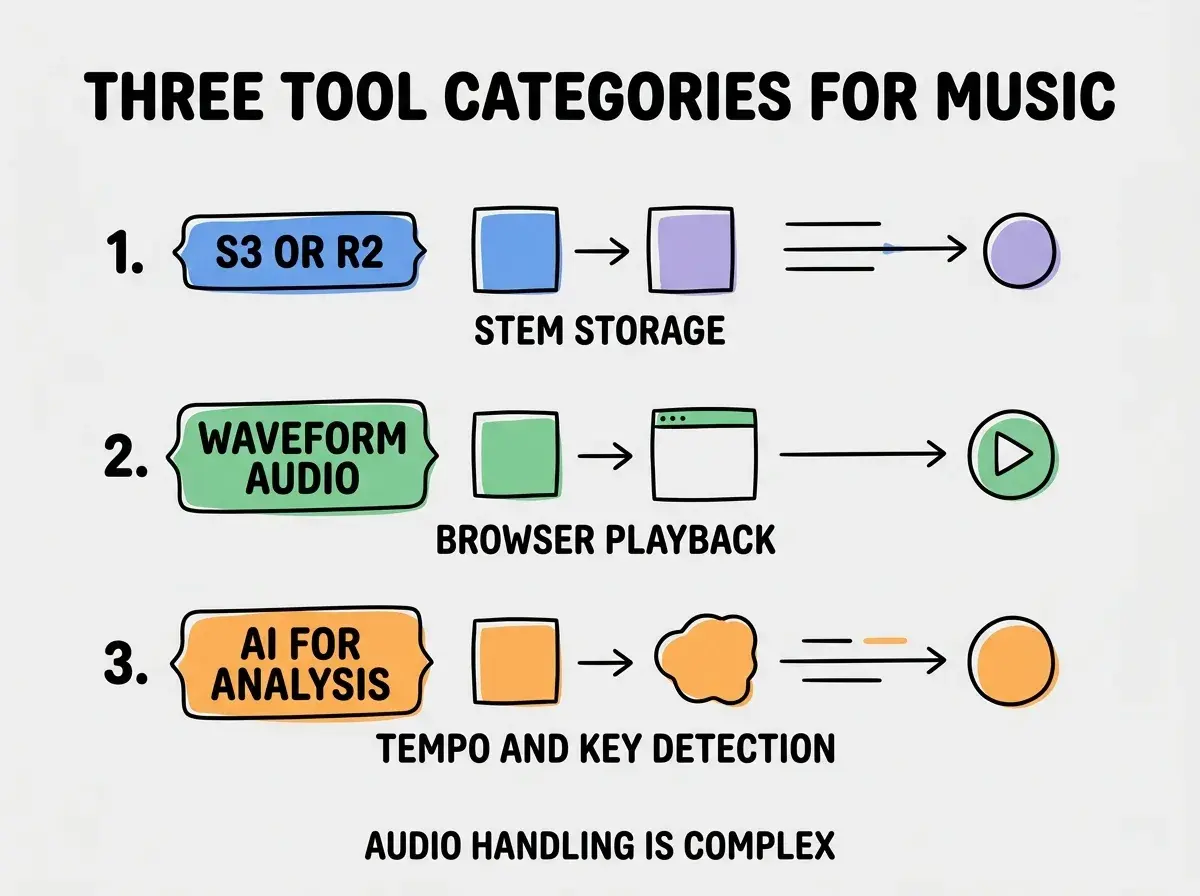
Tool 1, S3 or R2 for stem storage. Audio files at scale. Object storage handles audio files better than database storage at any meaningful scale.
Tool 2, Wavesurfer or similar for browser audio playback. Waveform visualization, scrubbing, looping. Browser audio interface determines collaboration usability.
Tool 3, AI for tempo and key analysis. Auto detect tempo, key, chord progressions. AI analysis enables features like automatic stem matching that improve collaboration.
What Makes Music Platforms Get Sustained Use
Three patterns separate sustained musician use from quick abandonment.
Pattern 1, DAW integration through plugin or export formats. Musicians work in DAWs primarily; platforms that integrate with DAW workflows succeed where standalone platforms fail.
Pattern 2, mobile listening with desktop production split. Listening happens mobile; production happens desktop. Both interfaces matter for sustained use.
Pattern 3, fast file upload and download. Music files are large; slow transfer produces friction. Speed determines workflow fit.
The combination produces platforms musicians integrate into creative workflows. Without these patterns, platforms get tried then abandoned for established file sharing.
How to Build Your First Music Platform
Three implementation patterns help first music platforms succeed.
Pattern A, start with one collaboration pattern, not all patterns. Songwriting first or production first. Single pattern validates the platform.
Pattern B, beta test with friendly musicians for 3 months. Music creation timelines are months; short beta misses real workflows.
Pattern C, instrument upload to playback experience. Where does friction emerge in the audio handling pipeline. Without instrumentation, audio issues stay hidden.
The combination produces first platforms that establish musician use patterns. Without these patterns, first platforms often launch with audio handling that does not match real DAW workflows.
The most damaging music collaboration platform mistake is treating music files like generic files. Music files have specific format requirements (sample rates, bit depths, channels), specific size constraints (multi gigabyte project files), and specific playback needs (low latency, scrubbing). The fix is to invest in audio specific handling from start; generic file handling produces frustration that audio specific handling avoids. Music platforms built on generic file infrastructure rarely succeed regardless of other features.
The other mistake is missing the legal complexity of music collaboration. Songwriter splits, performer rights, master rights all matter for monetization. The fix is to handle legal complexity deliberately; ignoring legal aspects produces problems when songs monetize.
A third mistake is failing to handle large project file sizes. Multi gigabyte files require special handling. The fix is to design for large files with resumable uploads and progress indicators.
A fourth mistake is treating all music genres identically. Hip hop production differs from band recording differs from electronic production. The fix is to design for genre specific patterns where they matter.
How Music Platform Communities Build Around Specific Genres
Three community patterns matter for music platform business sustainability. First, niche genre focus produces deeper engagement than general music platforms; specific genres have specific collaboration patterns that general platforms rarely match. Second, established musician advocates accelerate platform growth dramatically; one well known musician recommending a platform produces signups that paid marketing rarely matches. Third, integration with existing genre communities matters; music platforms that integrate with subreddits, Discord servers, and Twitter communities for specific genres reach audiences that standalone platforms struggle to find.
What This Means For You
The music collaboration platform built with AI tools becomes valuable through audio specific handling, fair credit patterns, and DAW workflow integration. The four phases, credit patterns, and tool combinations produce platforms musicians integrate into creative workflows.
- If you're a creator: Music collaboration platforms can become creative homes for distributed musical communities. Niche platforms (specific genres, specific collaboration patterns) often outcompete general platforms.
- If you're an indie hacker: Music has substantial market but specialized requirements. Build with deep music understanding or partner with musicians; without understanding, platforms fail to fit musician workflows.
- If you're a senior dev: AI tools handle music platform implementation effectively. The bottleneck is audio specific engineering and music industry understanding, not generic implementation; invest in those areas more than feature breadth.
Browse more creator tutorials
Read more build tutorials