To build a location-independent career as a vibe coder in 2026, recognize four lifestyle patterns that consistently work (digital nomad with monthly relocations, slow-traveling expat with year-long stays, home-based with occasional travel, and hub-based with deep community in one city), evaluate the practical considerations (taxes, healthcare, banking, time zones, visas) before committing, and choose a pattern that matches your actual preferences rather than the lifestyle that looks best on Instagram. Location-independent vibe coding is achievable but requires deliberate setup; the freedom is real but the work is also real.
This piece walks through the four lifestyle patterns, the practical considerations, the work patterns that thrive, and the four mistakes vibe coders make when going location-independent.
Why Vibe Coding Enables Location Independence
Traditional engineering roles often required office presence; vibe coding work is naturally remote-friendly. The combination of AI tools (location-independent), client communication via async channels (location-independent), and deliverable-based work (location-independent) makes location-independent vibe coding genuinely viable.
The 2026 reality is that location-independent work has become mainstream for vibe coders. The question is no longer whether the lifestyle is possible but which version of the lifestyle fits a given person.
A 2025 Nomad List builder survey of 3,000 location-independent technologists found that 67 percent of vibe coders had earnings stable or growing while traveling, compared to 42 percent of traditional engineers. The location-independence advantage is real for vibe coders specifically because the work pairs naturally with remote tools and deliverable-based engagements. The pattern works; the question is execution.
The pattern to copy is the way travel writers built location-independent careers in pre-internet days. They wrote on the move, sold articles to publications, traveled on assignment. The lifestyle worked because the work was portable. Vibe coding work has similar portability; the lifestyle patterns transfer with adaptation.
The Four Lifestyle Patterns
Four lifestyle patterns consistently work for location-independent vibe coders. Each fits different personalities and life stages.
Pattern 1, digital nomad with monthly relocations. New city every month or two. Maximum variety, social stimulation, and travel coverage. Best for younger builders without dependents.
Pattern 2, slow-traveling expat with year-long stays. Year in Bali, year in Lisbon, year in Mexico City. Deep cultural immersion, sustainable pace, easier logistics. Best for builders who want depth over variety.
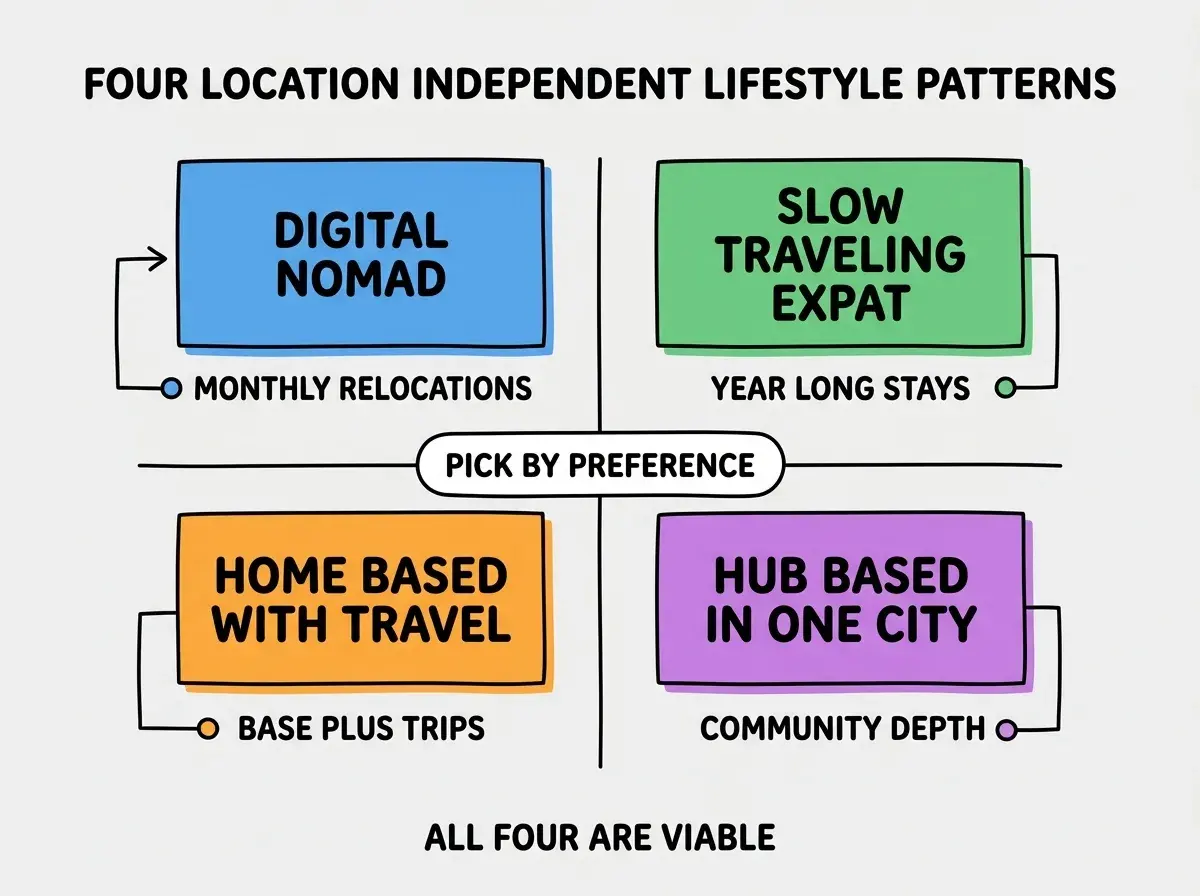
Pattern 3, home-based with occasional travel. Permanent home, frequent trips. Best for builders who value community and routine but also enjoy travel. Most sustainable long-term for many people who want both stability and exploration.
Pattern 4, hub-based with deep community in one city. Choose one optimal city (Lisbon, Bali, Austin, Buenos Aires) and stay. Build deep community while keeping location-independent income. Best balance of freedom and roots for many people who tested nomad life.
The Practical Considerations
Three practical considerations make or break the lifestyle. Underestimating them produces real problems.
Consideration 1, tax planning. Location-independent income often crosses jurisdictions. Tax obligations depend on citizenship, residency, source of income. Get professional advice before going location-independent; the cost of an accountant consultation is small relative to the risk of mishandling.
Browse more career and lifestyle guides
Read more foundations articlesConsideration 2, healthcare across borders. Travel insurance, expat insurance, country-specific systems. Healthcare gaps produce real risk; plan before traveling, not after experiencing a health issue without coverage.
Consideration 3, banking and payment infrastructure. Multi-currency accounts (Wise, Revolut), international payment methods, address requirements for accounts. The infrastructure is workable but takes setup time and forethought before you actually need it.
The Work Patterns That Thrive
Three work patterns help location-independent vibe coding thrive rather than struggle.
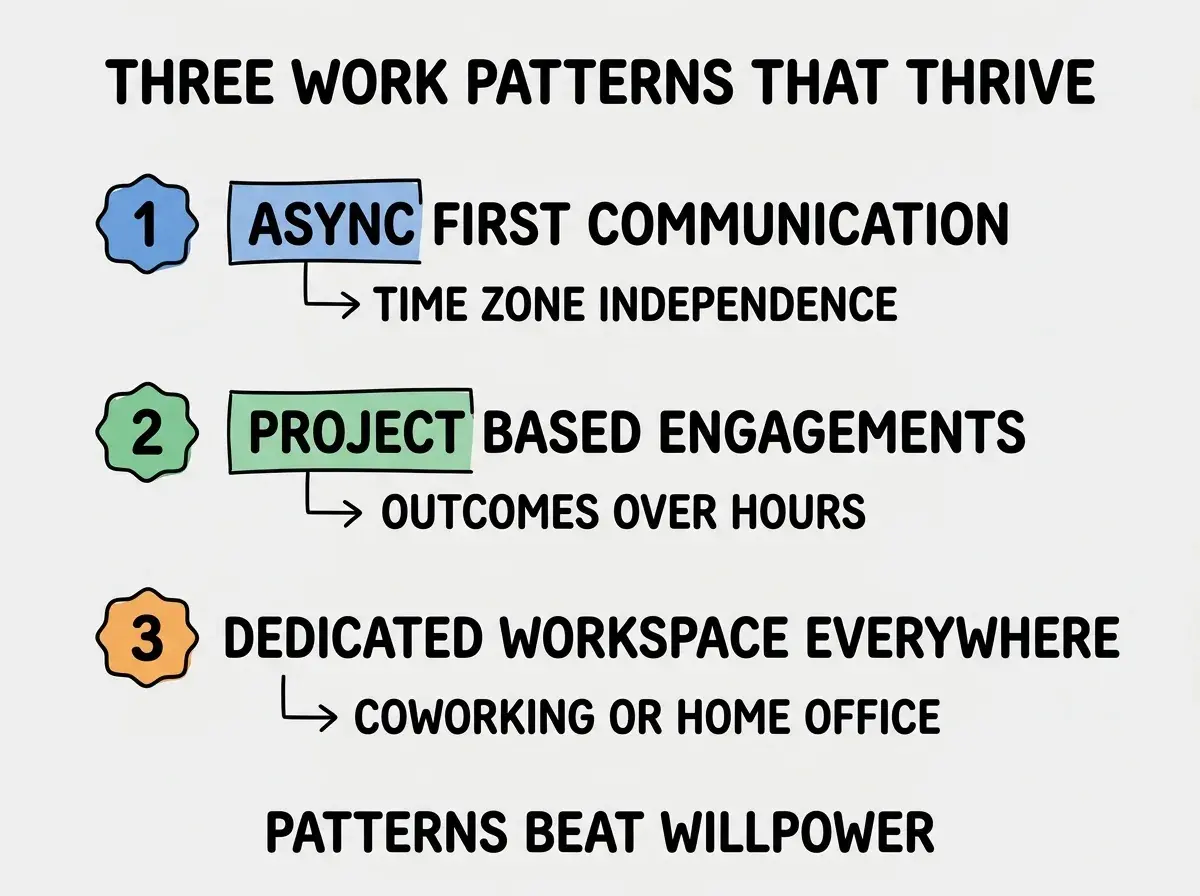
Pattern 1, async-first communication. Slack, email, Notion comments. Async work removes time zone friction; sync calls become exception, not norm. The async discipline is what makes location independence work for client engagements.
Pattern 2, project-based engagements over hourly billing. Project pricing aligns with location-independent work; hourly billing across time zones creates friction. Productize where possible to remove the time-tracking overhead that hourly creates.
Pattern 3, dedicated workspace everywhere you go. Coworking memberships, hotel desks, home office in primary location. Consistent workspace produces consistent output; ad-hoc working produces inconsistent output that erodes professional reliability over time.
How to Build Income Streams That Travel With You
Three income patterns help maintain location-independent earnings.
Pattern 1, recurring revenue from products. SaaS, digital products, content subscriptions provide income regardless of location. The recurring nature reduces the pressure of constant client work and supports the variability that travel introduces.
Pattern 2, retainer relationships with select clients. Long-term client relationships paid monthly. The predictability supports location-independent lifestyle better than project-based income.
Pattern 3, productized services with clear scope. Specific services at specific prices delivered on specific timelines. The clarity makes async client work viable across time zones.
The combination produces income stability that lifestyle requires. Without these patterns, location-independent vibe coders often struggle with income volatility that adds stress to the lifestyle.
How to Decide if Location Independence Fits You
Three diagnostic questions help honestly assess whether the lifestyle fits.
Question 1, do you genuinely enjoy travel and change? Some people thrive with constant change; others struggle. Honest self-assessment matters; the lifestyle does not change personality preferences.
Question 2, do you have flexible relationships? Partners, kids, aging parents, deep friend groups all complicate location independence. Possible to navigate; harder than for solo unencumbered builders.
Question 3, can you maintain work discipline without external structure? Office structure provides accountability; location-independent work requires self-discipline. Honest self-assessment about discipline is required to avoid the productivity collapse that catches some location-independent workers.
The combination produces honest self-assessment. Without these questions, builders sometimes pursue lifestyle that does not match their preferences and fail despite the work being viable.
The most damaging location-independence mistake is treating it as escape from problems. Builders who pursue the lifestyle to escape unhappiness, relationship issues, or career stagnation usually find the problems travel with them. The fix is to address underlying issues before going location-independent; the lifestyle works best when added to a generally good life rather than used as escape from a bad one. Builders who go location-independent for positive reasons (curiosity, opportunity, alignment with values) report dramatically higher satisfaction than those who go for escape reasons.
The other mistake is romanticizing the lifestyle from social media. Instagram nomads share highlights; the reality includes mundane logistics, loneliness, work disruption, missed family events. The fix is to talk with location-independent builders honestly about both upsides and downsides; the picture clarifies dramatically when both sides are visible.
A third mistake is failing to plan for relationship maintenance. Long-distance friendships and family relationships require deliberate effort that location independence does not automatically provide. The fix is to schedule regular calls, plan return visits, and invest in keeping connections alive; the relationships that get neglected fade and are hard to rebuild.
A fourth mistake is treating productivity as constant across locations. Some places work better than others for focus; some times of year work better than others for visiting. The fix is to plan locations and timing around work intensity; busy quarters in productive locations, slower quarters in exploration locations.
What This Means For You
Location-independent vibe coding is genuine option in 2026. The four patterns, practical considerations, and work patterns produce viable lifestyles for builders who match the requirements.
- If you're a founder: Even without going fully location-independent, designing your business for location flexibility creates options. The optionality is valuable even if you do not exercise it constantly.
- If you're changing careers into vibe coding: Location independence becomes possible once income stabilizes. Plan for it as option; pursue it when income justifies the transition.
- If you're a student: Use student years to test whether you enjoy the lifestyle. A semester abroad or summer of travel reveals whether constant change suits you.
Browse more career lifestyle guides
Read more foundations articles