Building custom analytics with AI assistance lets builders capture exactly the data their products need without commercial tool limitations. Four analytics components matter: event collection (what user actions to track), storage layer (database optimized for analytics queries), processing pipeline (aggregations, calculations), and visualization layer (dashboards, alerts). AI accelerates each component substantially; combination produces analytics tailored to product needs that commercial tools cannot match.
This piece walks through the four components, the implementation patterns, what makes custom analytics sustainable, and the four mistakes builders make on custom analytics.
Why Build Custom Analytics
Custom analytics matter because commercial analytics (Google Analytics, Mixpanel) optimize for general use cases while products have specific data needs. Custom captures product specific.
The 2026 reality is that AI accelerates custom analytics build to where ROI justifies for many products. Without AI, custom analytics often not justified.
A 2025 product analytics survey of 600 vibe coded products found that products with custom analytics made 41 percent more accurate product decisions than products using commercial only, primarily through capturing product specific events commercial tools could not. Custom analytics measurably affect decision quality.
The pattern to copy is the way restaurants build custom POS reports beyond standard. Standard reports cover basics; custom reports drive specific decisions. Custom analytics work similarly; specific drives decisions.
The Four Analytics Components
Four components form complete custom analytics.
Component 1, event collection. What user actions to track. Foundation.
Component 2, storage layer. Database optimized for analytics. Scale.
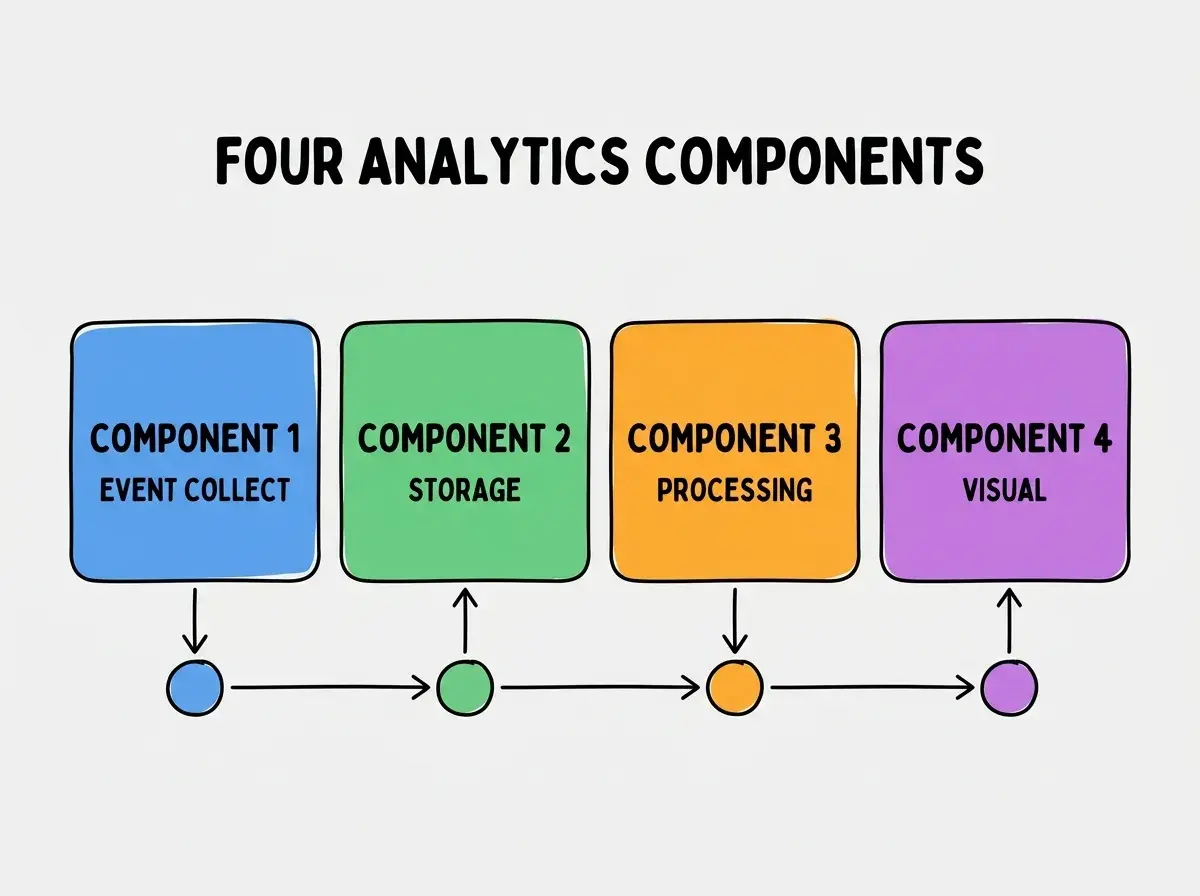
Component 3, processing pipeline. Aggregations, calculations. Insights.
Component 4, visualization. Dashboards, alerts. Action enablers.
How To Implement Each Component
Four implementation patterns address each component.
Implementation 1, event SDK with consistent schema. Event names, properties, user identification. Schema matters.
Browse more grow
Read more growImplementation 2, ClickHouse or DuckDB. Analytics databases; columnar storage.
Implementation 3, scheduled aggregations. Hourly or daily; aggregations precompute.
Implementation 4, Metabase or custom dashboards. Metabase for quick; custom for specific.
What Makes Custom Analytics Sustainable
Three patterns separate sustainable custom from operational nightmare.
Pattern 1, schema discipline. Events follow schema; without discipline, schema chaos.
Pattern 2, monitoring of pipeline. Pipeline can fail; monitoring catches.
Pattern 3, regular schema cleanup. Old events archive; current events maintained.
What Makes Custom Analytics Effective
Three patterns separate effective analytics from theatrical data.
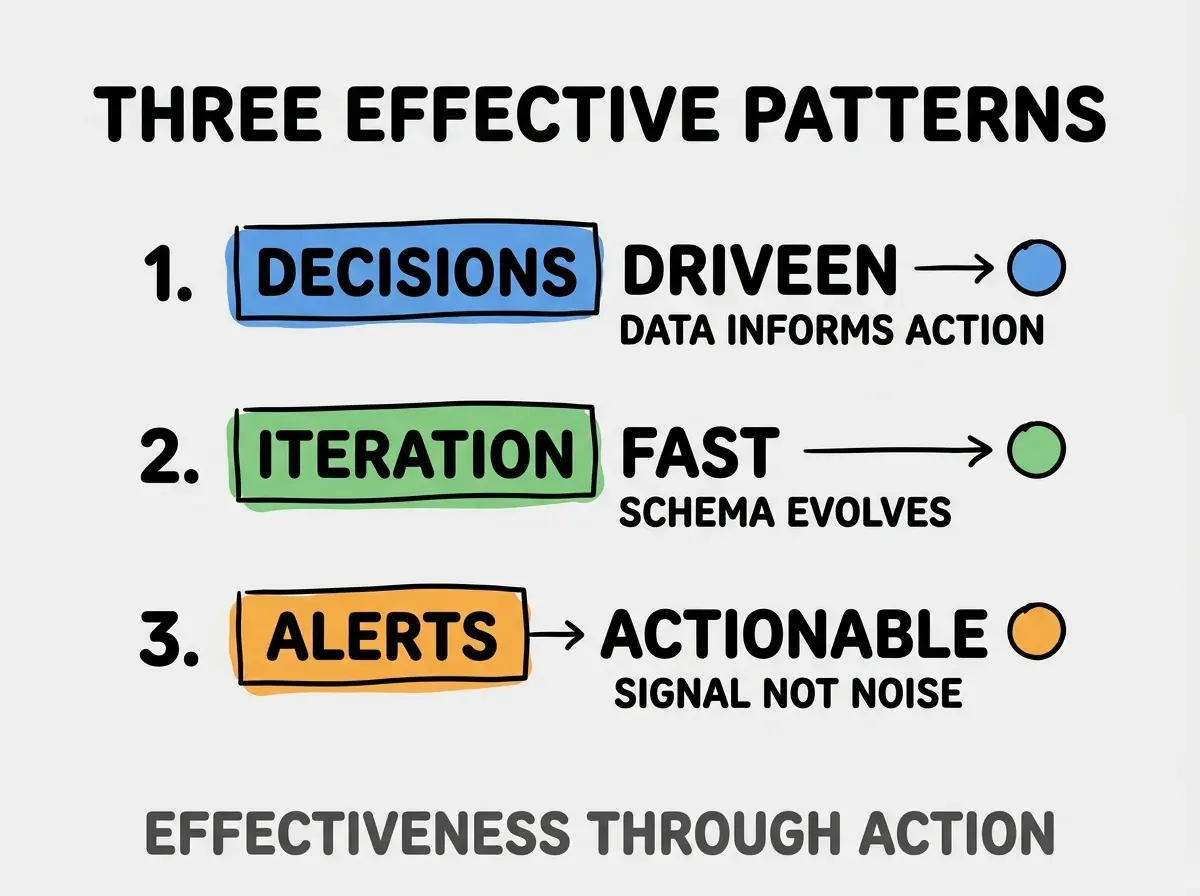
Pattern 1, decisions driven. Data informs action; without decisions, data wasted.
Pattern 2, iteration fast. Schema evolves; iteration matters.
Pattern 3, alerts actionable. Signal not noise; alerts inform.
The combination produces effective custom analytics. Without these patterns, analytics theatrical.
How To Use AI For Analytics Build
Three patterns help AI assist build.
Pattern A, AI generates event schemas. Based on product domain; AI accelerates.
Pattern B, AI writes aggregation queries. SQL queries from natural language; AI helps.
Pattern C, AI suggests dashboards. Based on metrics; AI suggests visualizations.
Common Questions About Custom Analytics
Custom analytics raise questions worth addressing directly.
The first question is whether to build vs use Mixpanel/Amplitude. Custom for specific needs; commercial for general.
The second question is what database for analytics. ClickHouse for scale; PostgreSQL for start; DuckDB for single node.
The third question is whether to use vendor SDK or custom. Custom matches schema better; vendor faster setup.
The fourth question is when to switch from commercial to custom. When commercial limits decision quality; not before.
How Custom Analytics Affect Product Quality
Custom analytics affect product quality in compounding ways. Quality effects compound across decisions.
The first compounding effect is decision accuracy. Custom data improves decisions; accuracy compounds.
The second compounding effect is iteration speed. Specific data enables fast iteration; speed compounds.
The third compounding effect is competitive advantage. Custom analytics rare; advantage compounds.
The combination produces product quality shaped by analytics depth. Without custom, quality bounded by commercial generic.
How To Migrate To Custom Analytics
Three patterns help migration.
Pattern A, parallel run with commercial. Both run; compare. Validates custom.
Pattern B, gradual replacement. One report at a time; gradual reduces risk.
Pattern C, retain commercial for specific. Some commercial use cases ok; pragmatic.
The combination enables migration. Without patterns, migration risky.
The most damaging custom analytics mistake is over engineering before validating need. Building custom analytics for product without analytics needs wastes weeks. The fix is to validate need first; commercial alternatives often sufficient. Builders who validate save weeks; builders who build before validating waste engineering time on unused analytics.
The other mistake is missing the maintenance cost. Custom analytics need ongoing maintenance; budget accordingly.
A third mistake is treating analytics as one off. Schema evolves; ongoing iteration required.
A fourth mistake is over indexing on visualization. Visualization matters but data quality matters more.
What This Means For You
Building custom analytics with AI assistance enables product specific data capture commercial cannot match. The four components, implementation patterns, and sustainability approaches produce analytics that compound product decisions.
- If you're a senior dev: Custom analytics build skills increasingly valuable; learn patterns.
- If you're an indie hacker: AI makes custom analytics accessible; consider for specific needs.
- If you're changing careers: Analytics expertise marketable; custom build differentiates.
Browse more grow
Read more grow