Vibe coding in India represents 16.7 percent of global vibe coding market share as of Q1 2026, second only to the United States. Four factors drive India's outsized adoption: large young technical population, English language coding aligned with AI tools, freelance economy maturity matching vibe coding economics, and strong startup ecosystem rewarding speed. Understanding India's role helps founders, indie hackers, and students see opportunities in the world's most dynamic vibe coding market.
This piece walks through the four India adoption factors, what India's role means for global market dynamics, what builders should know, and the four mistakes when interpreting India market data.
Why India Market Share Matters
India market share matters because India is shaping global vibe coding market direction. Trends starting in India often spread globally; awareness of India patterns predicts global patterns.
The 2026 reality is that India vibe coding market grew 200 percent year over year through 2025, faster than most other geographies. Growth continuing through 2026 at slower but substantial pace.
A 2025 global vibe coding market analysis estimated India at 16.7 percent of global market share, up from 8 percent in 2024. India's growth pace exceeds US and EU combined; pace makes India market trends increasingly important for global understanding.
The pattern to copy is the way analysts study China for technology trend prediction. China often leads adoption of certain technologies; observation predicts global patterns. India plays similar role for vibe coding currently.
The Four India Adoption Factors
Four factors drive India's outsized vibe coding adoption.
Factor 1, large young technical population. 1.4 billion population, median age 28, 4 million STEM graduates annually. Demographic drives adoption.
Factor 2, English language coding aligned with AI tools. Most AI tools English first; English fluent population captures benefit immediately.
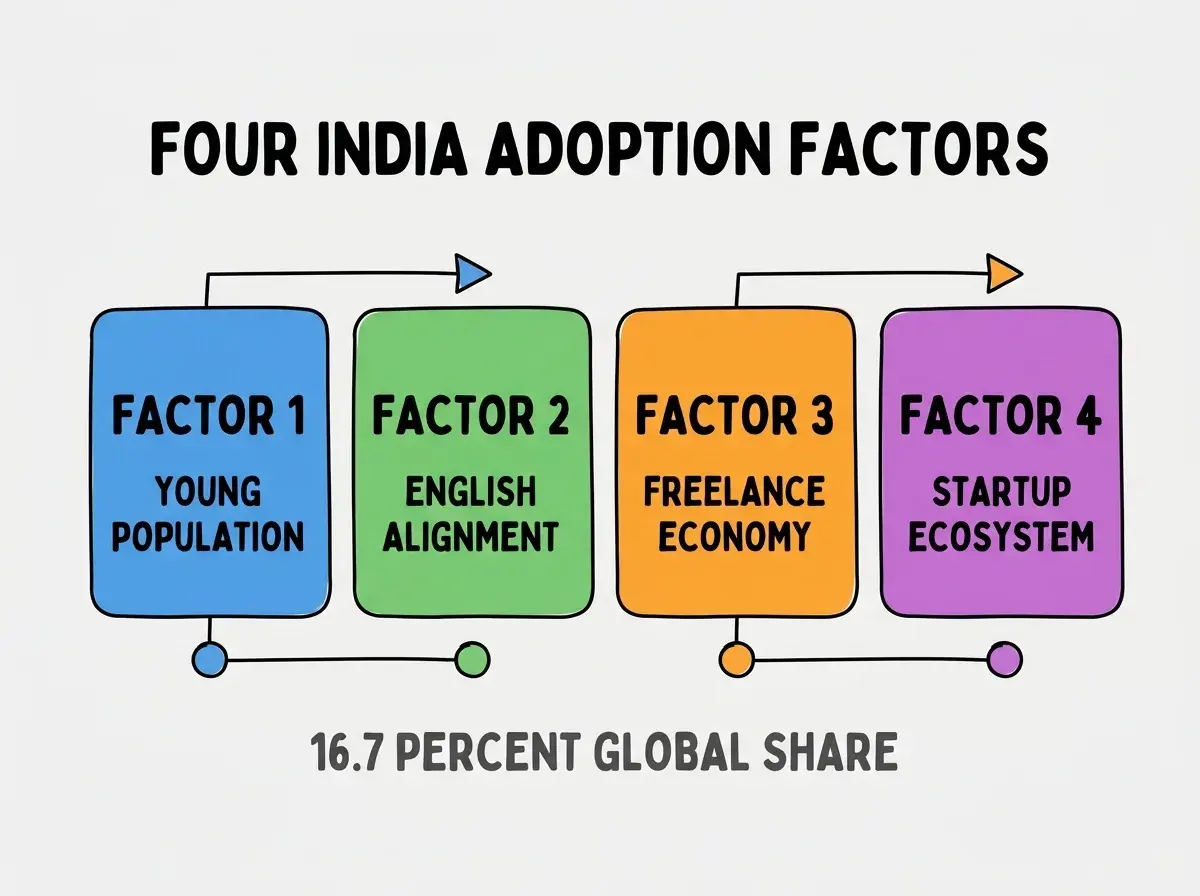
Factor 3, freelance economy maturity. India freelance market mature; freelance economics match vibe coding economics; match drives adoption.
Factor 4, strong startup ecosystem. India startup ecosystem rewards speed; vibe coding enables speed; reward drives adoption.
What India Role Means For Global Dynamics
Three implications matter for global market understanding.
Implication 1, India trends predict global trends. India early adopters often signal what other markets will adopt; awareness enables anticipation.
Browse more foundations
Read more foundationsImplication 2, India pricing affects global pricing. Lower India price points pressure global pricing; pressure compounds with India market share.
Implication 3, India talent affects global hiring. India vibe coders increasingly hired globally; hiring affects local talent dynamics.
What Builders Should Know
Three things matter for builders considering India market.
Knowledge 1, India market different from Western markets. Pricing, payment methods, support expectations all differ; assumption transfer fails.
Knowledge 2, India offers significant opportunity. Both as customer market and talent source; opportunity bigger than market share suggests.
Knowledge 3, India regulation affects market access. Data residency, payment regulation, compliance all India specific; regulation knowledge required.
What Makes India Vibe Coding Sustainable
Three patterns separate sustainable India market analysis from snapshot interpretation.
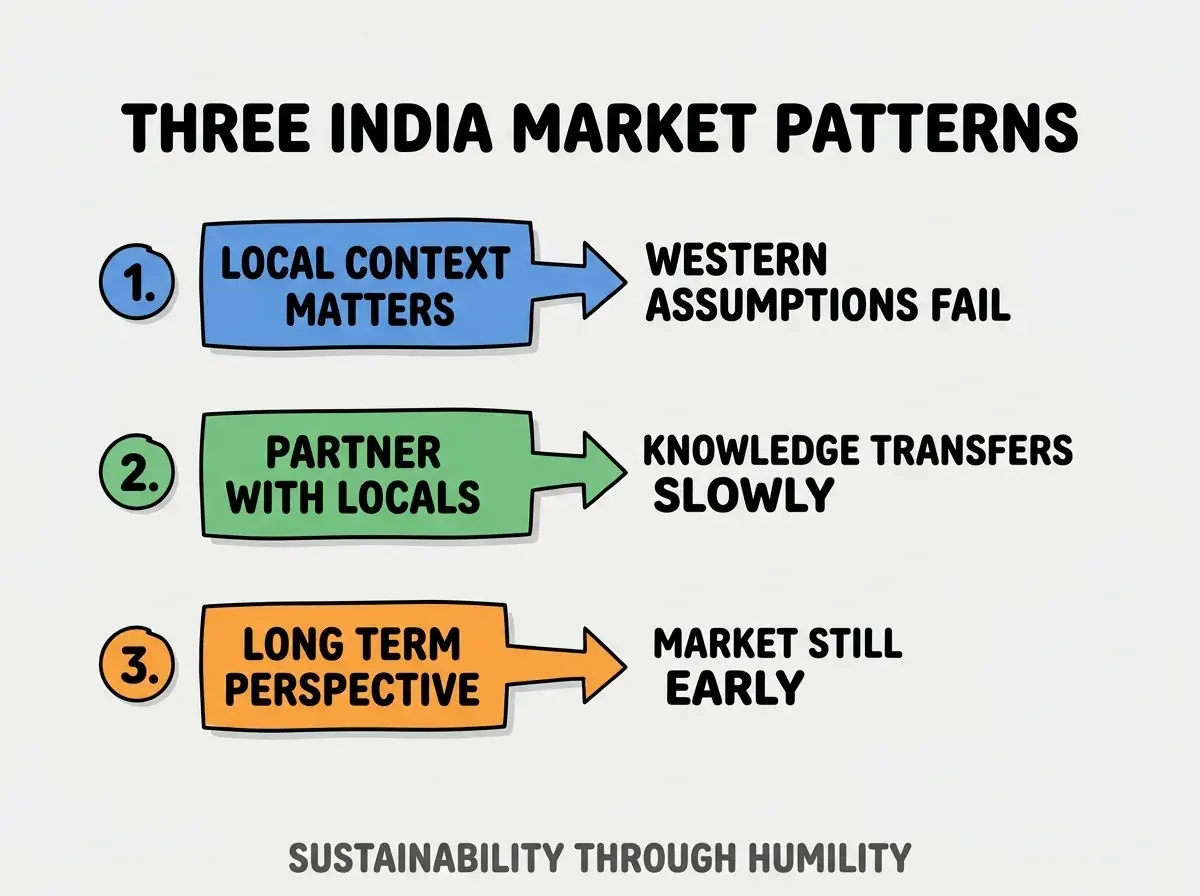
Pattern 1, local context matters. Western assumptions about India market often wrong; context awareness required.
Pattern 2, partner with locals. Local partnerships produce understanding faster than solo analysis.
Pattern 3, long term perspective. India market still early in growth; long term view captures trajectory.
The combination produces sustainable India analysis. Without these patterns, analysis stays superficial.
How To Enter India Market
Three patterns help builders enter India market.
Pattern A, partner with India based founders. Local partners navigate culture and regulation; partnership accelerates entry.
Pattern B, price for India local economics. India pricing different from Western; localized pricing essential.
Pattern C, support in local languages. English helps but Hindi, Tamil, Telugu support reach more customers.
Common Questions About India Vibe Coding Market
India vibe coding market raises questions worth addressing directly.
The first question is whether India market growth will continue. Yes; demographic, economic, and policy factors all support continued growth.
The second question is whether to hire India based vibe coders. Yes; talent quality high, cost lower than Western markets, time zones manageable for many regions.
The third question is whether India trends spread globally. Often yes; observation produces global insight.
The fourth question is whether to enter India as customer market or talent market. Both viable; specific business model determines fit.
How India Market Affects Global Builders
India market affects global builders in compounding ways. Market effects compound across business decisions.
The first compounding effect is talent pool access. India talent pool large; access shapes hiring options.
The second compounding effect is customer market opportunities. India customer market growing; opportunities expand over time.
The third compounding effect is competitive dynamics. India based competitors emerging globally; awareness shapes competitive strategy.
The combination produces global market dynamics shaped by India. Without India awareness, global analysis incomplete.
How To Track India Market Specifically
Three patterns help track India vibe coding market.
Pattern A, follow India based analysts and publications. YourStory, Inc42, Tech in Asia all cover India tech. Subscriptions produce awareness.
Pattern B, attend India tech conferences. TechSparks, Surge, Nasscom events all India focused. Attendance produces insider awareness.
Pattern C, build India based network. Network produces insider awareness; insider awareness beats outsider analysis.
The combination produces India market tracking. Without tracking, India patterns miss notice.
The most damaging India market analysis mistake is assuming Western patterns apply directly. Pricing, support expectations, payment methods, regulation all differ. The fix is to study India specifically rather than assume transfer; specific study reveals differences. Builders who study India specifically succeed; builders who assume transfer fail despite Western success.
The other mistake is over generalizing within India. India is large diverse country; tier 1 city patterns differ from rural patterns.
A third mistake is missing the language opportunity. Non English language support reaches dramatically larger audience.
A fourth mistake is treating India as monolithic talent market. Quality varies dramatically; partnership with quality contractors matters.
What This Means For You
Vibe coding in India represents 16.7 percent of global market share with patterns that influence global market direction. The four factors, implications, and entry patterns produce framework for India market engagement.
- If you're a founder: India market opportunity bigger than market share suggests; consider India as customer or talent source.
- If you're an indie hacker: India based vibe coders offer talent at competitive prices; partnership unlocks productivity.
- If you're a student: India market dynamics informed career planning even outside India; awareness matters.
Browse more foundations
Read more foundations