To use vibe coding effectively for government and FedRAMP contexts, recognize the four compliance patterns that matter (data residency requirements affecting AI tool choice, audit trail requirements documenting AI generated code provenance, security clearance requirements affecting tool access, and procurement requirements affecting tool selection process), see what makes AI coding work despite government constraints, and apply the patterns that produce compliant AI coding. The government context matters because compliance requirements differ dramatically from commercial AI coding patterns.
This piece walks through the four compliance patterns, what makes AI coding work for government, the specific approaches, and the four mistakes that produce non compliant AI usage.
Why Government AI Coding Matters
Government AI coding matters as government adoption accelerates. The matter; FedRAMP authorized AI tools enable government adoption that non authorized tools prevent.
The 2026 reality is that government AI coding sits between aggressive adoption and conservative compliance. Pattern matters for navigating this tension.
A 2025 government technology survey of 200 federal agencies found that agencies using FedRAMP authorized AI coding tools achieved 47 percent productivity gains while maintaining compliance, compared to agencies prohibiting AI tools entirely. FedRAMP authorization unlocks productivity that prohibition prevents.
The pattern to copy is the way government adopted cloud computing. Initial prohibition gave way to FedRAMP authorized cloud services that combined productivity with compliance. AI coding follows similar trajectory; FedRAMP authorization enables productive adoption.
The Four Compliance Patterns
Four patterns characterize government AI coding compliance.
Pattern 1, data residency requirements. Code and data must stay in approved environments. Tool choice constrained by residency.
Pattern 2, audit trail requirements. AI generated code provenance documented. Audit trails required for compliance.
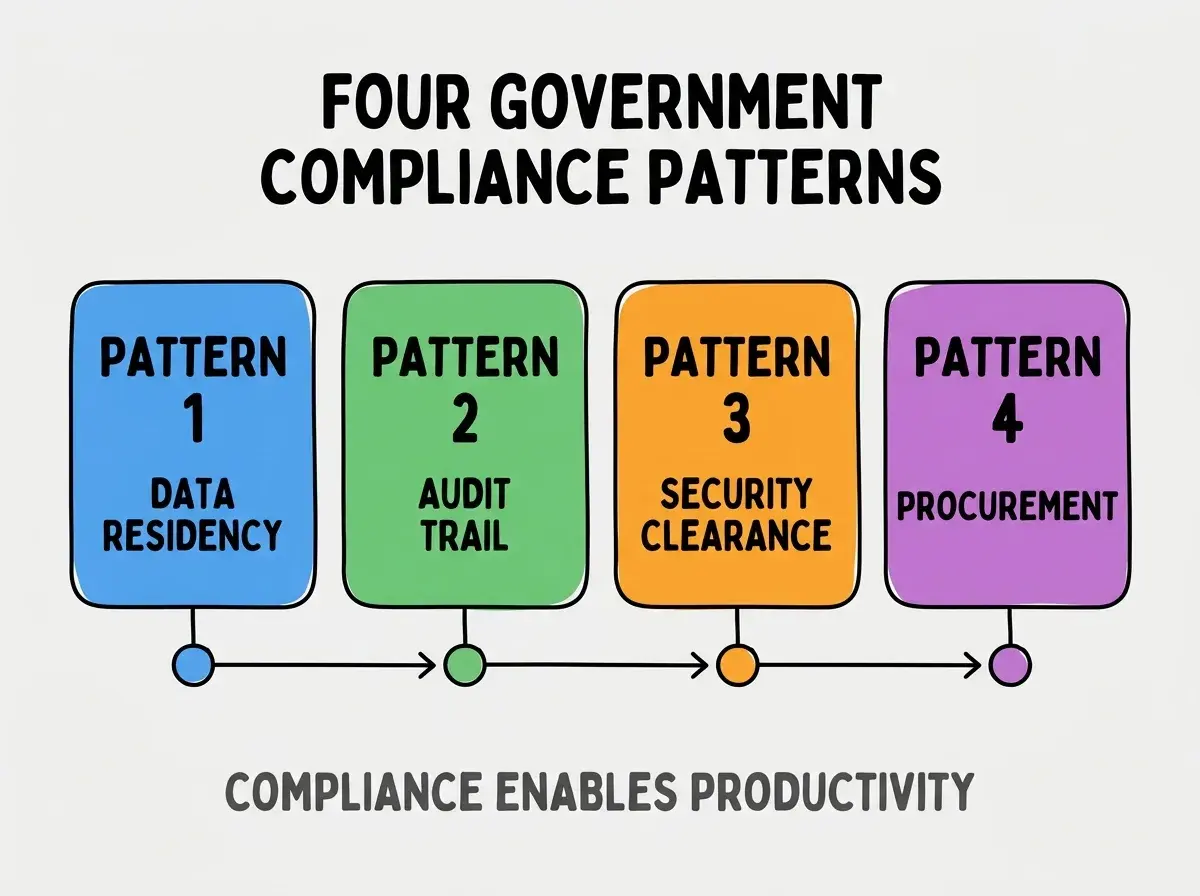
Pattern 3, security clearance requirements. Cleared personnel only access certain systems. Clearance affects tool access.
Pattern 4, procurement requirements. Tools must be procured through approved channels. Procurement timelines extend tool selection.
What Makes AI Coding Work For Government
Three patterns characterize successful government AI coding.
Pattern 1, FedRAMP authorized tools selected first. Authorization enables compliance. Without authorization, deployment prohibited.
Browse more pulse
Read more pulsePattern 2, audit trail integrated with code generation. Every AI generation logged. Logging supports compliance requirements.
Pattern 3, security review for AI generated code. Review catches security issues before deployment. Without review, security compromised.
The Specific Approaches That Work
Three approaches handle government AI coding effectively.
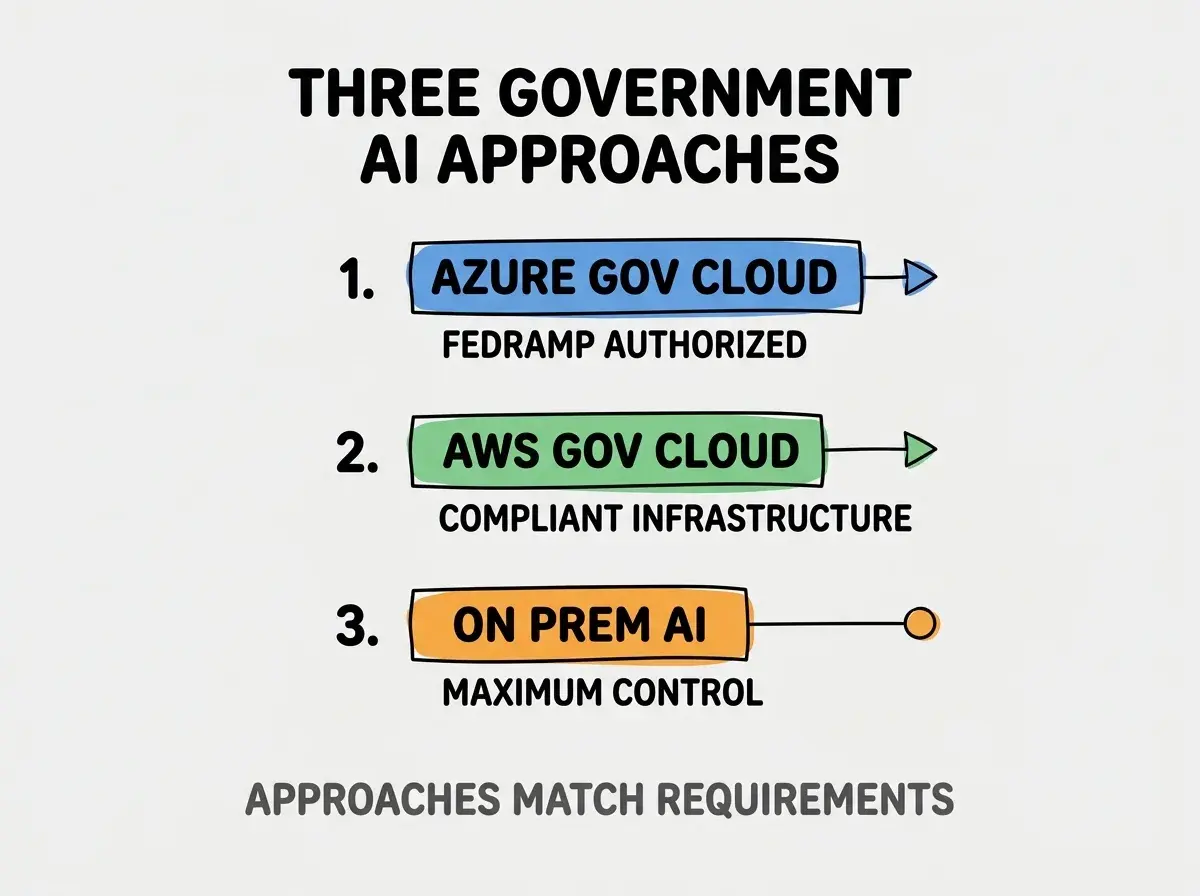
Approach 1, Azure Gov Cloud for AI services. FedRAMP High authorized; comprehensive AI services. Best for Microsoft heavy environments.
Approach 2, AWS Gov Cloud for AI services. FedRAMP High authorized; broad AI capability. Best for AWS heavy environments.
Approach 3, on premises AI for maximum control. Self hosted models on government infrastructure. Best for highest sensitivity.
What Makes Government AI Coding Sustainable
Three patterns separate sustainable government AI coding from problematic patterns.
Pattern 1, compliance built into workflow not added later. Adding compliance later creates rework. Built in compliance scales.
Pattern 2, security training for AI coding patterns. Engineers trained on AI specific security. Training prevents AI specific issues.
Pattern 3, regular compliance audits catching drift. Periodic audits verify continued compliance. Without audits, drift accumulates.
The combination produces sustainable government AI coding. Without these patterns, compliance gaps emerge over time.
How To Navigate Procurement For AI Tools
Three procurement patterns help government AI tool acquisition.
Pattern A, leverage existing FedRAMP authorizations. Already authorized tools faster to procure. Authorization status reduces procurement time.
Pattern B, partner with cloud providers for AI services. Cloud providers handle FedRAMP for AI services. Partnership enables faster access.
Pattern C, plan procurement timelines into project plans. Government procurement takes months; planning matters. Without planning, procurement delays surprise.
The combination produces procurement strategies that enable AI access. Without patterns, procurement often blocks AI adoption.
The most damaging government AI coding mistake is using non authorized AI tools for government work. Non authorized tools may produce compliance violations that affect entire program. The fix is to verify FedRAMP authorization before tool use; authorization enables compliant productivity while non authorized tools create risk that exceeds productivity benefit. Government engineers who verify authorization first produce sustainable productivity; engineers who skip verification create compliance risk.
The other mistake is missing the audit trail requirement. Without audit trails, AI generated code violates compliance.
A third mistake is treating government AI coding like commercial AI coding. Different constraint sets require different patterns.
A fourth mistake is solo procurement attempts without security partnership. Security teams essential for government AI procurement.
How To Handle Specific Government Scenarios
Three scenarios deserve specific approaches.
Scenario A, classified system development. Air gapped AI tools or no AI. Classification level determines AI tool feasibility.
Scenario B, sensitive but unclassified development. FedRAMP Moderate authorized tools sufficient. Sensitivity level determines requirement.
Scenario C, public facing government applications. Standard FedRAMP authorized tools work. Public facing same as commercial often.
The combination produces scenario specific approaches. Without scenarios, generic approach produces compliance issues.
How Government AI Coding Will Likely Evolve
Government AI coding will likely continue evolving as authorization expands.
The first likely evolution is more AI tools achieving FedRAMP authorization. Authorization enables broader adoption. Authorization expansion expected.
The second likely evolution is on premises AI options improving. Local model deployment becomes more capable. On premises options matter for highest sensitivity.
The third likely evolution is government specific AI training emerging. Tools trained on government workflows. Specialization improves fit.
The combination suggests government AI coding will become more accessible. Engineers learning patterns now build skills that remain valuable.
Common Questions About Government AI Coding
Government AI coding raises questions worth addressing directly.
The first question is whether contractors can use AI tools for government work. Yes if authorized; no if not. Authorization status determines feasibility.
The second question is whether to wait for full authorization or use limited authorized tools now. Use limited now; capability beats waiting. Limited capability still substantial.
The third question is how to handle classified work with AI prohibitions. Air gapped local models or human only work. No good cloud AI options for classified.
The fourth question is whether state and local government has same requirements. Often less strict; check specific state requirements. State variation matters.
How Government AI Affects Career Opportunities
Government AI coding affects career opportunities beyond pure work. Career effects compound for engineers in government adjacent roles.
The first compounding effect is consulting opportunities for compliance expertise. Government clients value compliance expertise. Expertise creates consulting opportunity.
The second compounding effect is contractor relationships building. Government contracting through cleared engineers. Relationships compound.
The third compounding effect is differentiation in government markets. Compliance fluent engineers differentiate from generalist engineers. Differentiation matters for government work.
Government AI coding career path remains specialized but valuable. Engineers building expertise compound career value as government adoption accelerates over coming years.
The combination of technical AI skills with compliance expertise produces engineering value that government markets reward through both direct employment and contracting opportunities.
Government AI adoption represents substantial market that compliance fluent engineers can serve while engineers without compliance fluency cannot. Specialization matters for government markets specifically.
What This Means For You
Government AI coding requires adapted patterns matching compliance requirements. The four patterns, approaches, and procurement strategies produce framework for compliant productive AI coding.
- If you're a senior dev: Government context requires understanding compliance beyond technical capability. Invest in compliance understanding alongside technical skills.
- If you're a founder: Help government clients navigate AI adoption. Compliance expertise valuable for government markets.
- If you're a contractor: Understand authorization status before proposing AI tools to government clients. Authorization affects proposal viability.
Browse more pulse
Read more pulse